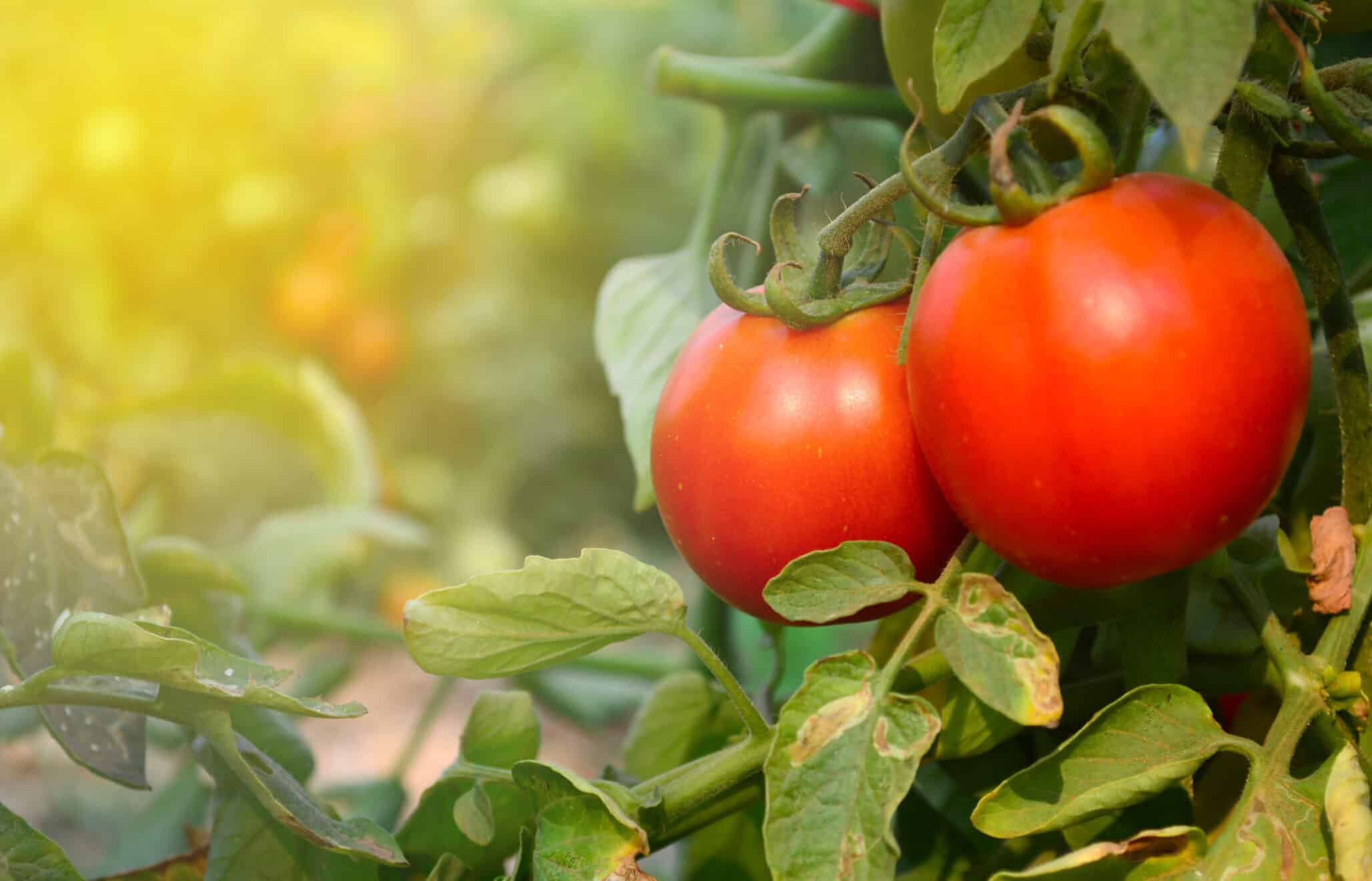
Tomato leaves contain surprisingly high protein levels—up to 27%—making them a promising source of plant-based protein amid growing demand. However, large-scale use is not yet feasible. PhD researcher Marietheres Kleuter’s work highlights the challenges that must be addressed to unlock the potential of tomato leaves as a valuable raw material.
The principle “waste doesn’t exist” underpins the circular economy, driving the search for smart, creative ways to repurpose plant waste. Wageningen University & Research is actively exploring methods to transform these residual streams into valuable resources.
“Much of the protein in tomato leaves consists of Rubisco,” says Kleuter. “That is an important enzyme for photosynthesis: it helps the plant capture CO2 from the air. Ideally, you can turn this protein into a dish similar to tofu. But that’s a way off. In our experiments, the extracted protein remained green due to the chlorophyll. Which isn’t ideal – people aren’t used to green protein – but if you use it in shakes or as a dietary supplement, for example, the colour is less of a problem.”
It will probably be some time before there are tomato plants in the greenhouse that not only produce fruit but also useful proteins from their leaves, according to a press release.
“There are still many factors that make extraction difficult,” Kleuter explains. “An important one is that the cell walls in the leaves form a physical barrier, making it difficult to extract the protein. The composition of the cell walls also changes as the leaves get older. That reduces the yield of extracted protein, especially from the older leaves.”
There are several reasons why extracting protein from young tomato leaves is preferable. As leaves mature, enzymes called proteases break down proteins into smaller molecules known as peptides.
“In our trials, we turned off two genes that are responsible for the production of such proteases,” Kleuter explains. “That worked: protein degradation was inhibited, but not until the very end of the growth period.”
This research began with an in-depth study of how proteins in tomato leaves are formed and then broken down, using a method called proteomics analysis. The results revealed that many genes influence protein content and the efficiency of protein extraction — valuable information for plant breeders. With these insights, breeders can now target traits that help maintain high protein levels even as leaves age, which is crucial since using young leaves is challenging in practice. Young leaves are essential for photosynthesis and, therefore, for the growth of the tomato plants themselves.
Exploring New Protein Crops
Kleuter’s research is part of a wider effort at Wageningen University & Research to discover new sources of plant protein. As the global population grows and animal protein production proves unsustainable, alternative protein crops are becoming increasingly important.
One example is duckweed, known as water lentils, which has recently been approved by the EU as a food and protein source — following years of research at WUR.
“Ongoing studies are also looking at how well proteins from existing varieties and variants (accessions) of agricultural and horticultural crops can be extracted in practice, for example in sugar beet,” she says.