A partnership between Scotland’s top technology and agricultural research institutions is pioneering 5G-connected robotics to help farmers adopt precision agriculture while overcoming rural connectivity challenges.
The collaboration — featuring The National Robotarium at Heriot-Watt University, James Hutton Institute, The Scotland 5G Centre, Boston Dynamics, and Freshwave — is developing advanced robotic systems capable of tasks like crop health monitoring, targeted fertiliser application, and soil condition assessment, all powered by portable 5G private networks.
This technology tackles key challenges in modern farming, including rising input costs, labour shortages, tightening environmental regulations, and the urgent need to boost food production sustainably. Unlike traditional methods that treat entire fields uniformly, 5G-enabled robotics deliver plant-by-plant precision, applying resources only where necessary, according to a press release.
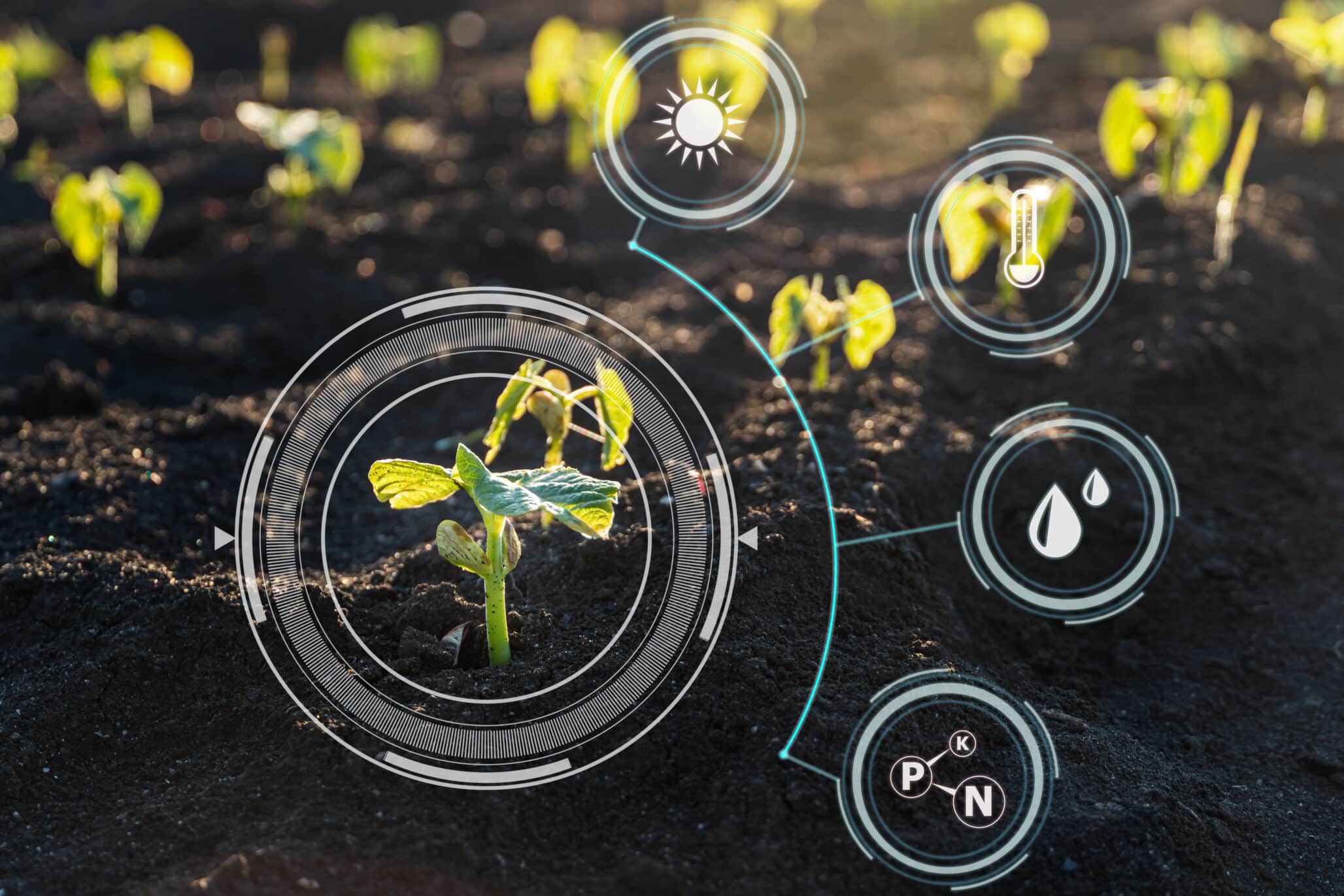
Using high-speed 5G connectivity, the robotic systems communicate securely in real time with other devices and transmit detailed data on crops, soil, and growing conditions — giving farmers the insights needed to make informed, timely decisions based on current field realities.
“We’ve successfully shown that portable 5G networks can provide the connectivity needed for real-time robotic operations in agricultural settings,” said Ruth Plant, Project Manager at The National Robotarium, Heriot-Watt University. “The integration of these technologies creates opportunities for precision farming that weren’t previously possible in areas with limited connectivity.”
A major breakthrough has been overcoming connectivity challenges in rural areas. Data-intensive robotic farming applications often struggle with limited mobile coverage and bandwidth. To tackle this, the partnership has developed portable 5G private networks that can be quickly deployed on farms, delivering the high-speed, low-latency connections needed for real-time robotic operations.
These robotic systems can stream high-definition video, create detailed field maps, and — using visual recognition technology still in development — detect problems like disease, pest infestations, or water stress much earlier than traditional methods. Tasks that once required costly specialized equipment, expert knowledge, and ideal weather conditions can now be carried out more efficiently and affordably.
With global food production needing to rise by over 50% by 2050 while minimizing environmental impact, advanced agricultural technologies are becoming critical. Scotland’s agricultural sector, contributing £2.2 billion to the economy, is well placed to lead the development of practical precision farming solutions that tackle real-world challenges.
“What’s exciting about this project is seeing the technology develop from initial concept to working demonstration,” said Plant, following a demonstration of the 5G-connected robotics technologies at The National Robotarium.
“We’ve successfully shown that portable 5G networks can provide the connectivity needed for real-time robotic operations in agricultural settings. The integration of these technologies creates opportunities for precision farming that weren’t previously possible in areas with limited connectivity.
“This partnership demonstrates exactly what the National Robotarium was designed to achieve — bringing together leading academic research, innovative companies, and industry expertise to develop practical solutions to real-world challenges. Our facility provides the collaborative environment where these breakthrough technologies can be developed, tested, and demonstrated to the partners and stakeholders who can help bring them to market.”
Andrew Christie, agritech specialist at The James Hutton Institute, said that as an evolution of precision farming technology being used in modern agriculture, robotics are a next step in the progression towards data driven farming practices, but a barrier to uptake has been the speed and reliability for real time communication and a need for manual intervention for data processing.
“With the integration of 5G private networks in robotics we can address these issues enabling high volumes of data to be transmitted at low latency and allowing us to use our current equipment more effectively, whilst also enabling future progress in swarm robotics, real-time sensors for digital twinning and active data processing through cloud computing” Christie said.
“The use of remotely deployable 5G private networks as showcased at The National Robotarium and The James Hutton Institute provides relevance to all rural settings, and agricultural businesses regardless of farm type.”