With Washington rewriting the rules and Ottawa tightening the purse strings, industry leaders warn: adapt fast or get left behind.
The message is unambiguous: the postwar rules-based order is gone, or at the very least, sidelined. The question isn’t whether Canada can lead in global agriculture — it’s whether it can even keep up.
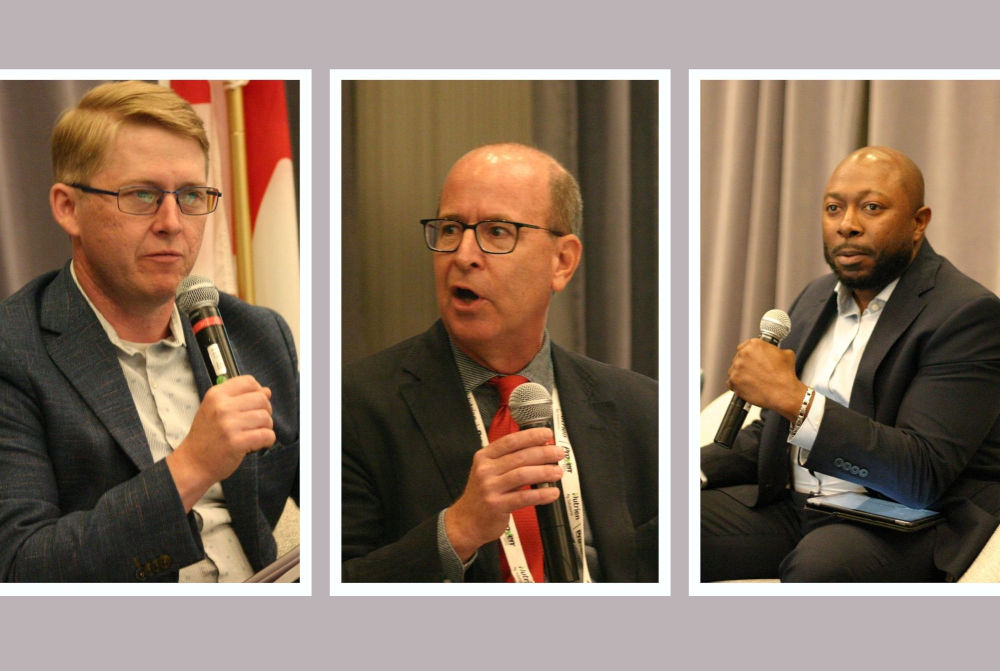
“We’re trying to catch up to where the prime minister is already running,” says Tyler McCann, managing director of the Canadian Agri-Food Policy Institute. “What would’ve seemed transformational six months ago is now table stakes.”
The stakes are indeed high. With a new Liberal administration under Mark Carney promising sweeping internal reform — including a demand for all ministries to slash budgets by 7 to 15% — and a volatile American election cycle threatening to upend hard-won trade agreements, the Canadian seed sector finds itself caught between domestic austerity and global instability.
Michael Harvey of the Canadian Agri-Food Trade Alliance (CAFTA) has some direct advice for those working in seed: “The level of political risk in your work is fundamentally higher now. We’ve entered a new world.”
If anyone knows that terrain, it’s Karis Gutter, former USDA official and current government affairs lead for Corteva Agriscience. From his seat in Washington, D.C., he’s watched as the Trump administration upended not just policy, but the very idea of how governance is done.
“This is not all about stakeholder engagement anymore,” he said. “It’s about polling, perception, and attention. Executive orders are replacing debate.”
The strategy? Adapt or be sidelined. Gutter describes preparing for political transitions as “pulling out the old playbook.” But in 2024, the names in that playbook were all wrong. “We’re playing catch-up,” he said. “The system’s been hijacked by attention economics.”
This is the climate in which Canada must renegotiate its standing under the Canada-U.S.-Mexico Agreement (CUSMA) — or USMCA, or T-MEC, depending on your latitude. Officially, the agreement is due for a formal review in 2026. Unofficially, it’s already being tested by a cascade of unilateral tariffs from Washington.
“We’ve been able to trust President Trump more than we admit,” McCann argues. “He hasn’t broken CUSMA, not yet. But if we aren’t ready, we could lose more than just preferential access — we could lose our place.”
Harvey, a veteran diplomat, offered a sobering reminder. “We’re next to the world’s largest market. That’s not something you pivot away from just because the president sends you a rude letter.”
Where are we Going?
But trade isn’t the only concern. There’s a question more existential than transactional: Where is Canada going, and does anyone have the courage to lead it there?
“We’re farming fewer acres in Canada today than in the past hundred years. And we celebrate record export values while ignoring stagnating volumes. That’s not success — that’s inflation,” McCann says.
So what does courage look like in 2025? According to Gutter, it means showing up with charts, infographics, and messengers who speak the political vernacular of the day. “If you’re not at the table, you’re on the menu.”
McCann goes further: “We need to stop asking government to come meet us in agriculture. We need to meet government where it is — on AI, on digital, on climate. The prime minister just named a minister for artificial intelligence. Why aren’t we in that conversation?”
The moment calls for ambition, not defensiveness. And maybe even a bit of opportunism. “This review process is a chance to push for biotechnology provisions, smoother regulatory alignment, and modern trade frameworks,” says Gutter. “But we can’t do it the way we used to. We need a new playbook.”
One clear takeaway? The regulatory system itself is on the chopping block. With Ottawa demanding deep spending cuts across departments, the Canadian Food Inspection Agency (CFIA) is expected to refocus on its core mandate — which may not include all of the legacy tasks tied to seed regulation.
“This is going to hit agriculture,” McCann says bluntly. “If we don’t step up with private sector solutions, we’ll be stuck with public sector retreats.”
That’s a call to action, not a complaint. “Private investment is what this government wants,” says McCann. “The message should be: here’s what we need to step up, and here’s how we can take some pressure off your budget.”
—This article is based on a live panel discussion delivered at today’s Seeds Canada annual conference in Quebec City.