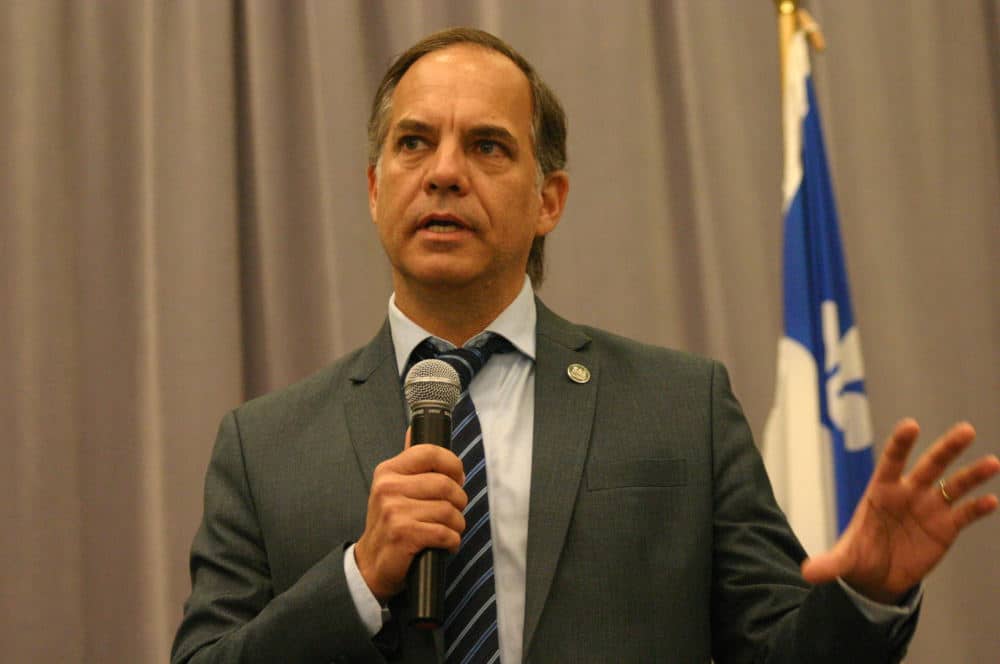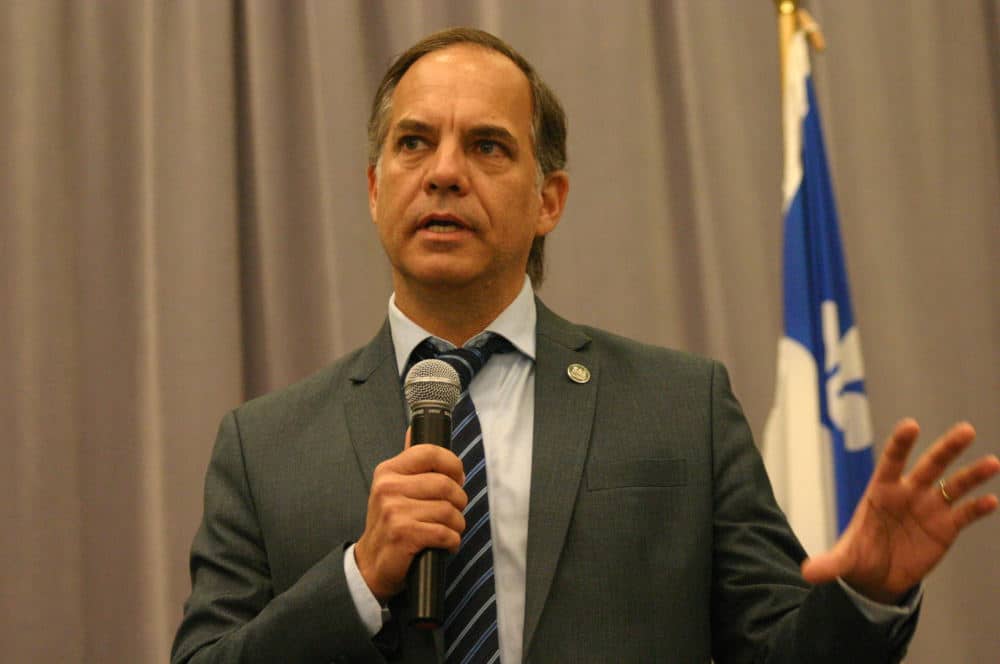
URUPOV’s Diego Risso came to Canada this week to offer an example of how seed policies can be changed to benefit everyone — farmers, breeders and government.
Latin America sometimes flies under the radar when it comes to agricultural innovation, but Uruguay has quietly set a gold standard for seed systems that are transparent, effective, and built on mutual trust. At the center of this quiet transformation is Diego Risso — executive director of both the Seed Association of the Americas (SAA) and the Uruguayan Breeders Association (URUPOV) — whose work is reshaping how plant breeding is supported across the hemisphere.
Speaking at the Seeds Canada annual conference this week in Quebec City, Risso offered a clear message: “If you keep doing the same thing, you’ll keep getting the same results.” Canada’s stagnant certified seed adoption — just 20% in wheat and 8% in durum — is evidence of a system that many feel is in need of change. “I came here in 2010 to raise these issues. Fifteen years later, very little has changed,” Risso said.
A Model Rooted in Farmer Respect
What makes Uruguay stand out isn’t just strong policy — it’s the culture behind it. Risso and his team at URUPOV helped build a system where royalty collection isn’t a punishment, but part of a broader value-sharing model. Farmers sign contracts acknowledging their use of farm-saved seed and agree to audits to ensure compliance. But coercion isn’t the point.
“We visit them. We talk. We listen,” Risso explained. “It’s about building trust — and with trust, we get results.”
Those results speak volumes: Uruguay sees 85% of its soybean area and 97% of its wheat area covered by the system — a level of compliance many countries can only dream of. And it’s all driven by what Risso calls “a balance of trust and verification,” not heavy-handed enforcement.
Laws That Mean Something
Uruguay hasn’t formally adopted the UPOV 91 convention — the international gold standard for plant breeders’ rights — but it has implemented almost all of its key features. “We call it UPOV 78++,” Risso joked. “Because what matters isn’t the label — it’s the practice. Good laws are useless if they’re not enforced.”
That mindset shows in action. Uruguay backs enforcement with modern labs, public registries of violators, and even tax incentives to encourage certified seed use. It’s not just a policy — it’s a working ecosystem.
Big Lessons from a Small Country
With just 5,000 commercial grain farmers and around 1.1 million hectares of soybean, Uruguay may be small. But its seed system offers valuable insights for larger countries across Latin America and beyond. The key? Simplicity, shared responsibility, and public-private alignment.
That was contrasted with Canada’s patchwork approach, where royalty collection on farm-saved seed is limited to a small number of private breeders. “Breeders won’t invest without a return,” he said. “It’s just basic economics.”
Risso’s credibility doesn’t come from theory. He grew up on a research farm, the son of a national breeding coordinator. With a background in ag economics and experience as an extension officer, he’s always focused on making things work in the real world. His principle is clear: “Breeders need to see value — and so do farmers. Innovation only thrives when everyone benefits.”
A Message for the Americas
His address in Quebec wasn’t just a critique of the Canadian system — it was a call to action for Latin America, too. From Argentina to Mexico, countries are grappling with similar challenges around innovation, enforcement, and farmer engagement. Uruguay’s approach shows that it’s possible to honor farmer autonomy and still ensure sustainable investment in breeding.
“Genetics is science. And science is progress,” Risso said. “If we want agriculture to move forward in the Americas, we have to stop apologizing for innovation — and start building systems that protect and reward it.”