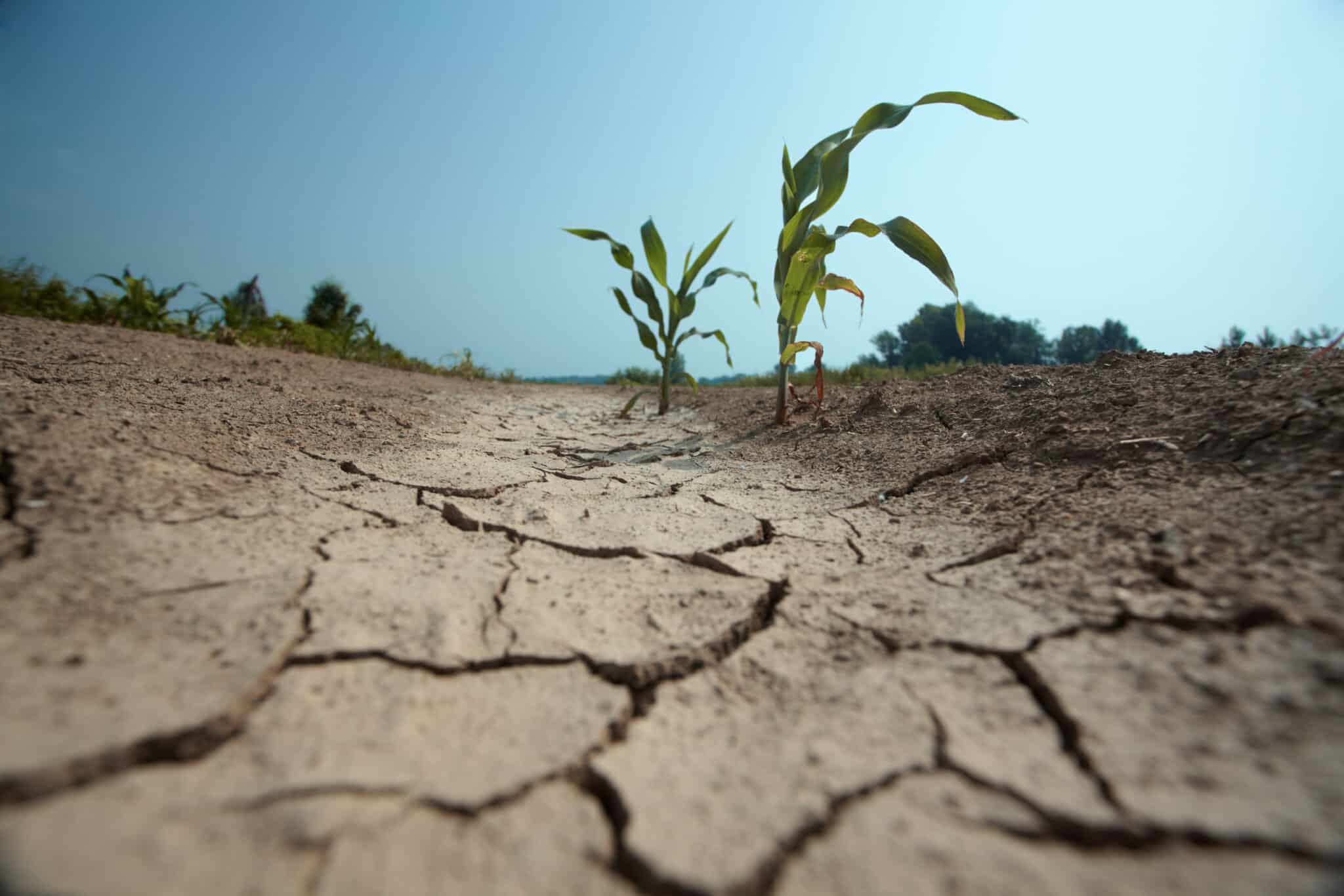
With accelerating global warming and climate change, drought has emerged as a major threat to agriculture worldwide, severely affecting crop yields and food security. To cope with water scarcity, plants have developed various survival strategies.
One key mechanism is stomatal closure — the closing of tiny pores on leaf surfaces called stomata, which regulate gas exchange and water loss. This process is controlled by the plant hormone abscisic acid (ABA), a central player in the plant’s internal stress response system.
Although ABA’s role in drought tolerance is well known, recent research has uncovered an unexpected contributor: myosin XI, a motor protein previously recognized mainly for transporting cellular cargo. To investigate this novel function, a research team led by Professor Motoki Tominaga at Waseda University, Japan, conducted a study to determine whether myosin XI actively participates in the plant’s drought response and to reveal the underlying mechanisms involved, according to a press release.
“Although previous studies have suggested a potential involvement of myosin XI in drought stress responses, the underlying mechanisms have remained unclear,” shares Tominaga. The findings of this research were published in Volume 44 of Plant Cell Reports on June 19, 2025. The study was co-authored by Graduate Student Haiyang Liu, also from Waseda University.
Researchers used Arabidopsis thaliana as a model to explore the role of myosin XI in drought response. They studied genetically engineered plants missing one, two (2ko), or all three (3ko) major myosin XI genes and compared them with wild-type plants through a series of tests. These included drought survival assays, measurements of water loss, analysis of stomatal aperture, and evaluation of sensitivity to abscisic acid (ABA). Additionally, the team assessed reactive oxygen species (ROS) production, visualized microtubule dynamics with fluorescent markers, and tracked expression levels of ABA-responsive genes using qRT-PCR. This comprehensive approach enabled them to determine how myosin XI contributes to drought tolerance and ABA signaling.
The results were striking. Mutants lacking myosin XI — particularly the 2ko and 3ko lines — lost water at a faster rate, showed impaired stomatal closure, and had significantly lower survival under drought conditions. These plants were also less sensitive to ABA, exhibiting higher germination rates and reduced root growth inhibition when exposed to the hormone. At the cellular level, the mutants displayed reduced ROS production and disrupted microtubule remodeling, both critical processes for ABA-induced stomatal closure. Furthermore, the expression of key stress-related genes was diminished, indicating that myosin XI plays a regulatory role in ABA signaling pathways.
These findings demonstrate that myosin XI is much more than a transport protein. It actively supports plant drought defense by coordinating ROS signaling, microtubule remodeling, and gene activation in guard cells, enabling more effective stomatal closure and water conservation.
“It was found that in multiple mutants of plant myosin XI, the rate of water loss during drought is four times faster than in the wild type,” notes Tominaga. “This finding offers a new perspective on how plants adapt to environmental changes.”
This study marks several important breakthroughs and opens new avenues for research. It uncovers a previously unknown function of myosin XI in abiotic stress responses, shedding light on how intracellular transport mechanisms contribute to environmental adaptation. Moreover, it highlights a promising molecular target for improving drought resistance in crops.
“This discovery is expected to advance fundamental research on how plants respond to stress and contribute to the development of technologies that improve water-use efficiency in crops grown in drought-prone regions,” shares Tominaga. “We aim to further advance our research so that this knowledge can be applied to agricultural technologies that support farming in the face of climate change,” he adds.
This study reveals myosin XI as a vital component of the plant drought response, connecting cellular transport systems with hormone-driven signaling. As climate challenges intensify, discoveries like this pave the way for breeding more resilient, water-efficient crops adapted to a changing environment.