
As the turfgrass industry faces mounting pressure to adapt to climate change, this year’s International Turfgrass Research Conference (ITRC) in Karuizawa, Japan, offered a timely and deeply insightful forum. With hundreds of presentations across five packed days, the 2025 conference spotlighted the convergence of innovation, sustainability, and climate resilience across the turf sector.
Autonomy and Precision
A defining theme of ITRC 2025 was the rapid rise of robotic and autonomous technologies in turf management. Presenters demonstrated how autonomous mowing, targeted spraying, and digital sensing are driving both efficiency and environmental gains. Robotics is helping reduce emissions, labor inputs, and the frequency of mowing – while advancing precision practices that support the turf industry’s alignment with global sustainability goals.
From real-time pest detection systems to ultra-high-precision chemical applications, the sessions revealed how emerging technology can reduce pesticide reliance and fine-tune nutrient inputs, helping turf managers meet both regulatory demands and ecological challenges.
Disease Under a Changing Climate
Climate change continues to alter disease dynamics, and turfgrass pathologists presented research pointing to increased severity and persistence of diseases like Dollar spot, Pink snow mold, and Spring dead spot. A special focus was placed on the development of resistant cultivars, the refinement of predictive models, and non-chemical solutions such as UV-C radiation treatments, biological agents, and smart fungicide scheduling.
Integrated pest management (IPM) and fungicide stewardship were core to discussions -— especially relevant in the European context where chemical restrictions are tightening and resistance risk is growing.
Turf as a Climate Tool
A full track on soil and water management underscored how critical turfgrass systems are in mitigating climate impacts. Studies presented covered drought resistance, evapotranspiration modeling, improved irrigation practices, and water-efficient cultivar development. Notably, research showed that even small adjustments to rootzone construction and irrigation strategy can significantly affect turf performance under water-limited conditions.
Equally important was the growing body of research on turf’s role in carbon sequestration. Golf courses and urban greenspaces were evaluated not just for playability, but also for their capacity to store carbon, regulate soil temperature, and enhance microbial diversity — critical functions in a warming world.
Genetics and the Path Forward
Breeding programs were another highlight, with several talks focusing on drought resistance, salinity tolerance, and stress-resilient cultivar traits. Advances in molecular tools and digital phenotyping are accelerating progress — offering promises for seed companies and managers seeking climate-adapted turf solutions.
Observing Turf in its Native Habitat
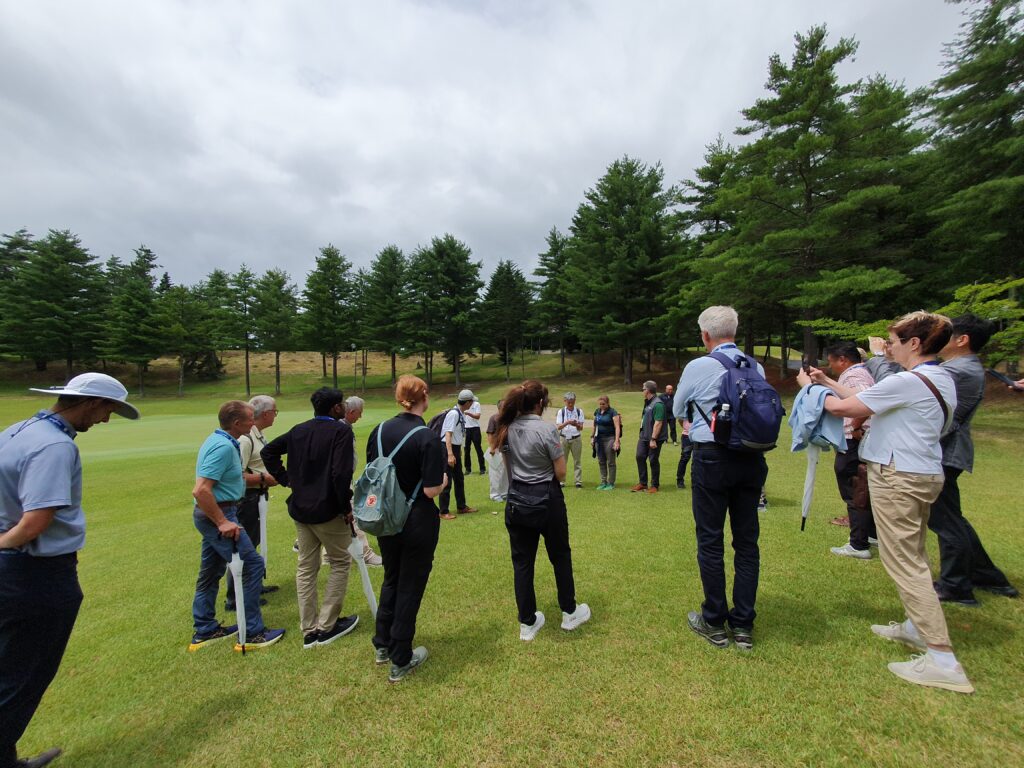
The field tours offered a rare chance to see Zoysia and cool season blends in native settings. From iconic Olympic venues to serene mountain golf courses, the diversity of grass species and management strategies was striking. The recurring challenge of Poa annua underscored the balance between aesthetics, performance, and ecological pressures.