
In all history of mankind, crop yields and turf performance have never been as high as during the past 20 years. This performance level, completely unimaginable a hundred years ago, has been driven by extremely efficient plant breeding. For some traits and some species, we are likely already past the limits of what genetics can do under optimal conditions. Is there still a need for breeding forage and turf?
Before we answer that question, let’s just admire the yield gains obtained during the past century in major crops: Wheat from 1.5 to 7.5 ton/ha; maize from 1.5 to 9.0 ton/ha; perennial ryegrass forage from 13.5 to 16.0 ton/ha. All-in-all a tremendous effort. However, this accomplishment was only possible due to intensive pest control and fertilizer applications. Since 2020, most of the yield gain curves in major crops have broken and significant declines are evident. Whether the same holds true for forage- and turf grasses remains to be seen.
But something has changed! Growth conditions are no longer what they were 10 years ago: Both forage and turf are now subject to very firm pesticide- and fertilization constraints and new varieties not only need to deliver the same performance for less; they must also take care of their own protection. Add to these new requests of being more robust and capable of reducing climate effects. Nothing is for free, and when breeding is directing its efforts towards more disease resistance, other traits will gain less traction. Is that bad? No, it just represents a much-needed adaptation to more sustainable, future-proof solutions. So, instead of looking at breeding gains per se, perhaps it is time to look for gains relative to input.
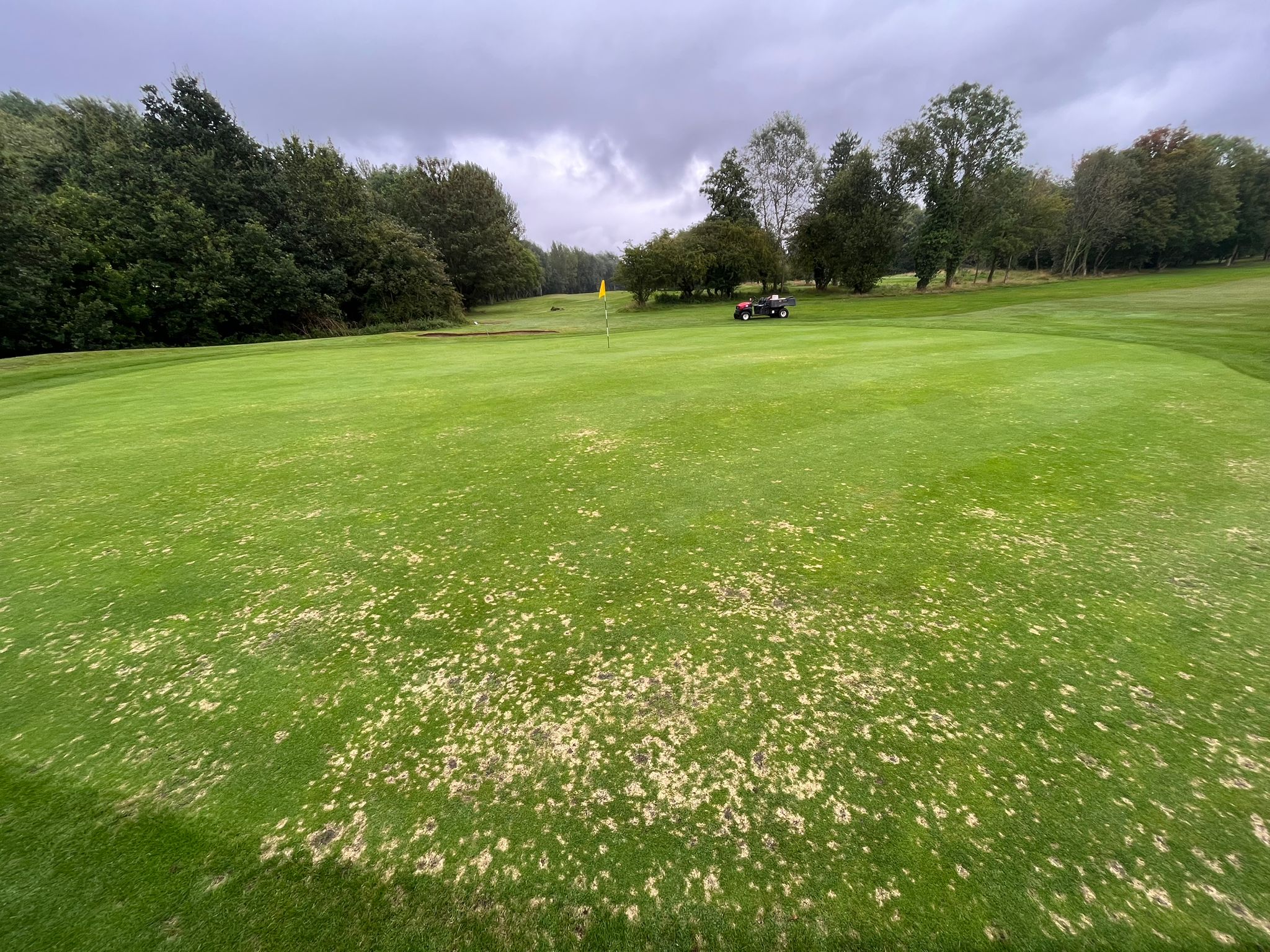
At DLF, this way of regarding variety performance, has already for several years changed breeding perception and targets. Fortuned by a global screening setup, it has been possible to develop new turf varieties fast, which show increased resistance under different attacks. When asked, several professional turf managers today prefer disease resistance over turf quality. It is our hope that the European official variety testing system soon will adapt to these trends and change its reward principles accordingly.
Both for forage and turf, robustness towards climate extremes will be paramount. But breeding takes time, and we now struggle to compete with the pace by which these changes occur. One of our prime tools in this regard is Genomic Selection (GS), which is used both to predict performance under various conditions and to select lines generating less methane during feeding of ruminant’s.
Another is New Genomic Techniques (NGT), which holds the capacity to alter single genes into more climate-friendly traits. Used correctly and in combination with shortened life cycles these tools will reduce breeding time with up to 50%. This year, DLF has launched no less than 12 new forage- and turf varieties. They represent the tip of our efforts and in comparison, with input needs, they are all outstanding. Some things have changed – our plant breeding has changed; and with less input, it is more needed than ever!