Legumes, grown for grain and forage, are vital to agriculture, providing essential proteins for humans and animals while improving the environment through nitrogen fixation. Despite this potential, European legume cultivation has remained limited due to a lack of high-yielding, resilient varieties, resulting in heavy imports of legume grains and nitrogen fertilizers. The BELIS project (Breeding European Legumes for Increased Sustainability), launched in October 2023 under the EU Horizon Europe program, aims to bridge this gap by leveraging advanced breeding methods and fostering collaboration between research and industry stakeholders.
With a consortium of 34 partners across 18 countries—including research institutes, breeders, seed companies, registration offices, and advisory services—BELIS focuses on seven forage crops (lucerne, red, white, and annual clovers, sainfoin, birdsfoot trefoil, and vetches) and seven grain crops (pea, faba bean, soybean, white lupin, lentil, chickpea, and common bean), representing a major portion of Europe’s cultivated legume diversity, according to a press release.
Innovative Research and Breeding Techniques
BELIS integrates cutting-edge technologies to accelerate genetic progress and develop new legume varieties. Early results include KASP genotyping outcomes in chickpea, new protocols for evaluating disease, pest, and quality traits, and drone-based phenotyping of forage legumes. A multi-species SNP array is under development to enable widespread application in research and breeding. Advanced phenotyping and genotyping methods are being expanded to cover more crops, stress conditions (drought, waterlogging, pests, diseases), and quality traits relevant to nutrition and industrial processing. These innovations aim to make germplasm screening, characterization, and breeding programs faster and more precise.
Improving Variety Testing and Registration
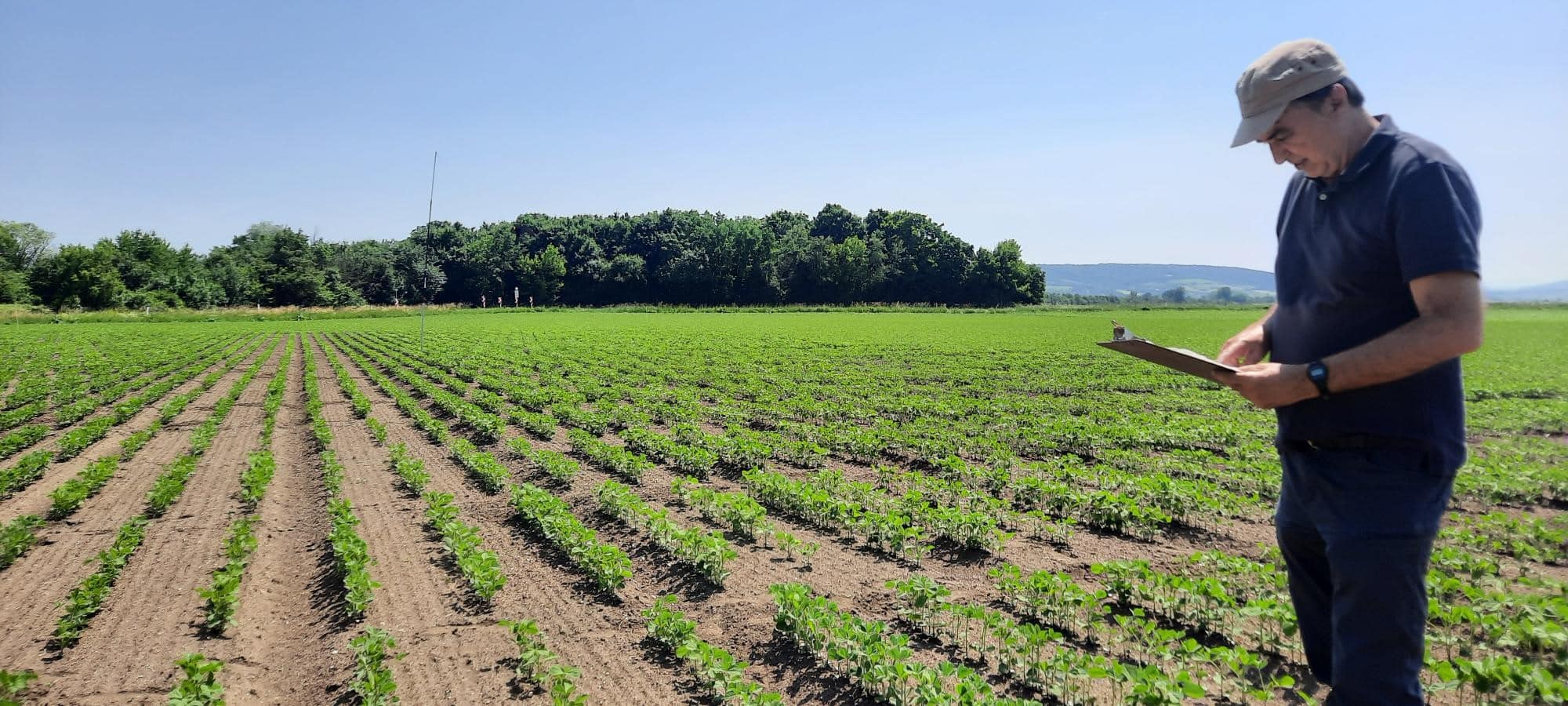
BELIS also focuses on translating genetic advances into practical benefits for farmers. Innovations in variety testing seek to enhance Value for Cultivation and Use (VCU) assessments, including multi-country trials. For example, lucerne VCU trials are currently running at eight locations in Serbia, Italy, and France. Modelling approaches are being used to predict forage yield potential of different lucerne varieties under current and future climates. The project also compiles registration and post-registration data to inform variety recommendations across Europe.
Fostering Collaboration and the BELIS Network
BELIS emphasizes cooperation across public and private breeders, researchers, extension services, registration offices, and the seed, food, and feed industries. The network facilitates business partnerships, technical training, and policy advocacy to support legume breeding. The second day of the BELIS meeting will allow Serbian stakeholders to engage in person with project advancements and trial visits, while international participants can join online. The sister project Legume Generation, funded under the same EU call, will also present key results, with regular exchanges organized between projects.
Farmers, researchers, and policymakers are invited to join the BELIS network, stay informed on progress, and help shape the future of legume breeding in Europe.
IFVCNS Contribution
The Institute of Field and Vegetable Crops (IFVCNS) in Serbia actively contributes to BELIS by developing protocols for abiotic stress, phenotypic and molecular breeding proofs of concept, improved VCU testing, and EU-level variety recommendations for various legume crops.
For more information, visit the BELIS website.
Project Features
BELIS – Breeding European Legumes for Increased Sustainability – Oct 2023 – Sept 2028
Coordination by INRAE – 34 partners : INRAE (FR), EV-ILVO (BE), CREA (IT), CSIC (ES), CPSBB (BG), IFAPA (ES), FH-SWF (DE), ICARDA (LBN), GEVES (FR), CIHEAM Zaragoza (ES), TI (FR), LBI (NL), CER (FR), R2N (FR), DLF (DK), AU (DK), NMBU (NO), IKBKS (RS), Agrovegetal (ES), LAMMC (LT), AO (FR), UNIZG FAZ (HR), UNL (PT), IFVCNS (RS), IPG-PAS (PL), Agritec (CZ), Sicasov (FR), UNIVPM (IT), KWS (DE), WBF-Agroscope (CH), ETHZ (CH), PGRO (UK)
European funding under the Horizon Europe programme: €7,077,914