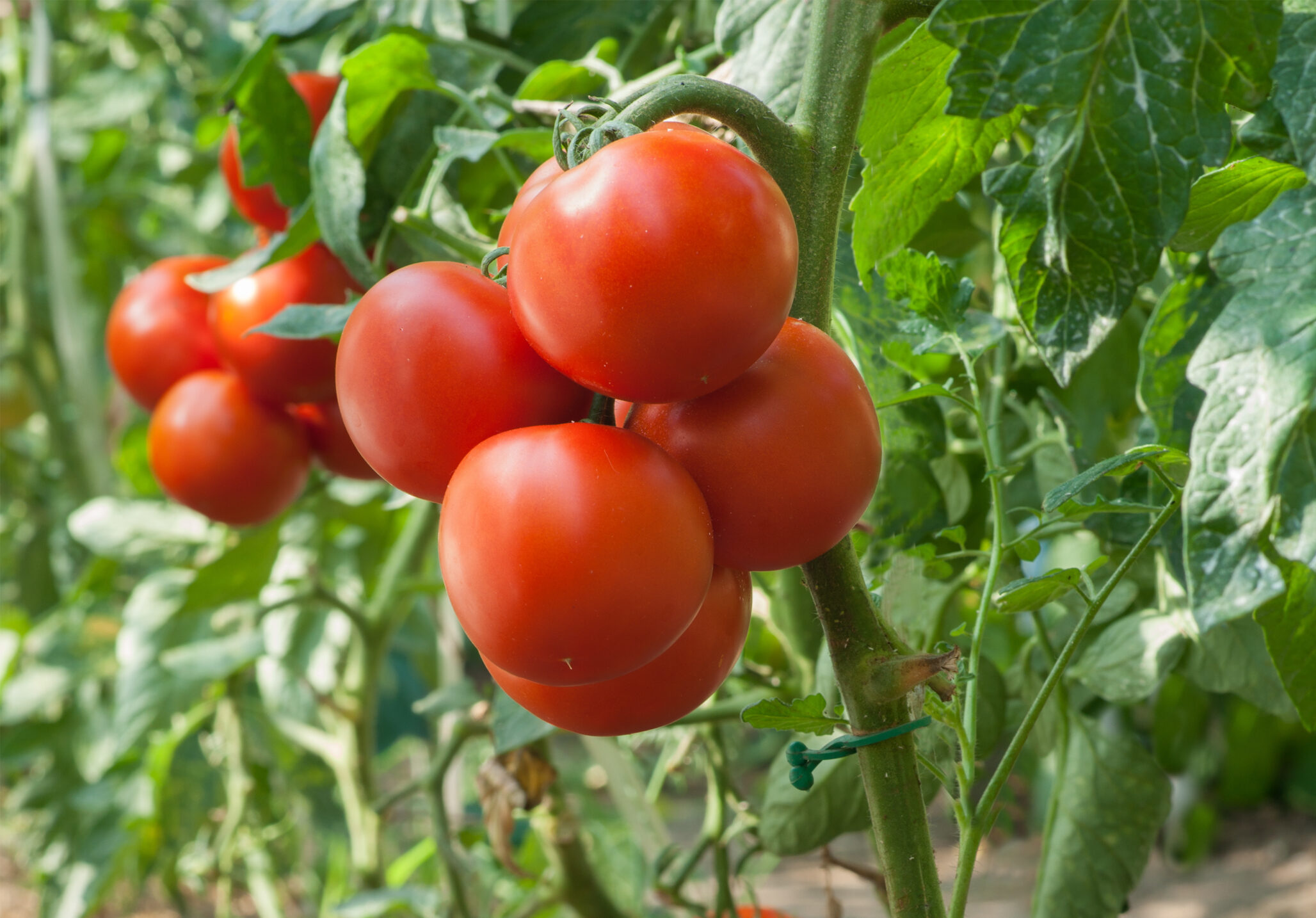
Tomatoes, a cornerstone of Chilean cuisine and a star of the Fiestas Patrias, are increasingly facing complex challenges. Prolonged drought, parasitic weeds, rising soil salinity, and growing consumer demand for healthier and more sustainable food threaten the continuity of this vital crop. In this context, agricultural biotechnology offers practical solutions, enabling the development of tomato varieties adapted to both environmental stresses and modern nutritional needs.
Worldwide, biotechnology has advanced tomatoes that not only withstand harsh conditions like water scarcity but also provide enhanced health benefits and new production opportunities. Scientific innovations are transforming the way this essential food is produced and consumed — from more nutritious varieties to solutions for urban and vertical farming.
Already, biotechnology has delivered tomatoes that are more resilient, nutritious, and consumer-friendly. In the United States, purple tomatoes rich in antioxidants have become a market success; in Japan, tomatoes designed to reduce risks of high blood pressure are available; and compact varieties for small-space and urban agriculture promise higher yields, according to a press release.
Global research has also produced drought-tolerant tomatoes that retain flavor and yield, varieties that resist rotting while maintaining taste for over a month, and vitamin D-enriched tomatoes capable of providing levels comparable to several salmon fillets, helping to combat nutritional deficiencies worldwide. In Chile, scientists have developed burgundy tomatoes with a unique antioxidant pigment, able to thrive even under challenging water conditions.
“We are seeing how science and biotechnology provide concrete solutions to agricultural, nutritional and health challenges,” Dr. Miguel Ángel Sánchez, doctor in Biological Sciences and executive director of ChileBio, said. “ A tomato that resists drought, that provides more antioxidants or even vitamin D is not only innovation: it is food security and more healthy options for consumers.”