Public or private? As it gears up to mark its 50th anniversary, SeCan thrives by bridging the two worlds.
A half-century ago, a group of public plant breeders and institutions came together to solve a problem: how to get Canadian genetics into farmers’ hands quickly and equitably. That collaboration became SeCan, which is getting ready to mark its 50th anniversary in 2026.
Since then, technologies have come and gone, markets have boomed and busted, and the politics of food have become inseparable from the politics of trade and national security. But through it all, SeCan has grown into a uniquely Canadian institution — part distributor, part funder, part bridge between public science and private enterprise.
“When SeCan was formed, it was by public breeding institutions, for public breeding institutions,” says Jeff Reid, SeCan’s longtime general manager. “Today, it’s by independent seed companies, for independent seed companies. That evolution has been key to our survival — and our strength.”
With nearly 600 members, SeCan isn’t just moving seed. It’s moving ideas, partnerships, and leverage. And as Agriculture and Agri-Food Canada (AAFC) plans to pare back its role in developing field-ready cultivars, SeCan’s function has never been more urgent.
“What could be more critical to national security than your food supply?” Reid asks. “That all comes back to controlling your own genetics.”
From Distribution to Development
In 2013, SeCan changed its mandate — from simply distributing genetics to actively facilitating their development, Reid says. “Since then, we’ve doubled our annual R&D spend. And we’ve become more hands-on: helping with winter multiplications, running trials, and in some cases, acting as an industry spokesperson for public breeding at a time when governments need to hear that message most.”
That expanded mandate matters, because public breeding is under pressure. AAFC has signaled its intent to exit variety finishing, leaving the system reliant on partners like SeCan to keep the pipeline flowing.
“We’ve become much more than a distributor,” Reid says. “We’re a partner in making sure Canadian germplasm remains Canadian.”
Supporting Innovation
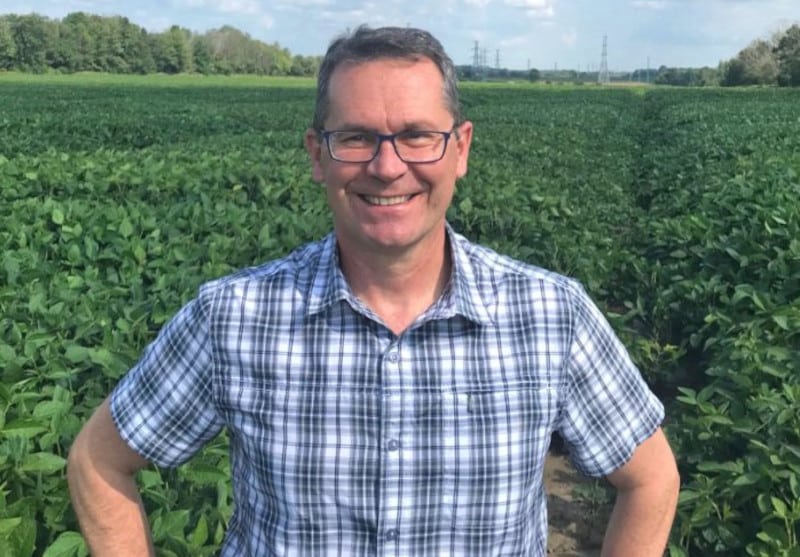
For Matt Hooyer, who in 2024 joined SeCan as its Eastern product development lead after a 13-year career at Syngenta, the contrast between private and public breeding couldn’t be clearer.
“It’s exciting to step into SeCan as it turns 50,” Hooyer says. “The resources are tremendous — the breeders, the institutions, the network. What I love is the speed. If we hear something from a member company, we can act on that immediately. That agility just doesn’t exist the same way in a multinational.”
Private-sector breeding is powerful but often focused on different priorities, he explains.
“Private programs think in quarters and often lack the long term commitment required. At SeCan, the vision has been consistent — long term stable support of innovation. That’s what makes it unique.”
Watching Genetics Evolve
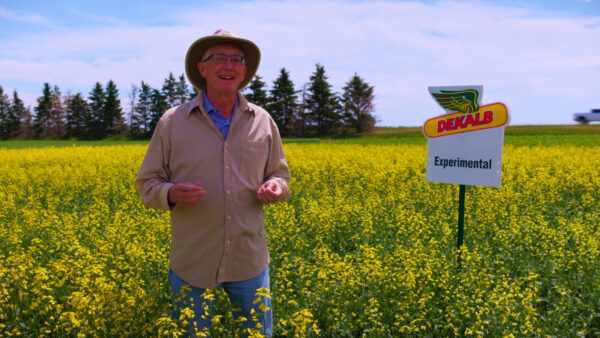
Few people have had a closer vantage point on SeCan’s evolution than its Western research and development lead Jim Downey, who joined the organization nearly three decades ago.
“When I started, AC Barrie wheat could grow up to my chest in wet spots,” he recalls. “Today’s wheats are a foot shorter, stand better, yield more, and carry much stronger disease packages. We’d never go back.”
Downey attributes that transformation to long-term investment — checkoffs, public funding, and breeder focus — and he sees the stakes clearly. “If you pull a major player out of wheat, barley, oats — crops almost every Prairie farm grows — you don’t just slow progress. You risk going backwards. Diseases evolve. Genetics have to keep pace.”
The Eastern Playbook: Premiums, Not Parity
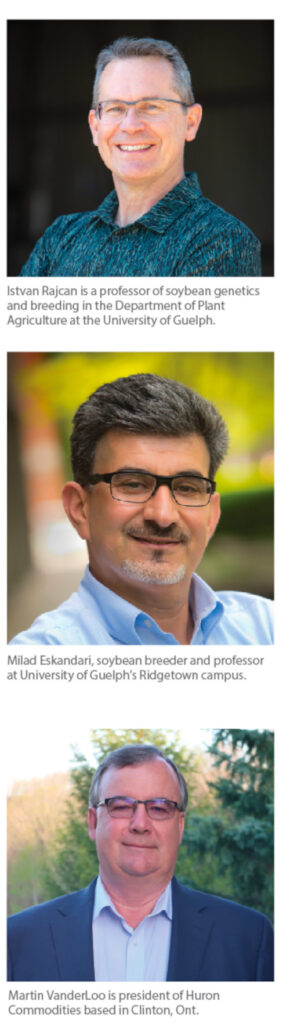
If Western Canada’s superpower is scale in cereals, Eastern Canada’s is precision in soy. Martin VanderLoo, president of Huron Commodities, has built a career on that distinction.
“Competing vessel-for-vessel on bulk soy is a tough game,” VanderLoo says. “The Mississippi to New Orleans is a logistics machine. Our answer in Ontario and Quebec has been to differentiate — deliver the protein, sucrose, and functionality the food market is paying premiums for.”
Japanese, European, and Southeast Asian buyers pay substantially more for Canadian beans that meet exacting specs: high protein, sucrose, precise 7S/11S ratios, and specialty traits like low lipoxygenase for cleaner flavour and trypsin-inhibitor nulls for better digestibility.
“Food companies now start at the genetics,” VanderLoo says. “They come with specs, and we take those needs to public programs with co-funding. That loop works. And the premiums shore up farm revenue when commodity prices are soft.”
The Long View
Few know SeCan’s importance better than Istvan Rajcan, soybean breeder at the University of Guelph.
“SeCan has been fantastic to work with,” Rajcan says. “For more than 27 years, they’ve supported our program — not just financially, but with ideas and feedback about what the seed industry needs.”
That feedback is essential because of the timelines. “Even with winter nurseries in Costa Rica saving us two years, it takes about eight years to finish a variety,” Rajcan explains. “Then you need another two or three years to bulk up seed before farmers ever see it. So really, you’re talking 10 or 11 years from cross to commercial adoption.”
A big myth, he says, is that private breeding is inherently faster. “Technology makes us more efficient — helping us avoid wasting resources on material that won’t work — but it doesn’t eliminate the need for multi-year field testing. Nothing replaces that.”
Rajcan says SeCan’s value lies in understanding that reality. “They know this is long-term work. They listen to what we can and can’t do in a timeframe, and we listen to them about what the market needs. That dialogue is what makes the partnership so strong.”
At the University of Guelph’s Ridgetown campus, soybean breeder and Rajcan protégé Milad Eskandari echoes that view — and pushes it further. Since taking over his soybean breeding program in 2013, SeCan has become his main sponsor.
“Working with SeCan has been an absolute game-changer,” Eskandari says. “It’s like having an ally who is as invested in the future of farming as I am.”
Eskandari’s team is now applying artificial intelligence and drone-based high-throughput phenotyping to predict yield and quality earlier in the breeding cycle.
“Breeding is always a gamble,” he says. “We start with 50,000 single plants and end up with a handful of advanced lines. Somewhere along the way, we’re bound to miss potential winners. Drone hyperspectral imaging and AI give us better indicators of yield and quality throughout the season. It’s about improving accuracy, not replacing field testing.”
SeCan’s backing has allowed him to experiment without fear. “As a breeder, I can’t be an expert in everything — AI, drones, statistics. What I can do is identify tools with potential and surround myself with bright graduate students. Having SeCan behind me makes that possible.”
Made in Canada, For Canada
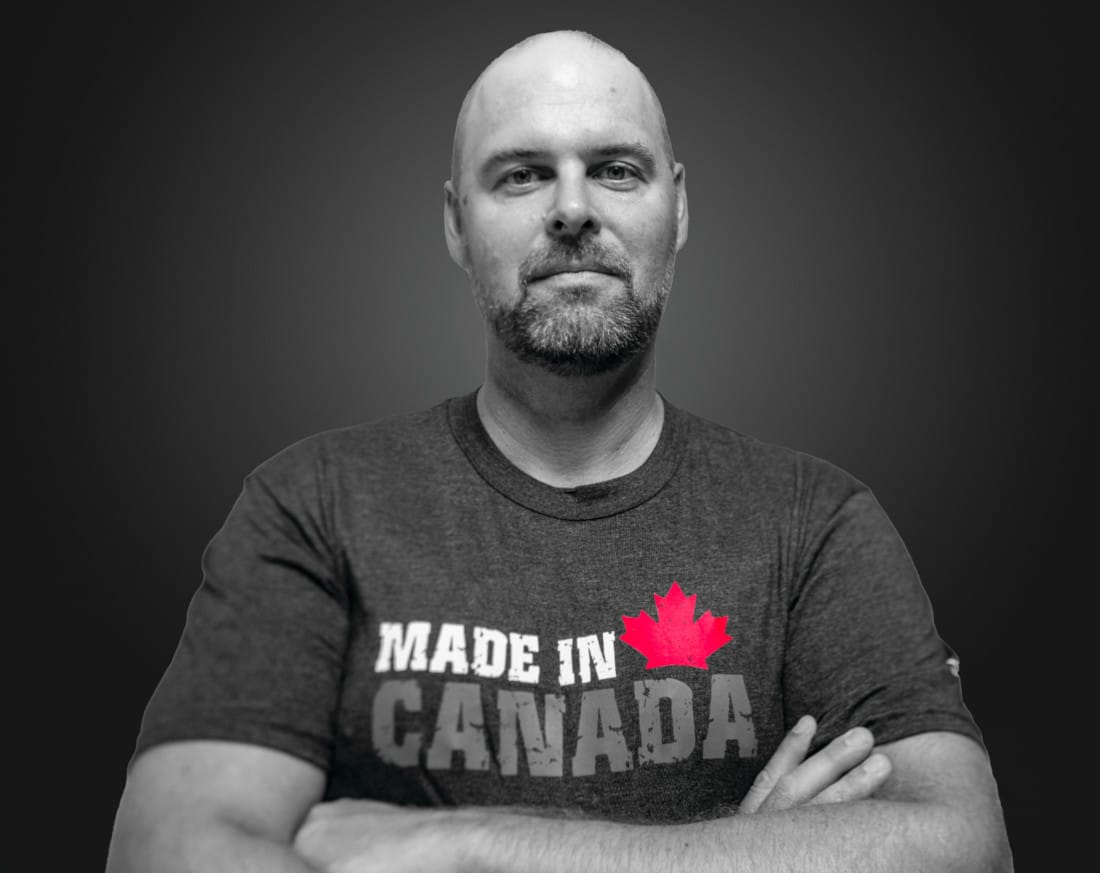
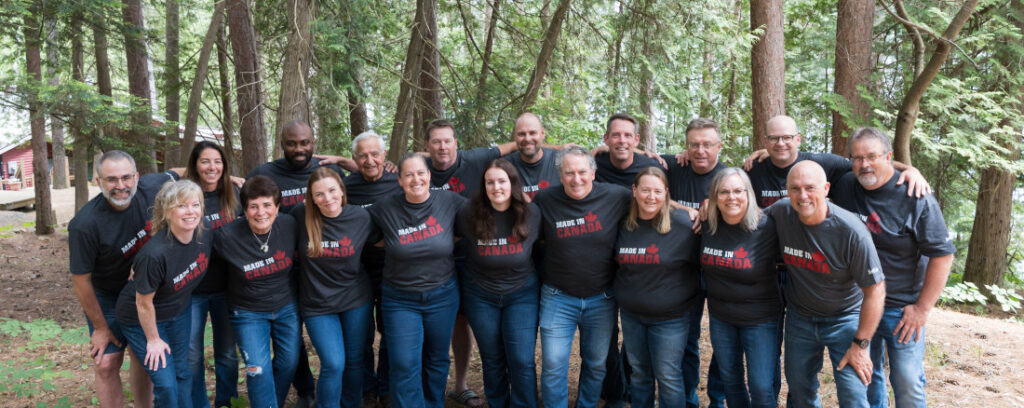
Across Reid, Hooyer, Downey, VanderLoo, Rajcan, and Eskandari, one phrase surfaces again and again: Made in Canada. It’s literally become a slogan for SeCan in recent months, emblazoned on its product guides, website, social media accounts, ballcaps and t-shirts.
“Traits like herbicide tolerance will always be global,” Reid says. “But the genetics that carry those traits — those need to be tailored to Canadian soils, Canadian climates, Canadian markets. That’s where we can compete.”
Hooyer agrees: “I’ve seen products that thrive in Canada but flop in the U.S. Our focus has to be on breeding here, for here. That’s how we keep independent seed businesses strong and our food system resilient.”
Downey puts it bluntly: “We talk about steel as critical to national security. But genetics? They’re the foundation of our food supply. Without control over that, everything else falls apart.”
The Next 50 Years
What does the next half-century look like?
Reid sees SeCan as the bridge that ensures Canada has both strong public programs and robust private partners. “We may need entirely new institutions that don’t exist yet — something lean, efficient, and inclusive — where government, industry, and producer groups all come together.”
Hooyer imagines deeper integration too — linking breeding with processing and value-added markets. “Instead of outsourcing, keep it local. Breeding, processing, innovation — it all strengthens Canadian businesses end-to-end.”
Downey’s advice stays pragmatic: think in realistic time increments, stack the traits, and don’t break what works.
For VanderLoo, the test will be whether Canada can keep building premiums into its crops. “Food companies are saying, ‘We need protein. We need flavour. We need function.’ Genetics is where it starts. SeCan helps make sure Canada can answer that call.”
Rajcan, ever the breeder, frames the work as a marathon: “It takes a decade to deliver a variety. But if SeCan keeps building bridges between breeders, seed companies, and farmers, Canada will still be leading 50 years from now.”
And Eskandari, already leaning into the future, puts it simply: “Breeding isn’t just about today’s cultivars. It’s about giving the next generation the tools and populations they’ll need to succeed. With SeCan, we can do that.”
By the Numbers: Why SeCan’s Future Looks Strong
500+ members nationwide
Independent seed businesses form the backbone of SeCan’s network, giving it unmatched reach across regions and crops.
Over $170 million in total returns to plant breeding
What started as a distribution mandate now fuels direct investment into breeding and variety development — nearly double compared to a decade ago.
50+ breeding partnerships
From AAFC and universities to independent programs, SeCan supports both public and private breeders, creating a uniquely balanced model.
Over 350 commercial varieties
Over five decades, SeCan has helped move thousands of cereal, soybean, and pulse varieties from labs to farm fields.
National trial footprint
Hands-on with field trials, winter multiplications, and grower feedback loops — speeding up how genetics get tested and delivered.
Made-in-Canada focus
Protecting Canadian germplasm and tailoring genetics to local soils and climates is central to SeCan’s strategy — and to food security.