For decades, the equation for progress in agriculture was simple: more yield meant more success. Tonnes per hectare, bushels per acre, kilograms per plant — these were the universal scorecards of breeding achievement. But as climate shocks, resource scarcity, and biodiversity decline reshape global farming, the equation has expanded. Yield still matters, but now so do the litres of water used to grow it, the emissions behind it, and the livelihoods sustained by it.
A Shared Platform for Collaboration
Across the seed sector, companies are rewriting the definition of productivity. Many of them collaborate through the Environmental and Social Responsibility Coordination Group (ESR-CG) of the International Seed Federation (ISF) — a platform that connects competitors around shared sustainability challenges and opportunities. By aligning their efforts, these companies aim to be stronger and more impactful together than they could be alone, ensuring that sustainability becomes a core part of seed innovation rather than an afterthought.
Seed World Europe spoke with five leaders — Cristiane Lourenço, director, global sustainability & smallholder farmers at Bayer; Eduard Fitó, president of Semillas Fitó; José Ré, sustainable ag science advisor for RiceTec; and Jason Allerding, global head, HSE, sustainability & risk management seeds for Syngenta — about how they are balancing yield goals with environmental responsibility, and how plant breeding can influence sustainability far beyond the field in Part 1 of our sustainability feature.
Beyond Yield – The New Priorities
When Lourenço describes Bayer’s global sustainability agenda, she begins not with genetics but with regeneration. “At Bayer, we believe we can leverage our global presence and leadership in agriculture to help drive a transition to regenerative agriculture. Our ambition is to scale regenerative agriculture on more than 400 million acres globally by the middle of the next decade” she says. That ambition has been translated into a concrete set of 2030 targets:
- 30% reduction in on-field greenhouse-gas emissions per unit of crop produced.
- 30% lower environmental impact from crop-protection products.
- Empower 100 million smallholder farmers in low- and middle-income countries.
- 25% improvement in water-use efficiency through the transformation of rice systems, particularly in Asia.
“Higher crop yields themselves present an environmental benefit by reducing the need for additional land cultivation,” Lourenço adds. “But the ultimate aim is not just to produce more; it’s to produce more with less and restore more.”
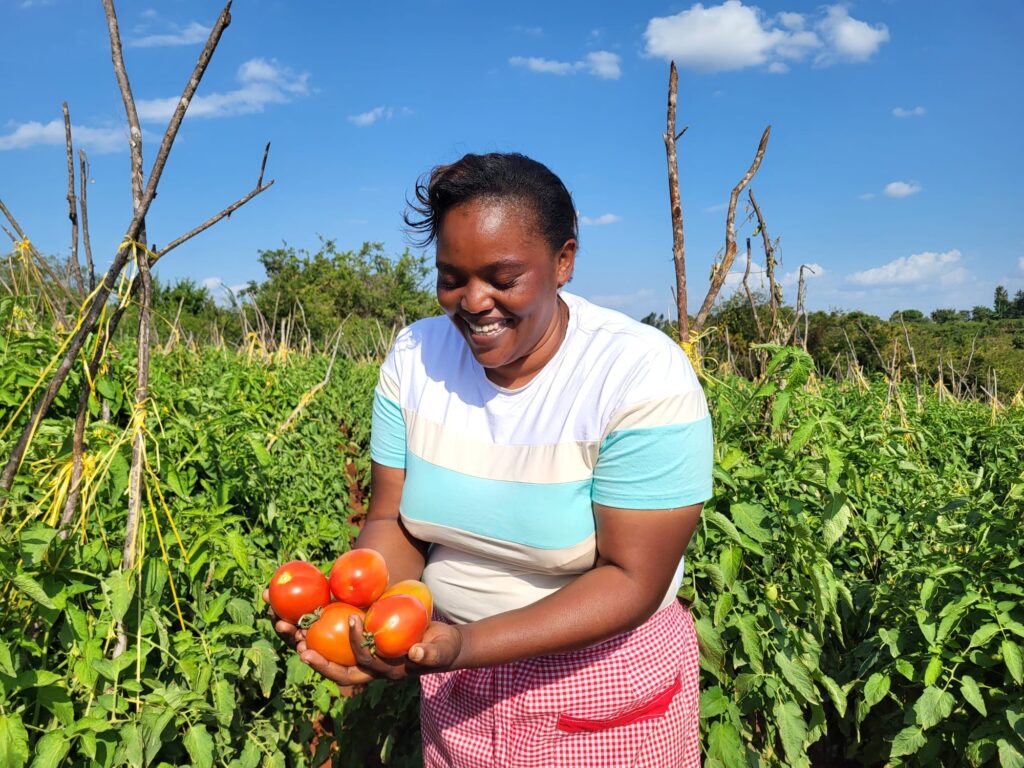
Bayer’s breeding and technology pipeline illustrates what that means in practice. The Ansal tomato, with extended shelf life, directly tackles food loss and waste; Direct Seeded Rice (DSR) slashes water use and methane emissions; CoverCress, a rotational oilseed for biofuel, brings soil benefits and does not compete with food crops. Together, these innovations show that yield and footprint reduction can coexist — and even reinforce each other.
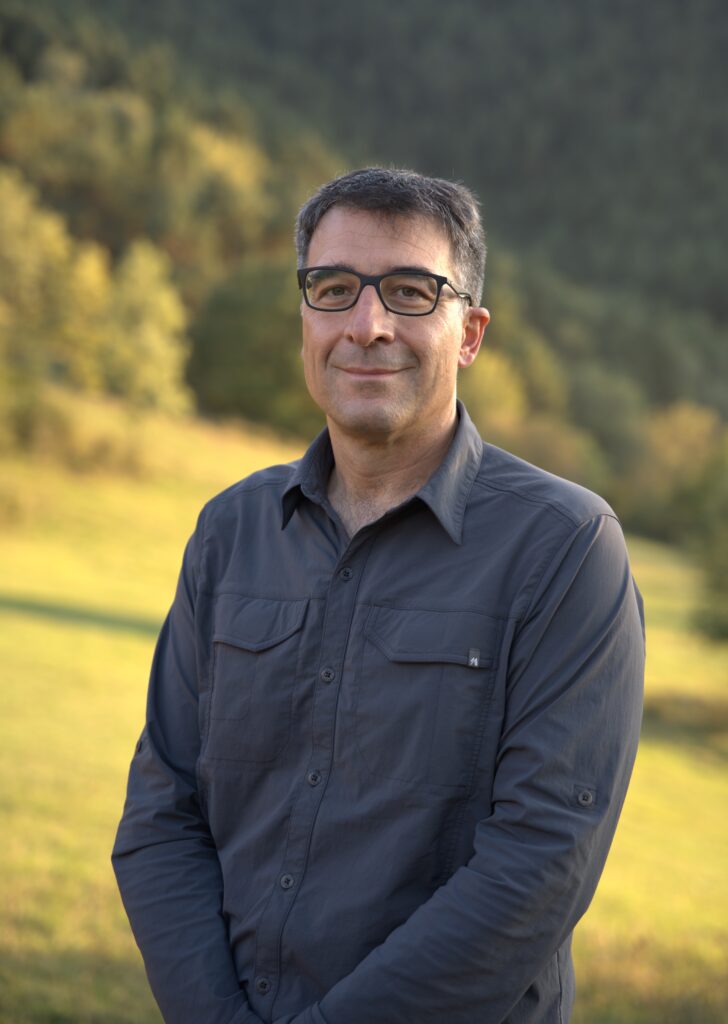
For Fitó, sustainability begins with a farmer’s balance sheet. “We’ve spent decades increasing yield,” he says. “But we also need to reduce the resources that go into that yield — water, fertilizers, pesticides.” He frames it as a ratio of income to resources. “You can improve that ratio by lowering the bottom or increasing the top. Not just more kilos per hectare, but more value per kilo and fewer inputs.”
Fitó’s team has been working for more than a decade to build differentiation into varieties, allowing farmers to earn more from the same harvest. “It’s about increasing the added value,” he explains. “The variety itself can become a lever for revenue as well as resource efficiency.”
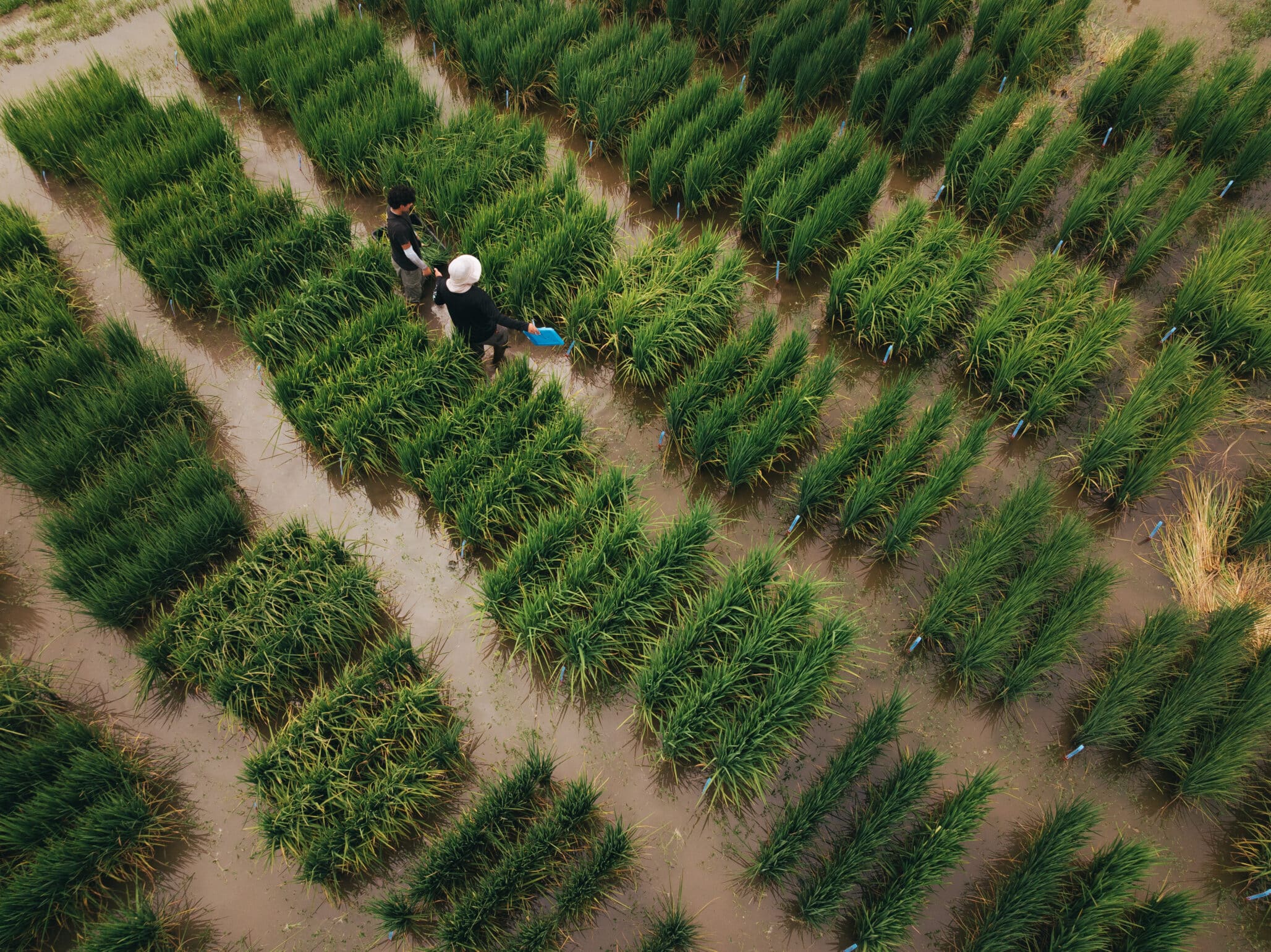
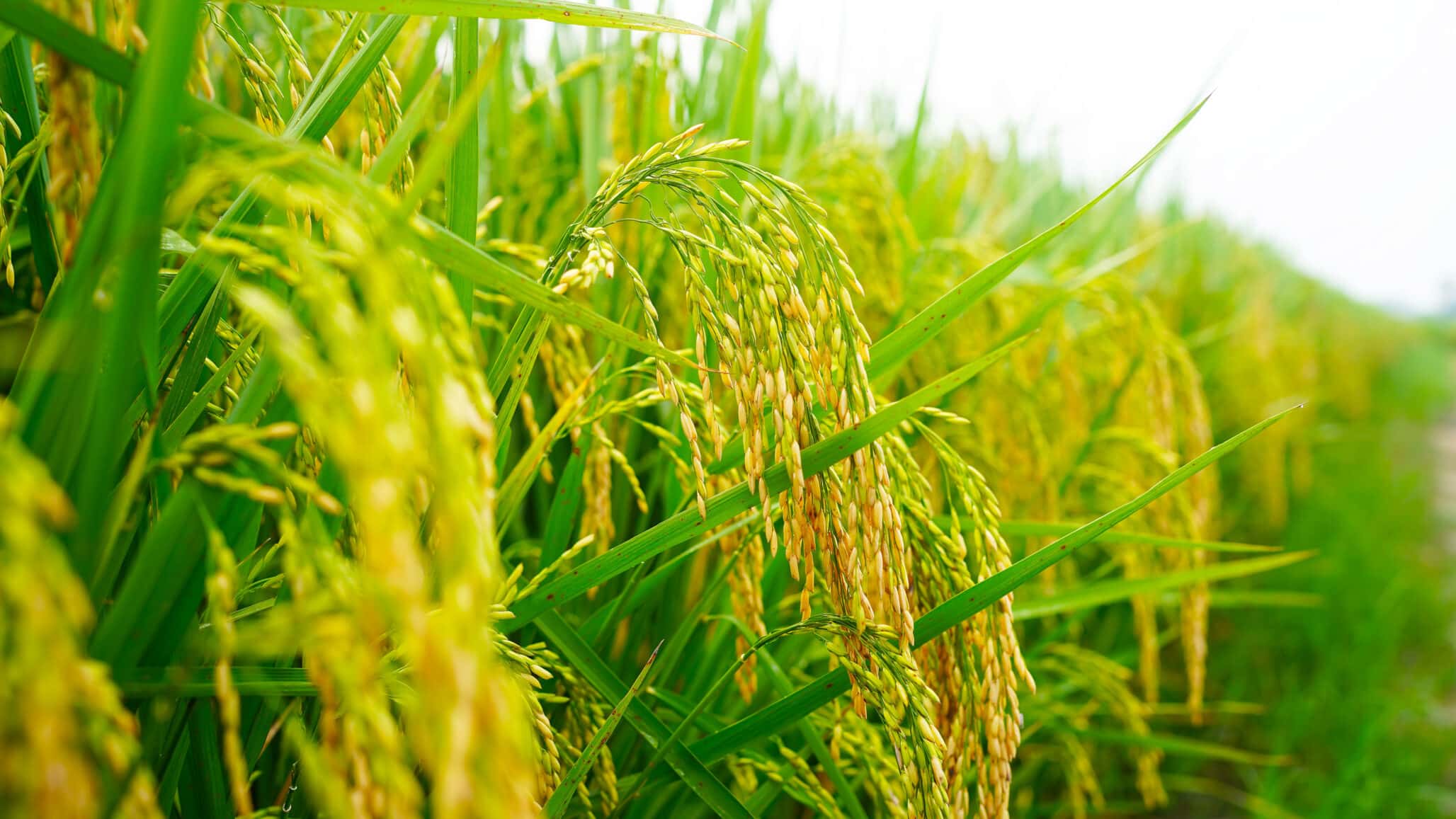
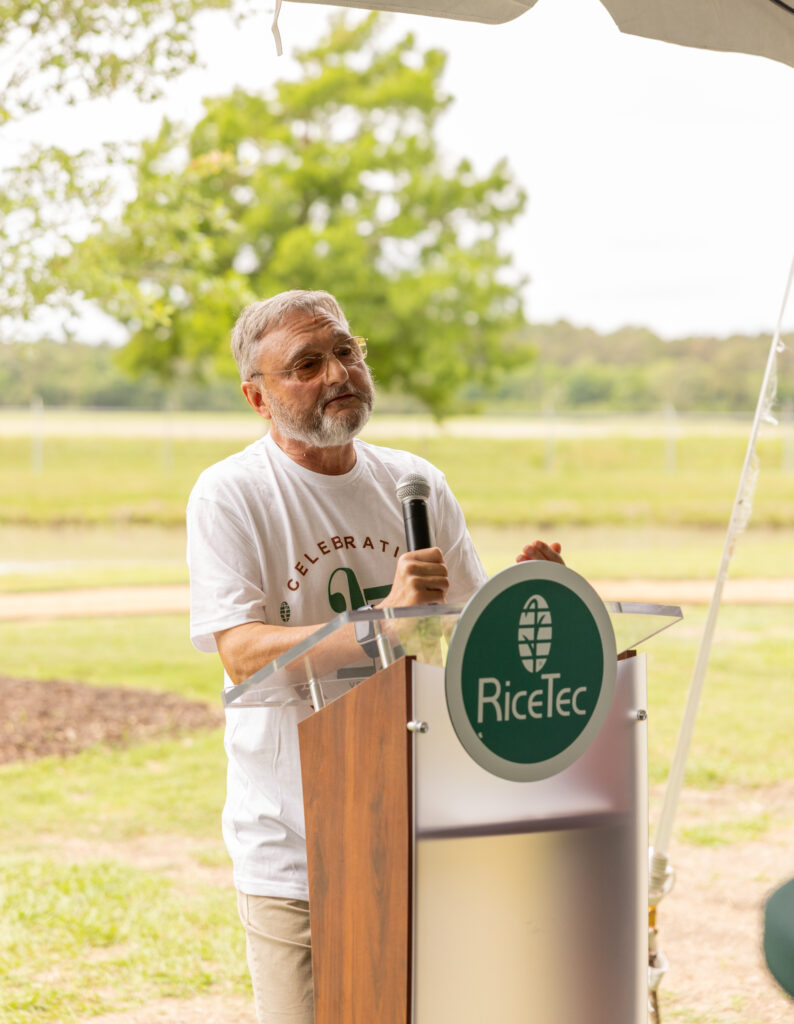
No crop illustrates the intertwining of yield and sustainability more vividly than rice. Ré recalls that when the company began breeding hybrid rice in the late 1980s, “nobody was talking about climate change.” Yet its early focus — developing varieties suited to direct seeding rather than transplanting — now aligns perfectly with climate goals.
“Those first hybrids were bred for lodging, disease, and herbicide tolerance,” says Ré. “What we created decades ago has become the foundation for more sustainable rice systems today.”
The result is SmartRice®, RiceTec’s flagship hybrid portfolio designed for DSR. These hybrids deliver above-average marketable yields using significantly less water, labour, and land than conventional transplanting. They maintain grain quality and milling performance and tolerate stress better under resource-efficient regimes. “Yield and sustainability are not competing goals,” Ré emphasizes. “They’re interconnected.”

RiceTec’s breeding and agronomic model is now helping farmers across Asia to manage water scarcity, labour costs, and methane emissions simultaneously. “We’re redefining what high-performance rice farming looks like,” Ré says. “It’s not just about tonnes per hectare; it’s about tonnes per unit of water and per unit of carbon.”
At Syngenta, the same logic drives programs beyond rice. “We’re balancing yield goals with environmental stewardship,” explains Allerding. “Through regenerative-agriculture commitments and innovations like X-TERRA® hybrid wheat, we’re supporting practices that improve soil health, reduce inputs, and enhance biodiversity.”
The company’s internal carbon-reduction and regenerative ag programs complement product development. “The goal,” says Allerding, “is for every new variety to deliver measurable yield gain and a smaller environmental footprint.”
From Volume to Value
A common refrain runs through all four perspectives: productivity is no longer a single metric. It is a balance sheet where biological performance, resource efficiency, and farmer income intersect.
Lourenço describes it as “raising productivity, restoring ecosystems.” Fitó, echoing the same concept from a smaller-scale vegetable and forage lens, talks about empowering growers to capture added value through differentiation. RiceTec’s hybrids translate the idea into tangible system efficiencies: less pumping, fewer field passes, smaller methane emissions. And Syngenta’s hybrid wheat and regenerative projects show that even staple cereals can be re-engineered for soil and ecosystem benefits.
The message is clear: in a warming, resource-tight world, yield is evolving from an endpoint into a means for sustainability.
The Feed Connection – How Crop Genetics Shape Livestock Sustainability
If sustainability in cropping systems has matured quickly, the next frontier is feed — and how the genetics of feed crops influence the sustainability of livestock production. Feed efficiency, nutrient density, and digestibility can significantly reduce emissions intensity per kilogram of meat or milk.
Syngenta has made this link explicit with its Enogen® corn, which contains an alpha-amylase enzyme that enhances starch conversion during digestion. “It improves feed efficiency and digestibility,” says Allerding. “That translates directly into better animal nutrition, reduced input costs, and a lower environmental impact — less land, less water, and fewer emissions per litre of milk or kilogram of beef.” The project sits squarely within Syngenta’s $2 billion global sustainability commitment to support regenerative practices and shrink agriculture’s carbon footprint.
Bayer also sees opportunities for cross-sector gains. “Our Preceon smart corn enhances silage quality,” notes Lourenço. “Better silage means better energy use by dairy cows, which can contribute to improved overall system efficiency.” Though Bayer’s primary breeding mission remains plant-focused, its indirect benefits ripple through the feed and livestock chain.
Fitó approaches the issue from another angle — that of economic and climatic realism. “Animals don’t pay more for flavour,” he jokes. “So, creating added value is harder in feed crops than in vegetables.” Yet even without a price premium, breeding can make a difference. “In Mediterranean conditions where we operate, reducing water consumption and improving heat tolerance are vital. If we can maintain yield under stress and raise protein content, that’s real progress for animal feed and for the environment.”
In practice, Semillas Fitó’s forage and corn programs now prioritise drought and heat resilience, as well as improved protein ratios — traits that reduce the resource intensity of feed production.
At RiceTec, Ré notes that rice by-products such as bran and broken grains play an increasing role in regional feed formulations. “The more resource-efficient the rice system, the more sustainable the feed ingredient becomes,” he says. By cutting methane and water use per kilogram of grain, DSR systems indirectly lower the footprint of every tonne of rice-based feed that enters livestock diets.
A Shared Challenge
The animal-feed discussion underscores how sustainability goals ripple across agricultural value chains. Better feed crops mean more efficient animals; more efficient animals mean lower emissions and land pressure. Each link strengthens the next.

For Allerding, the opportunity is technological as much as biological. “We now have the digital and analytical tools to connect genetic traits to environmental outcomes — for crops, feed, and livestock alike,” he says.
“The science is converging.”
Lourenço adds that “Bayer remains focused on creating resilient and high-yielding crops that can support overall agricultural sustainability, which in turn can positively influence animal production systems.”
The same systemic thinking drives RiceTec’s and Semillas Fitó’s strategies: integrating genetics, agronomy, and farmer profitability into one sustainability equation.
As Fitó puts it, “It’s all about the ratio — getting more out of less.”
The Road Ahead
Across all these conversations, one theme emerges: the boundaries of breeding are expanding. Seed companies are no longer judged only by the yield curves of their varieties but by how those curves intersect with carbon curves, water balances, and rural incomes.
RiceTec’s DSR model shows how decades-old breeding decisions can transform whole production systems today. Bayer’s regenerative roadmap demonstrates how a multinational can set measurable climate targets and link them to innovation pipelines. Syngenta’s Enogen® and hybrid wheat programmes prove that feed efficiency and biodiversity can be engineered alongside yield. And Semillas Fitó’s pragmatic, farmer-centric ratio reminds the industry that sustainability succeeds only when it makes economic sense on the ground.
Through ISF’s Environmental and Social Responsibility Coordination Group, these companies are amplifying their individual efforts through shared action and a unified voice, making their impact on sustainability broader and stronger.
The transition from “more yield” to “better yield” is well underway — and it starts, fittingly, with the seed.