Scientists from The James Hutton Institute and SRUC have produced a new report for the Scottish Government examining the potential for oilseed cover crops grown in Scotland to serve as feedstock for sustainable aviation fuel.
The evidence-based review, titled Oil-Based Cover Crops for Aviation Fuel in Scotland – Question and Answer Report, assesses the feasibility of cultivating oil-producing crops for biofuel production. The work follows a key recommendation from the recent Project Willow report — a joint UK and Scottish Government study exploring low-carbon industrial opportunities for Scotland’s Grangemouth site.
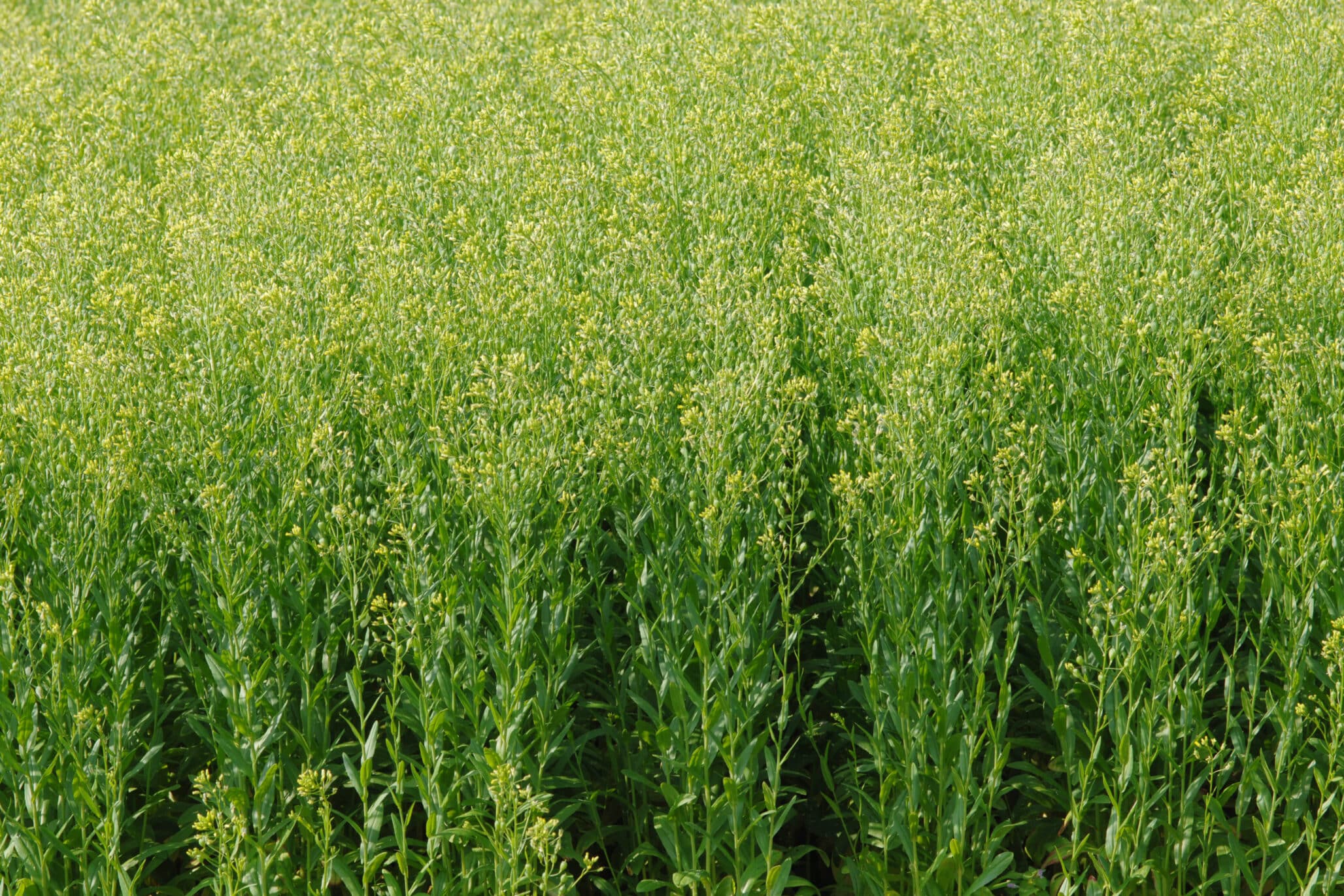
The report identifies camelina as the leading candidate crop. Already cultivated in several countries for aviation fuel production and in the UK for the health food market, camelina is considered a strong option due to the quality and suitability of its oil, according to a press release.
Next, researchers will launch field trials to study how camelina performs under Scottish growing conditions and how it might integrate into local crop rotations. The project will also assess potential environmental impacts — both positive and negative — to better understand camelina’s role in Scotland’s transition to sustainable agriculture and low-carbon fuel production.
“Camelina, particularly winter grown camelina, is a relatively novel crop for Scotland,” said Dr. Tracy Valentine, Project Lead and Senior Research Scientist. “By growing over winter, we hope to fit in with the main spring cropping season. Initially we will be looking at frost tolerance, growth rates, pests and fertiliser requirements, and ease of crop agronomy for farmers.
“This work will help to understand the potential for camelina to be grown as a biofuel crop in Scotland. Camelina is an oil seed plant, similar to oil seed rape and is part of the Brassicaceae (commonly known as mustard) plant family. It is widely grown across north America and Europe and is used for sustainable aviation fuel (SAF) production due to its high oil content and ultra-low carbon intensity compared to other alternative crops.”
One tonne of camelina seeds can yield roughly 200 to 230 litres of aviation fuel, though the exact output depends on the seed’s oil content, which typically ranges from 38% to 47%. For comparison, a light aircraft consumes an average of 22 to 45 litres of fuel per hour.
Beyond its potential as a renewable fuel source, camelina oil is also gaining popularity as a cooking oil. Naturally rich in vitamin E and omega fatty acids, it offers both nutritional benefits and a higher smoke point than many conventional oils, making it suitable for a range of culinary uses.
The James Hutton Institute provides world-leading research and innovation to address the challenges of climate change and biodiversity loss. Its expertise positions it as a key contributor to the Scottish Government’s goal of achieving net-zero greenhouse gas emissions by 2045.