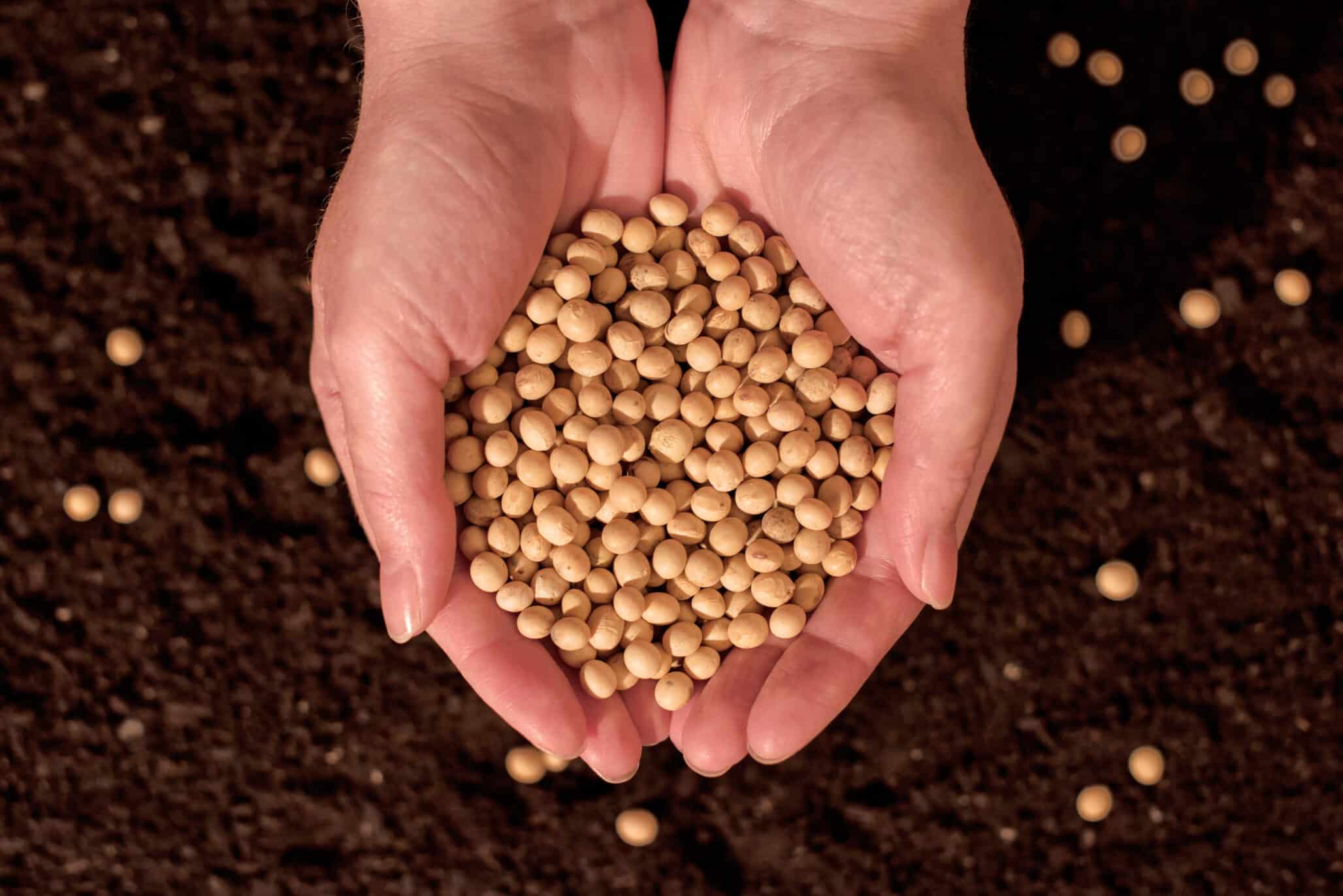
A research team led by Prof. Hou Xingliang from the South China Botanical Garden of the Chinese Academy of Sciences has identified a rare allele that regulates seed protein content and was lost during the domestication of soybeans. The discovery, made through genome-wide association studies (GWAS), was published in the Proceedings of the National Academy of Sciences on October 30.
The domestication of wild plants marked a turning point in human history, yet it often came at the cost of valuable genetic traits. Soybeans are a prime example: while wild soybeans (Glycine soja) typically contain 50–60% protein, modern cultivated varieties (Glycine max [L.] Merr.) contain only 30–40%. As soybeans are the world’s primary source of plant-based protein for both human consumption and livestock feed, enhancing seed protein content remains a central goal in agricultural breeding programs.
To better understand the genetic factors underlying high protein levels in wild soybeans, the researchers conducted GWAS across a diverse natural population. Their analysis identified a rare natural allele of Protein Contributor 08 (PC08) in wild soybeans that boosts seed protein accumulation but was lost during domestication, according to a press release.
Functional analyses revealed that this variant, known as PC08Ins, contains a short insertion in the gene’s promoter region, which enhances its expression. The increased expression raises levels of abscisic acid (ABA) in developing seeds, promoting the accumulation of storage proteins.
Population genetics analysis confirmed that the high-protein PC08Ins haplotype is unique to wild soybeans and absent in cultivated varieties. To test its potential, the team introduced PC08Ins into a commercial soybean cultivar, Hei Nong 35. The resulting backcrossed plants showed a significant increase in seed protein content, demonstrating that reintroducing this lost allele could be a powerful tool for future molecular breeding to improve soybean nutritional quality.