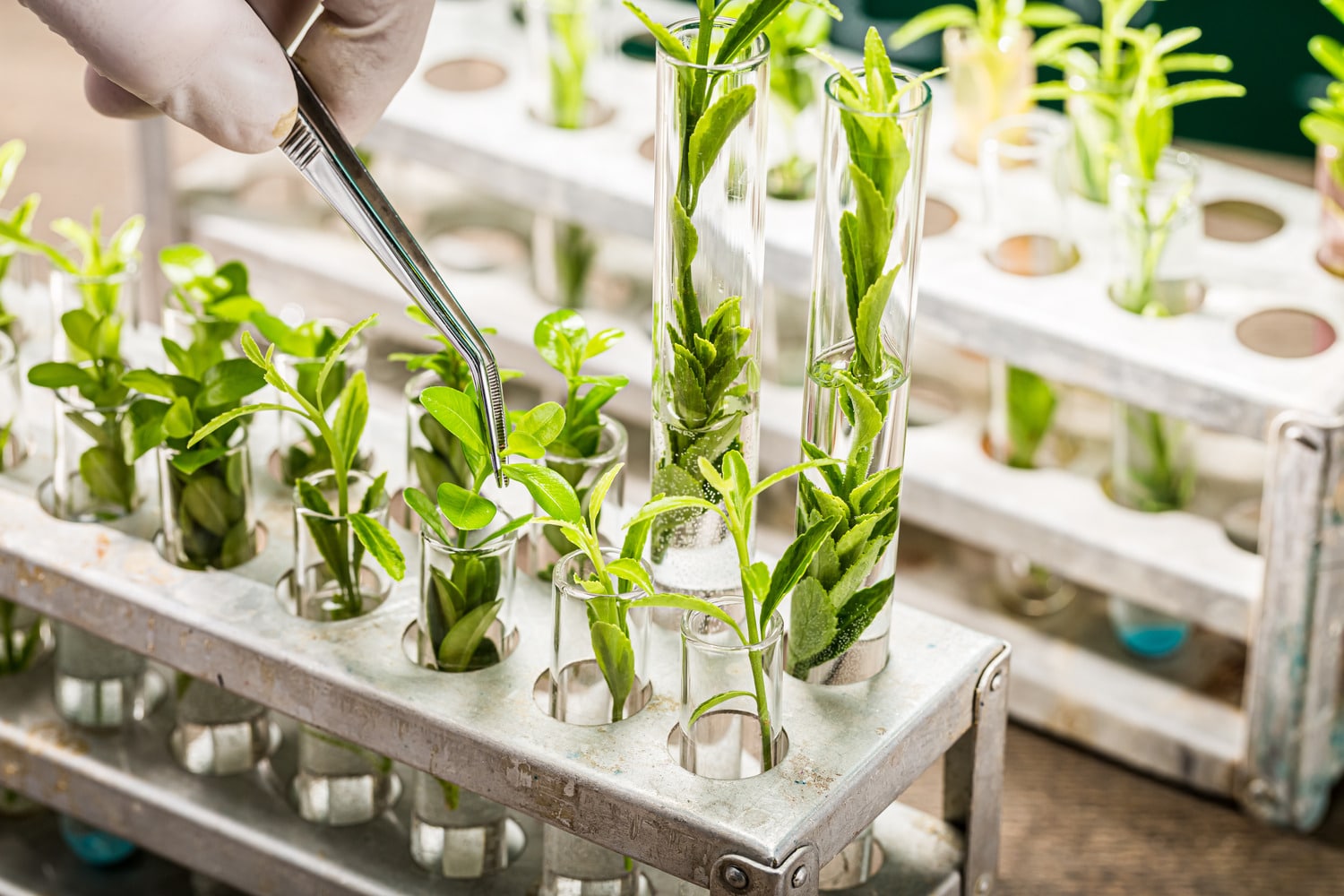
The UK’s Precision Breeding Act has officially come into force, marking a watershed moment for British agriculture and crop science. The new law establishes a separate, science-based regulatory pathway for gene-edited and other precision-bred plants, distinguishing them from GMOs and opening the door to faster development of improved crop varieties.
Research institutions and breeders echoed this enthusiasm. NIAB called the implementation a “historic milestone,” with CEO Professor Mario Caccamo highlighting innovations already in the pipeline — from disease-resistant beets and potatoes to climate-resilient tomatoes, non-browning bananas and methane-reducing barley. : https://www.niab.com/news-views/news/landmark-moment-uk-crop-science-precision-breeding-act-takes-effect
Rothamsted Research, which conducted the UK’s first gene-edited field trials, similarly welcomed the simplified regulatory system. Senior scientists described the day as “hugely important,” enabling decades of research to translate more quickly into real-world benefits for farmers and consumers. https://www.rothamsted.ac.uk/news/precision-breeding-act-marks-major-policy-shift-uk-agriculture-and-consumers
While some caution that public engagement and strong safeguards remain essential — particularly for future animal provisions — the broad consensus is that the Act ushers in a new era of innovation-driven, sustainable farming in the UK.
Here’s the Act: https://www.legislation.gov.uk/ukpga/2023/6/contents/enacted , and here are the Regulations:https://www.legislation.gov.uk/uksi/2025/581/contents/made .