
After more than three decades studying soil health and microbial ecology, one truth has become unmistakable: nature never works alone. Microbes succeed through partnerships — cooperating, communicating, competing, and adapting in extraordinarily complex ways. And the breakthroughs that will define the future of agricultural biologicals depend on embracing that same principle of collaboration, both in the soil microbiome and across the agriculture industry.
Yet today, we often treat biologicals and chemistry as separate programs — coexisting, but rarely intentionally working together. This mindset is no longer aspirational enough. The next frontier in crop productivity will come from truly integrated systems, where high-performing biologicals, proven chemistries, and aligned teams work in concert rather than in parallel.
In healthy soils, thousands of distinct microbes form networks that unlock nutrients, suppress disease, and build resilience. They’re not solo performers — they’re a dynamic ecosystem. Some cooperate, enhancing each other’s ability to colonize roots or deliver plant benefits. Others compete fiercely, deploying chemical defenses or outcompeting neighbors for resources. These competitive interactions can undermine the performance of microbial inoculants if we don’t account for them, while the right beneficial partnerships can be powerful multipliers.
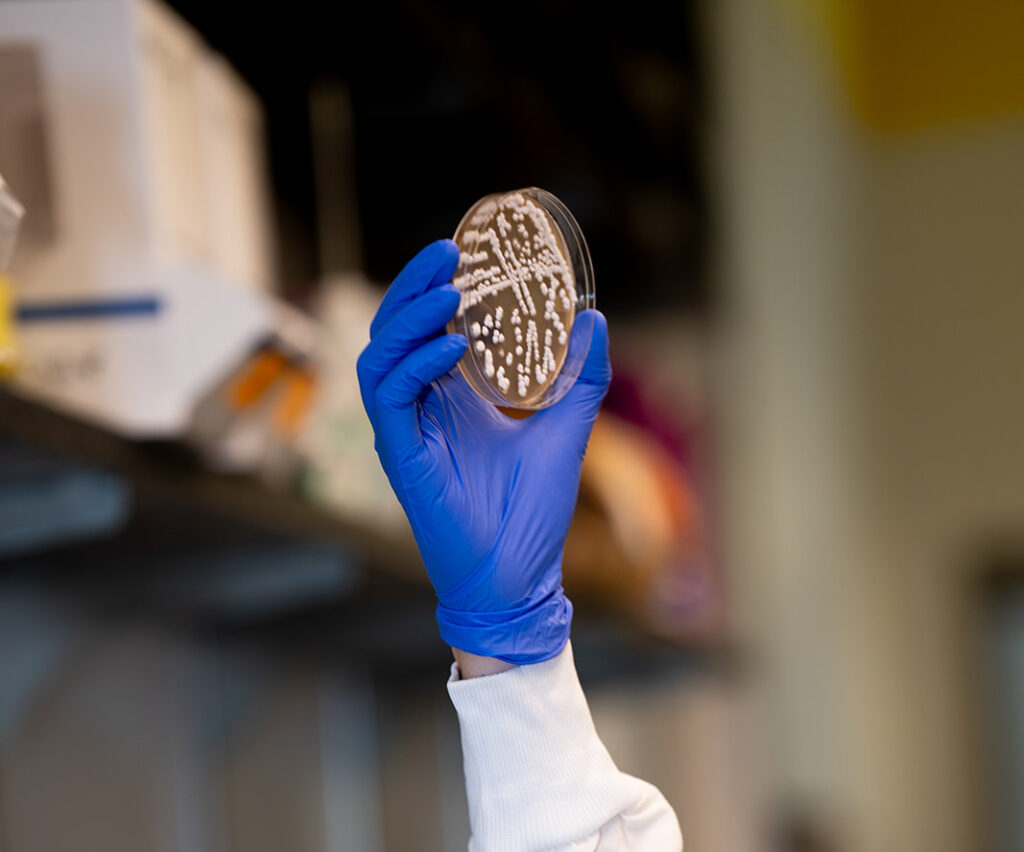
At Jord BioScience, this biological reality shapes everything we do. Our bio-prospecting strategy — sourcing microbes and microbial combinations from diverse, stress-adapted and high-performing environments worldwide—is designed to capture not just individual microbial capabilities but also the beneficial interactions shaped by evolution. By curating and evaluating thousands of strains through our proprietary screening process, we identify microbial combinations that work together — and work with chemistry — to deliver measurable, field-proven performance.
Our data consistently show what nature has demonstrated for millennia: when chemistry and biology are intentionally paired, they can outperform either alone. Collaboration isn’t just a philosophy — it’s a performance advantage.
Science has taught me that the same principle applies to people. Breakthroughs happen when disciplines connect, when knowledge is shared openly, and when diverse expertise comes together around a common goal. I saw this reflected at the World Food Prize Foundation’s celebration of the year’s Top 39 Agrifood Pioneers — an honor I’m humbled to share with collaborators across the globe working to make agriculture more resilient, productive, and sustainable.
I’m energized to continue these conversations with industry partners at the upcoming Independent Professional Seed Association (IPSA) meeting and the American Seed Trade Association (ASTA) Field Crop Seed Convention. These gatherings remind us that the future of the seed and biologicals industries will be shaped not by isolated innovations, but by collaborative ones.
Progress in agriculture has never happened alone. The next chapter of crop productivity will be written by bringing out the best in both people and microbes — championing collaboration at every root, every field, and every handshake.