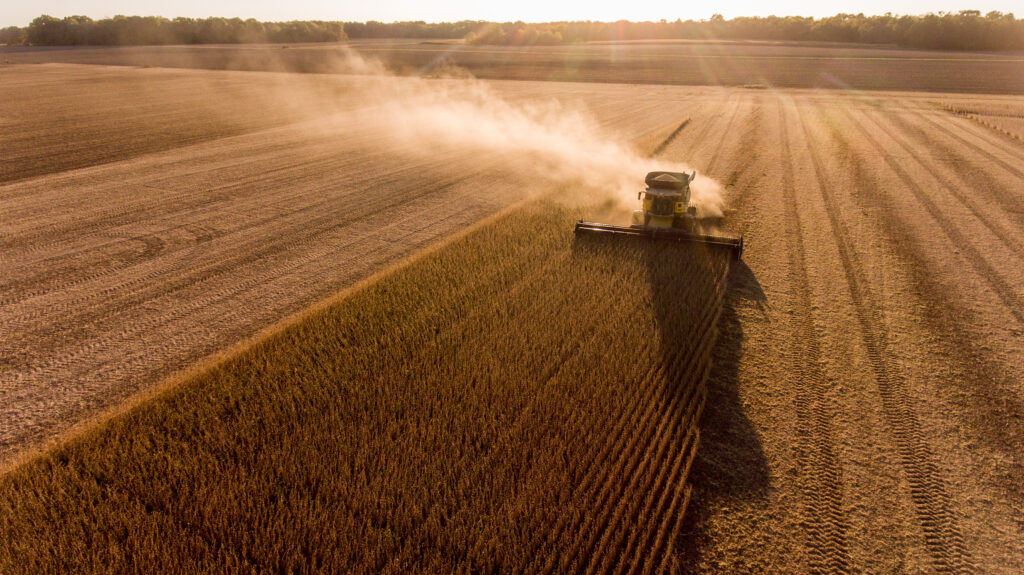

For decades, the United States stood as the world’s leading exporter of commodity grains, supported by a diverse base of global buyers. That era is fading. Today, China dominates as the largest purchaser of U.S. soybeans, and while corn exports remain strong, Brazilians have supplanted Americans as those who feed the world.
Brazil’s rise has been remarkable and intentional. The country produces soybeans at yield levels comparable to what U.S. farmers achieved back in 1978, and they’re achieving a similar rate of genetic gain as we do in the U.S. Every year, it adds acres, improves yields, and strengthens its infrastructure. This relentless expansion positions Brazil as a formidable rival in markets where the U.S. once held unquestioned leadership. Much of it is funded by China. According to the Brazil-China Business Council, China has invested more than $66 billion into Brazil since 2014. And that doesn’t include the most ambitious project; the $50 billion Transoceanic Railway. This project would connect Brazil’s massive acreage base with ports in Peru…on the Pacific Ocean side of South America. This would reduce the shipping distance to China by nearly 6,000 miles and completely reroute the world’s shipping lanes.
The vulnerability of our current system became clear when China sharply reduced soybean purchases this past year. That single shift sent shockwaves through U.S. markets, exposing how dependent we’ve become on one buyer. Worse yet, the long-term trend suggests this isn’t a temporary setback—it’s a structural change. If U.S. agriculture continues to rely on the same export-driven model, more farmers will find themselves on the outside looking in as Brazil and other nations seize market share.
The solution is building demand at home. Investing in emerging sectors like sustainable aviation fuel, soy diesel, and other industrial uses can create new, stable markets for U.S. production. These innovations not only diversify demand but also align with sustainability goals that resonate with consumers and policymakers.
Policy reform is equally critical. Farmers need better tools to adapt, such as crop insurance that covers more than just the major crops. Leveling the subsidy playing field would encourage alternative crops and foster resilience in a rapidly changing global economy.
The global commodity export market is evolving at breakneck speed. If U.S. agricultural policy doesn’t evolve with it, we risk ceding leadership to competitors who are hungry for growth. A recent report by the American Bankers Association underscores the urgency: more than 50% of U.S. ag borrowers are projected not to make a profit in 2026. That should be a wake-up call. Further proof, the USDA is set to release $12 billion in payments for “American farmers impacted by unfair market disruptions.” Is it unfair to the buy the cheapest supply or to buy from those you’ve invested in? These payments only further highlight the need for immediate change, as they are unsustainable and will only get larger.
Our system was built for yesterday’s world. If we don’t rebuild it for tomorrow, Brazil—and others—will gladly take our place.