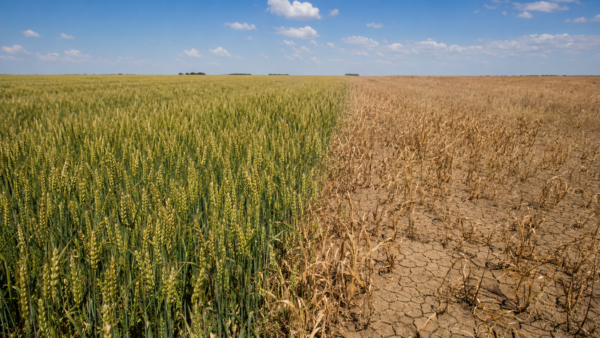
As global temperatures climb, scientists at Cold Spring Harbor Laboratory (CSHL) are striving to develop crops that are stronger and more resilient. This work, however, is far from simple. Many desirable plant traits — such as size or drought tolerance—are controlled by multiple related genes. Identifying genes that share overlapping functions, known as “redundant genes,” can feel like an almost impossible scavenger hunt.
“Most of the time, there are major limitations in the pathway to crop improvement,” said Iacopo Gentile, a postdoc in CSHL’s Zachary Lippman lab. “That’s because there’s so much redundancy and complexity in how gene families evolve and compensate for each other.”
Now, Gentile and colleagues have mapped the evolutionary history of a key gene family in flowering plants, tracking how it has changed over 140 million years. Using these data, they trained models to detect patterns of redundancy and predict which genes to edit to modify specific traits.
“It’s about understanding what happens after gene duplication,” Gentile explained. “You have one gene that duplicates. Then you have two. What happens after that? Theory tells you they will diverge from each other. The big question mark in the field is how.”

Lippman lab/CSHL
To tackle the problem, the researchers focused on CLE, a gene family that helps regulate cell signaling and plant development. CLE peptides are found throughout the plant kingdom, but many of their precise roles remain unclear. They’ve also been notoriously hard to study: the genes are short, evolve quickly, and often perform overlapping, redundant functions, according to a press release.
With recent advances in AI, the team uncovered thousands of previously unknown CLE genes across 1,000 species. They then used computational models to spot likely cases of redundancy. In many instances, redundant genes resemble each other in key regions—either in the peptides they encode or in their promoters, the DNA sequences that control when and where a gene is expressed.
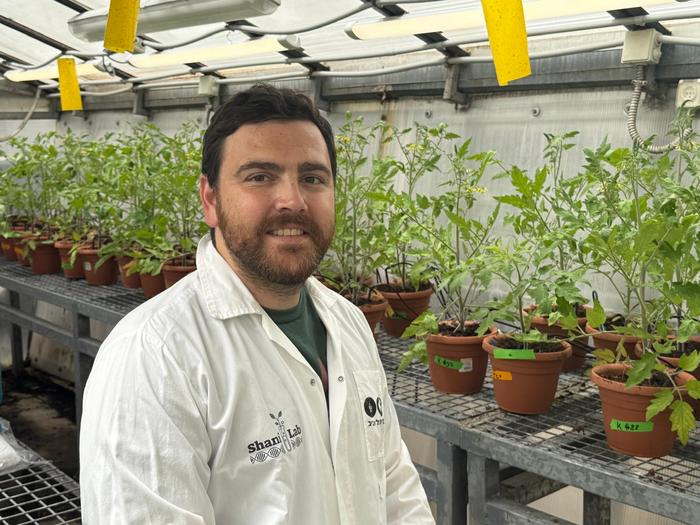
To test these predictions, the Lippman lab used CRISPR to knock out the flagged genes in tomato plants. As expected, removing a single gene had little to no effect. But when the entire set of redundant genes was eliminated, the plants showed clear, visible changes.
“It’s the first time in tomatoes where you have such big targeting of so many genes at the same time,” Gentile said. “We targeted 10.”
Notably, the team found that most redundant genes shared similar promoters even when their peptide sequences diverged. The model didn’t just flag potential redundancies—it also predicted whether specific CLE mutations would produce beneficial, harmful, or neutral effects in plants.
Gentile noted that their approach could “easily be scaled to every gene family,” not only CLE. That means plant breeders now have a kind of roadmap for anticipating how previously hidden genes might be harnessed to improve crops.