Billions in productivity gains, cross-border seed flows and the stability of food prices all hinge on a sector now squeezed by Canada’s stagnating innovation curve and global trade turbulence.
Canada’s farm economy is approaching a decisive moment. It can reignite innovation and productivity, or settle into a slower, less competitive future.
That’s the message delivered by Craig Klemmer of Farm Credit Canada (FCC) and Sam Crowell of the American Seed Trade Association (ASTA), who — speaking from opposite sides of the border — describe a North American seed sector that remains central to food security and agricultural trade but is now confronting two simultaneous pressures: slowing productivity in Canada and an increasingly volatile global trade environment.
“The world needs more of Canada,” says Klemmer, manager of thought leadership for FCC. “But our productivity story needs a rewrite — fast.”
Crowell, who serves as senior director of international programs and policy for ASTA, puts the U.S. situation more bluntly. “It’s staggering that we manage to function at all as an industry when you look at how many times seed crosses borders and the highly fragmented policy environment globally,” he says. “Tariffs are now adding an additional layer of expense.”
In their telling, the seed sector is the quiet backbone of North American agriculture: sprawling, globally interdependent, and essential. It is also under pressure on fronts that range from research spending to geopolitical trade tools that can change overnight.
A Quiet Economic Workhorse
Much of Klemmer’s argument centres on economics. Modern plant breeding and seed technologies, he says, contribute more than $5 billion in economic activity and roughly $2.4 billion to Canada’s GDP, supporting close to 17,000 jobs. Even when looking only at modern seed sales — largely traited varieties that reflect the newest innovations — the direct impact remains striking, with around $2.7 billion in output and more than 7,000 jobs tied directly to seed production and sales.
These figures do not account for the cascading effects through crop production, livestock feeding, processing, transportation and export sales.
He offers an even broader lens. The single largest economic event in Canada each year, he said, is seeding — when farmers put seed into the ground each spring. “We don’t celebrate that,” he says. “But it’s the biggest driver of jobs, value and growth in the Canadian economy in a single act.”
He also argues that innovations in plant science have helped hold down food prices. Without the past several decades of plant breeding and crop protection advancements, he estimates that Canadian grocery bills would be 25% to 65% higher.
“At a time when food inflation is already squeezing households, that difference is not theoretical,” he says. “Without plant science innovations, the squeeze would be far worse than what we’re already feeling.”
Productivity Slows — and With it, Competitiveness
For two decades, productivity growth helped mask structural challenges in Canadian agriculture. Between 1991 and 2010, productivity rose by roughly 2% per year — an exceptional pace, driven by better genetics, improved farm management, the adoption of zero-till systems and more precise use of fertilizer and other inputs.
Since then, the trajectory has shifted. From 2011 to 2020, productivity growth slowed to about 1.4% per year. Looking ahead to 2030, Klemmer expects it to decline further, likely landing near 1% or even lower. Those numbers translate into real money. At today’s pace of about 0.8% annual growth, billions in potential farm income will be left unrealized.
Returning to the 1.4% growth rates of a decade ago would add roughly $18 billion in additional returns across the sector by 2030. Reaching 2% again — the benchmark achieved in the 1990s and early 2000s — would unlock around $30 billion in extra revenue, equivalent to roughly $125,000 to $150,000 in new income per farm.
“That’s transition capital for aging farms,” Klemmer says. “That’s money for new equipment, new genetics and sustainability practices. It’s the difference between playing defense and playing offense.”
His broader concern is competitiveness. Slower productivity gains make it more difficult for Canadian farmers to keep pace with international rivals in export markets, particularly in grains and oilseeds. It also leaves the sector more exposed to the volatility of extreme weather, which has intensified in recent years.

A Global Industry Meets a Tariff Wall
If Canada faces a lagging productivity curve, the United States is navigating other challenges: a rapidly shifting trade environment that is imposing new risks.
Crowell, who serves as ASTA’s lead on trade issues, notes that many stakeholders do not truly appreciate how internationally integrated the seed sector truly is. ASTA’s nearly 700 member companies work across an enormous crop range, from small family firms to global multinationals. To illustrate the complexity of modern seed production, he points to one example: tomato seed.
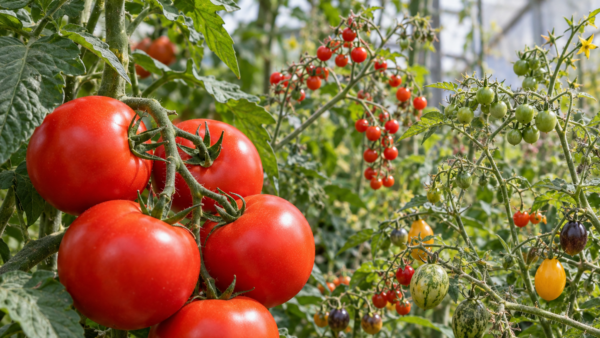
From the first breeding cross to the moment it reaches a North American farmer, a single tomato variety may travel across borders six or seven times. It can be bred in one country, bulked in another, cleaned and tested in a third, routed through a processing centre in the U.S. or the Netherlands, and then re-exported.
When expanded across 80 to 90 species and more than 150 countries, the number of regulatory and logistical hurdles — tariffs, phytosanitary measures, biotech rules, intellectual property requirements, variety registration, seed certification — is staggering.
“International seed movement was complicated before tariffs started dominating the conversation,” Crowell says.
“A year ago, not many people had fully internalized how important tariff-free seed movement is globally, or anticipated that tariffs would feature so prominently in our daily work as a seed sector,” he says. “Now the discussion is unavoidable.”
Through the use of the International Emergency Economic Powers Act (IEEPA), the U.S. president has imposed tariffs through executive orders that have varying scopes, coverage, and policy objectives. There is currently no formal exclusion process, meaning that companies seeking relief must navigate the administration on a case-by-case basis. Through the first half of 2025, tariffs were raised, lowered, or withdrawn with little notice. As multiple tariff authorities can overlap, companies must be careful on staying up to date on the latest policy.
As of press time, tariff rates on planting seeds imported into the United States vary from 10% to over 50%.
Even within North America, where the USMCA/CUSMA agreement still offers duty-free treatment for qualifying seed, the burden of proof has risen. If a shipment cannot clearly demonstrate it was grown and harvested in the U.S., Canada or Mexico, customs officials may apply higher “rest-of-world” rates.
“Will tariffs affect seed movement?” Crowell asks. “They already are.”