Science journalist Hidde Boersma on how a 1970s worldview came to dominate environmental thinking, and why high-yield innovation deserves a different story.
In today’s sustainability debate, progress is often treated with suspicion. Growth is framed as excess, technology as hubris, and productivity as something to be restrained rather than refined. Yet this dominant narrative — that protecting nature requires doing less, producing less, and scaling back human ambition — is not as timeless or inevitable as it appears. In fact, it has a very specific origin, and an increasingly uneasy relationship with the realities of feeding a growing world.
This two-part conversation explores that tension through the work and thinking of Dutch science journalist, filmmaker and activist Dr. Hidde Boersma. In Part 1, we trace how the prevailing “harmony with nature” narrative emerged, why it continues to shape public opinion and policy, and how it has left high-yield agriculture, including plant breeding and the seed sector, simultaneously indispensable and misunderstood. Boersma explains why sustainability framed as sacrifice struggles to inspire, and why an alternative story rooted in abundance, innovation and land-sparing may be better suited to the challenges ahead. In Part 2, we follow what happens when that alternative narrative moves from theory into action, through NGOs, films, campaigns and cultural storytelling aimed at changing not just minds, but the emotional language of sustainability itself.
Seed World Europe (SWE): Hidde, your work spans microbiology, journalism, filmmaking, activism, and even theatre. What personal journey or pivotal moment led you to dedicate your career to challenging dominant sustainability narratives and advocating for a more techno-optimistic, high-yield vision for the future of food?
Hidde Boersma (HB): I often explain this in two layers. The first is why I felt a new sustainability narrative was necessary in the first place.
I grew up with a deep love for nature. My father worked his entire life for the Dutch forestry service, and he took me into forests and natural areas constantly when I was young. That connection to nature was very much ingrained in me from early on. Later, through travel, that feeling only deepened. One experience that really stayed with me was a five-day journey through the Amazon rainforest. Encounters like that reinforced how much I care about biodiversity and natural landscapes.
What began to bother me, though, was how environmental protection was almost always framed as something fundamentally opposed to modern society. Nature was placed in direct conflict with prosperity, technological progress, and welfare creation. That never made sense to me. I did not see why protecting nature should require rejecting modernity.
I am trained as a microbiologist, and at some point, I became deeply involved in the debate around genetic modification. There I ran into a wall. Many environmental organizations were simply anti-technology, even when the evidence clearly contradicted their position. It was unscientific, and I could not reconcile that with my own background. For a long time, I described myself as a kind of “wandering environmentalist.” I knew I wanted to work on sustainability, but I felt completely alienated from the dominant green narrative, which revolved around being anti-tech and “living in harmony with nature” as a rejection of modern life.
That classic green story never felt like home to me. And I also noticed something else: it was not winning people over. Green parties and movements that built their identity around scarcity, restraint, and limitation kept shrinking. That is not surprising. A politics of sacrifice and restriction is very hard to sell, especially on a global scale. If sustainability is framed as having less, doing less, and restricting human ambition, it will never mobilize broad public support.
So, I became convinced that we needed a fundamentally different narrative.
In 2015, I encountered the Ecomodernist Manifesto (https://www.ecomodernism.org/ ), and for me it was a moment of recognition. It brought together everything I had been struggling to articulate. The core idea was simple but powerful: further modernization, not retreat, is what allows us to protect nature. By increasing productivity, intensifying agriculture, embracing technologies like advanced plant breeding, nuclear energy, and urbanization, and by using as little land as possible for human needs, we can actually free up space for biodiversity and wild nature. High-yield systems are not the enemy of the environment; they are a prerequisite for its protection. That vision aligned so closely with my values that from that point on, I decided to actively advocate for it.
The second layer is why I chose to pursue this mission in the way I do.
I started out as a journalist, and for a long time I believed that facts, data, and well-written arguments would be enough. I thought that if you just explained things clearly, people would change their minds. Over time, I learned that this was naïve. Facts matter, but on their own they rarely persuade.
There was a very concrete moment when this clicked for me. I was sitting in a bar with someone from the film world, and he said something that stuck with me: if you really want to reach people, you have to work with images, emotions, values, and stories. You have to make people feel something. That conversation pushed me toward film, theatre, and other forms of storytelling.
People want to belong to a story. They want a narrative they can identify with, not just a spreadsheet or a scientific paper. Cold facts and rational arguments are necessary, but they are not sufficient. If you want to change how society thinks about food, technology, and sustainability, you have to combine science with culture, evidence with imagination. That insight fundamentally shaped how I approach my work today.
SWE: Much of today’s sustainability discourse focuses on “harmony with nature” as the only legitimate path forward. Why do you believe this singular narrative harms the high-yield sector, including plant breeding and the seed sector, and how does an alternative, abundance-oriented narrative better address global food security and environmental goals?
HB: I think this new narrative is important because the dominant sustainability story we are still using today is largely a product of the 1970s. At that time, economic growth and environmental destruction were closely linked. This was the era in which Greenpeace emerged, the Club of Rome published Limits to Growth, and the general assumption took hold that prosperity inevitably came at the expense of nature.
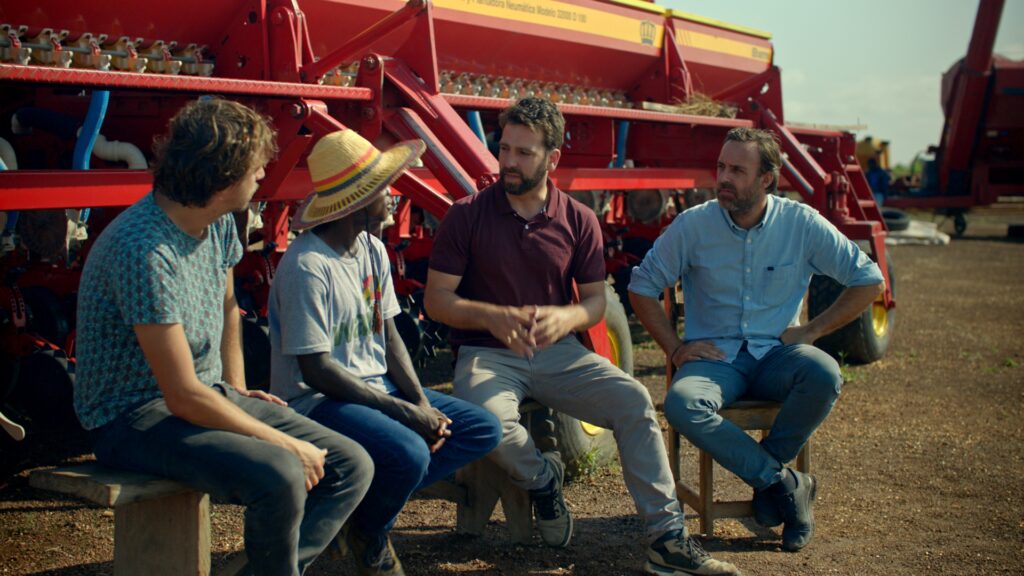
Out of that context grew a powerful narrative: the idea that the only path toward a sustainable planet is to slow down, step back, live “in harmony with nature,” and move away from modernization. That story has certainly achieved important things, and it still has value. But it also excludes large parts of the economy and many of the people who are, in practice, doing a great deal for sustainability.
I see this very clearly when I visit places in The Netherlands like the Westland, Seed Valley, or talk to highly productive farmers who invest heavily in efficiency, innovation, and environmental performance. These sectors often receive little recognition within the current sustainability framework. Over time, that lack of recognition leads to frustration and disengagement.
Take the Westland as an example. It is one of the most land-efficient and productive agricultural regions in the world. Enormous amounts of food are produced on very little land, with increasingly low inputs per unit of output. From an environmental perspective, that is incredibly powerful. But because production happens in greenhouses and not in a romantic, “natural” landscape, it does not fit the prevailing harmony-with-nature narrative. As a result, it is rarely celebrated as a sustainability success.
What bothers me is that, politically and culturally, this leaves us with a false dichotomy. In the Netherlands today, you are often forced into one of two camps. Either you fully embrace the harmony-with-nature narrative, associated with organizations like Greenpeace, Milieudefensie, or Green parties, or you are seen as anti-sustainability altogether. There is very little space in between. That is deeply unhelpful.
I see sustainability not as a single pathway, but as a stacking of approaches. There are farmers who feel at home in nature-inclusive or organic systems. I do not always agree with their methods, but many of them are genuinely trying to do the right thing. The problem is that we treat this as the only legitimate form of sustainability.
If we add a second, equally valid narrative, one that says sustainability can also mean producing much more on much less land, with lower inputs and smarter technologies, we dramatically expand the coalition working toward environmental goals. Suddenly, high-yield agriculture, advanced plant breeding, greenhouse horticulture, and the seed sector are not defensive actors trying to justify themselves, but central protagonists in the sustainability story.
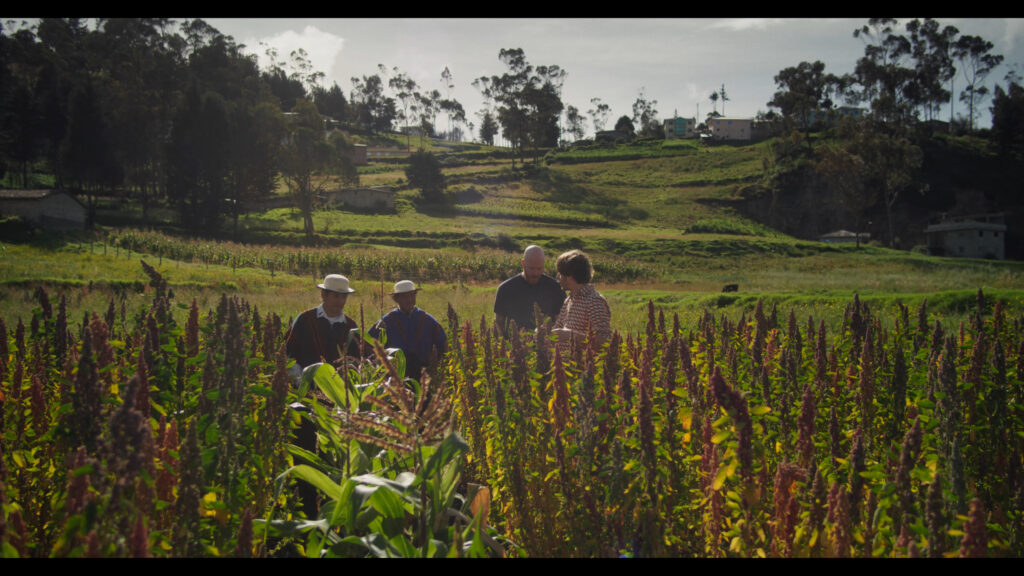
This matters because a narrative of abundance is simply more attractive and more scalable. It shows that it is possible to operate sustainably while becoming more prosperous, not poorer. Over the past 10, 20, and 30 years, we have accumulated a growing body of evidence that economic growth, food security, and environmental recovery can go hand in hand. That is an incredibly hopeful message.
For countries like the Netherlands, this means moving toward a future where we produce far more food on far less land, freeing up space for nature while maintaining prosperity. But this perspective is even more crucial for regions such as sub-Saharan Africa, where food security, development, and environmental protection must advance together. Telling these countries that sustainability requires stepping back from modern agriculture is neither realistic nor fair.
That is why I believe the high-yield sector, from plant breeding and seed companies to greenhouse horticulture and arable farming, needs to stop trying to earn approval within a narrative that will never fully accept them. The classic sustainability story was not written for them, and it never will be. What is needed is a new narrative, one in which their strengths are not a liability, but a core part of the solution.