Maizex Seeds’ Stephen Denys and CAFTA’s Michael Harvey weigh in on what lifted tariffs mean for exporters, growers, and continued investment in canola genetics.
When Maizex Seeds made the announcement in 2025 that it was entering the Alberta canola market, it did so with a long-term view, one that assumed volatility in global trade but remained confident in canola’s enduring role in Western Canadian agriculture.
Recent developments in Canada-China trade relations are now reinforcing that outlook.
Stephen Denys, director of market and product development for Maizex Seeds, says the newly announced agreement easing trade tensions with China is an encouraging signal for the entire canola value chain.
“It’s certainly positive,” Denys says. “I think many of us in the industry felt there was a definitive need to make friends with one of the big international players, whether that was the U.S. or China — and certainly China today seems a bit more stable.”
Entering the Market Through Uncertainty
Maizex’s move into Alberta last fall coincided with one of the most turbulent periods in recent canola trade history, as China imposed restrictions on Canadian canola seed. While the timing added uncertainty, Denys said the company’s investment was never based on short-term trade conditions.
“Our decision to enter the canola market was based on a long-term view,” he said. “We understood there would be ups and downs in trade relationships, but that the long-term potential for canola was very strong.”
Denys points to canola’s central role on the Prairies and its place in a globally competitive oilseed complex as reasons Maizex remained confident despite short-term disruptions.
“It’s a strong, healthy oil complex that has a place in the world,” he says. “Even when the relationship with China wasn’t good, we knew there would be resolution at some point.”

A Trade Reset That Matters on the Ground
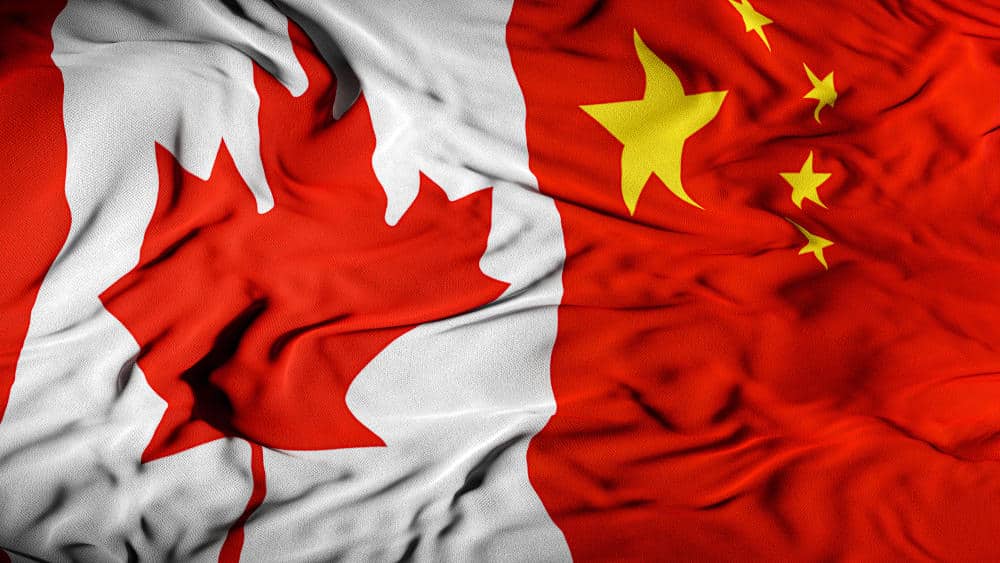
The recent agreement between Canada and China includes the removal of tariffs on Canadian canola seed, an outcome that Denys believes has immediate and symbolic importance for growers and seed developers alike.
“To get that resolved is a big deal for agriculture, and in particular for Western Canada from an export perspective,” he says. “It’s very positive news.”
Denys said the development validates the belief that canola will continue to see strong global demand and ongoing innovation.
“This is a good news story for growers and for the industry,” he says. “It reinforces, not just for Maizex but for other companies in the canola space as well, that this is still a dynamic marketplace going forward.”
Policy Context: Why the Door Reopened
From a trade policy standpoint, Michael Harvey, executive director of the Canadian Agri-Food Trade Alliance (CAFTA), explains that the reset came after deliberate decisions by both governments.
“The most basic thing that changed is the Canadian government decided to start allowing Chinese electric vehicles into the country in a limited way,” Harvey says. “China had retaliated by shutting out some of our products. Now both sides have adjusted.”
For the seed sector, Harvey emphasizes that tariff relief on canola seed was especially significant. “That was a huge deal for people in our sector,” he says.
More broadly, Harvey said the agreement restores hope for predictability. “Real stability would be the Chinese government not imposing tariffs like this again,” he says. “This agreement gives us a lot of hope.”
Designing Canola for a Changing World

For Denys, renewed access to China does not change Maizex’s strategy, but reinforces it. The company’s breeding and product development efforts are focused on balancing global market demands with on-farm realities.
“We’re addressing two things at the same time,” Denys says. “What importing countries are looking for in terms of oil quality and end-use, and what producers need agronomically.”
That includes traits such as disease resistance, stress tolerance, harvestability, and pod-shatter resistance — areas that remain critical regardless of export destination.
“We’ve got changing disease complexes that we have to address with new genetics,” Denys says. “It’s a constant balancing act.”
Diversification, Not Dependence
While China’s renewed engagement is welcome, Denys stresses that diversification remains essential.
“This situation forces Canada and other regions to diversify their trade relationships as a risk-management strategy,” he says. “That’s healthy for the industry.”
He added that while trade relationships can shift, canola’s importance to Canadian agriculture is unlikely to.
“I don’t think we were ever going to see a wavering in investment in canola,” Denys said. “But this certainly reinforces that continued investment is needed going forward.”