After three years of operation, the Agricultural Crop Licensing Platform (ACLP) has expanded the scope of crops covered by its activities. From the outset, the founding members viewed the platform launched in 2023 as an “ACLP 1.0”, a framework designed to evolve in line with the needs of its members and of the seed sector as a whole.
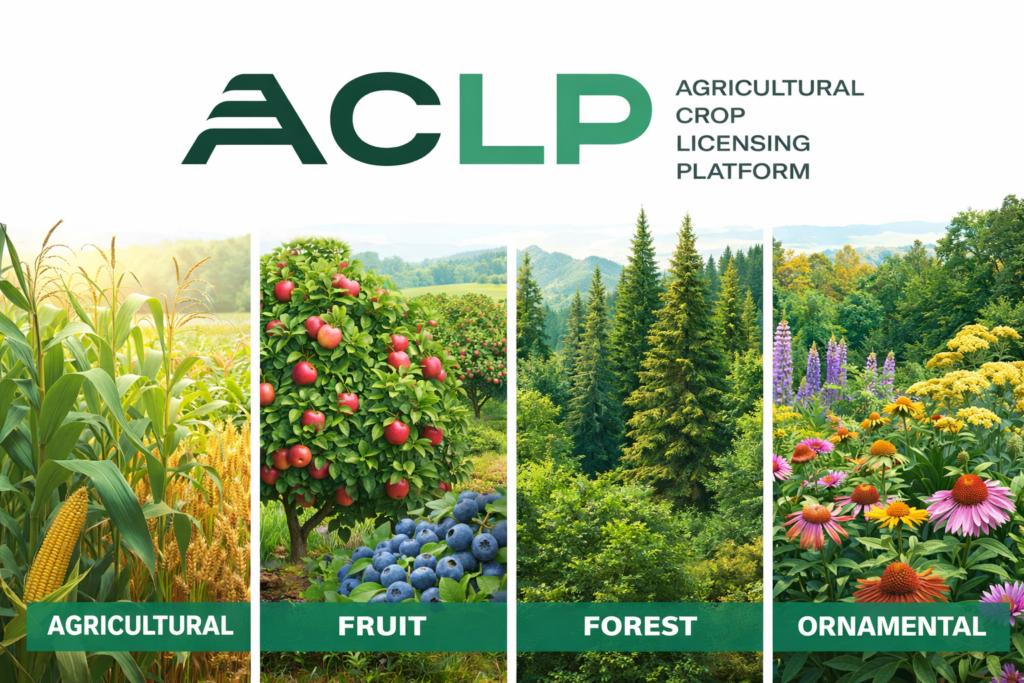
The decision to extend the platform’s crop scope to include ornamental, fruit and forest crops is therefore a natural next step. The expansion was approved by members without debate, reflecting broad consensus on the value of this development for breeders across Europe.
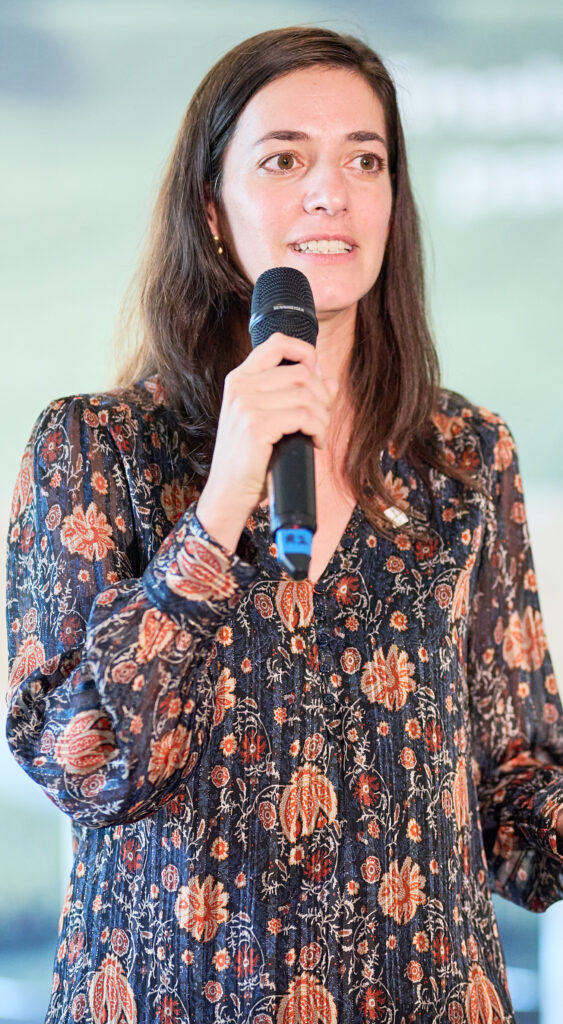
“Now, every breeder in Europe has the possibility to become a member of a licensing platform to display patented traits and/or to access patented traits of interest in a facilitated, fair and secure manner,” explained Claudia Hallebach, Chair of the ACLP. “Both licensing platforms are complementary: vegetable breeders can turn to the International Licensing Platform (ILP), while breeders of all other crops can rely on the ACLP.”
Today, the ACLP brings together approximately 95% of patented traits contained in commercial varieties of agricultural crops. The PINTO database, hosted on the Euroseeds website (https://euroseeds.eu/pinto-patent-information-and-transparency-on-line/ ), serves as the central point of entry for companies to disclose their patented traits. In the near future, the database will be updated to include patented traits present in the newly added crop categories owned by ACLP members.
The ACLP is open to any company conducting breeding activities within its territory (which includes the countries of the European Patent Office, as well as Russia and Ukraine) whether or not the company holds patents. Patent-holding members are required to disclose all patents contained in their commercial varieties and to grant a commercial license to any ACLP member requesting access.
Licensing negotiations are supported by a Standard License Agreement, which has been agreed upon by all members. This standardized framework ensures simplicity and cost-efficiency. The royalty fee remains the only element to be negotiated bilaterally and confidentially between licensor and licensee. Should negotiations fail after six months, either party may request arbitration. In such cases, three independent arbitrators determine which proposed royalty most closely reflects the market value of the patented trait, thereby settling the license agreement.
Founding members (BASF, Bayer, Corteva, Elsoms-Ackerman, Europlant, HZPC, KWS, Limagrain and Syngenta) are committed to the platform until April 2031. If a member chooses to leave after the initial commitment period, its patented traits will remain accessible to other members under ACLP conditions for an additional five years. Importantly, licenses concluded under ACLP rules remain valid even if one of the parties exits the platform. The platform is particularly beneficial for small and medium-sized enterprises, which gain essential legal and commercial certainty throughout their breeding processes, all for a very reasonable annual membership fee.
Through its governance and operating principles, the ACLP prevents monopolistic situations and acts as a trust-building mechanism. This role is particularly relevant in the context of ongoing discussions on future EU regulations on new genomic techniques (NGTs), where licensing platforms are expected to play an increasingly important role.
The ACLP Board continues to work on the future evolution of the platform, with the next steps expected to be unveiled in the coming weeks. Stay tuned!
For further information on ACLP membership, please contact Hélène Guillot at helene.guillot@aclp.eu or visit ACLP website: https://aclp.eu/