Researchers at Wageningen University & Research argue that recovering nutrients from wastewater — including treated human urine — could be a viable, and potentially better, alternative to inorganic fertilizer. They say it could reduce emissions and help rebuild a circular food system.
Historically, human waste was commonly returned to farmland, keeping nutrients in the soil–food–human loop. Modern sewer systems improved public health by limiting infectious disease, but they also disrupted that cycle. Sewage sludge was later used as a substitute, yet in the Netherlands this practice largely stopped in the 1990s because of contamination risks such as heavy metals and pharmaceutical residues. Since then, farming has increasingly relied on inorganic fertilizers and large amounts of animal manure.
Circular Fertilizers
But relying on such large quantities of inorganic fertilizer and manure comes with clear downsides.
“Inorganic fertilizers are made from mineral resources with finite supplies, for example from mines,” says Kimo van Dijk from Wageningen Environmental Research, who researches circular fertilizers, “and their production involves the use of natural gas, a fossil resource. Extracting and using these products causes environmental problems, including greenhouse gas emissions and the destruction of landscapes in mining. We need to put a halt to this.
“Livestock farming is responsible for high emissions of CO₂, methane and nitrogen compounds,” Van Dijk continues. ‘To combat that, livestock numbers need to be reduced. That will mean less manure. Anyway, European rules on the use of animal manure are already getting more restrictive. If we don’t come up with alternatives, farmers will resolve this issue by applying yet more inorganic fertilizer to the soil.”
That is why the Ministry of Agriculture has commissioned Van Dijk to investigate fertilizers that can be produced locally, require less long-distance transport, and have a smaller environmental footprint, according to a press release.
Any new fertilizers would still have to meet the same strict standards as those currently used by farmers.
“Their quality should be the same as the existing fertilizers. Farmers place high demands on the effectiveness, whereas the government is mainly concerned with safety and the environment.”
Van Dijk identified 20 potential fertilizers that meet these criteria. Only one is currently available on the market: fertilizer granules produced from the ash of incinerated sewage sludge. The others are derived from sources such as brewery and French-fries factory wastewater, as well as processed human urine.
“In 2024, in an initial field experiment in Lelystad, we found that the nitrogen in urine is taken up very effectively by plants, up to 25 per cent better than the nitrogen in conventional inorganic fertilizers. That could be because the nitrogen in urine is more likely to stay in the soil, with less loss to the air and groundwater.”
Measuring Emissions
The fertilizers vary widely in form. Some are liquid and resemble animal manure, while others are dry granules that look more like inorganic fertilizers. Van Dijk is examining whether their use results in significant emissions of ammonia and nitrous oxide, both nitrogen-based compounds.
“Crops never absorb all the nutrients in the fertilizer, regardless of the form. Some are gone from the soil again in about three weeks, ending up in the air or water as ammonia or nitrates, for example. We hope that the new fertilizers leave more of these nitrogen compounds in the soil than the fertilizers that farmers use currently.”
In a newly launched experiment, bags of fertilizer sit beside a long row of transparent soil-filled cylinders on a table. The cylinders are opened one by one as Van Dijk and his colleagues apply a fertilizer to each. In half of the cylinders, the fertilizer is left on the soil surface; in the other half, the researchers cover it with soil.
“In practice on farms, fertilizer has to be applied using a zero-emissions approach. That means below the surface, so as to minimize ammonia emissions. That is why we are testing the fertilizer both above ground and below the surface.”
In a nearby lab, researchers are running a four-month study to measure how these fertilizers behave in soil and what emissions they produce. Van Dijk says the team monitors carbon dioxide and methane, along with nitrogen compounds released from the soil into the air. Using sealed jars of soil fitted with sensors, the researchers track gas levels on-screen as they change after the fertilizers are applied.
Growing Potatoes With French-fries Wastewater
Using both measurement approaches, Van Dijk and his colleagues can identify which fertilizers produce the lowest emissions. Field trials planned for 2024 and 2025 will then test whether these options also perform well in terms of crop growth.
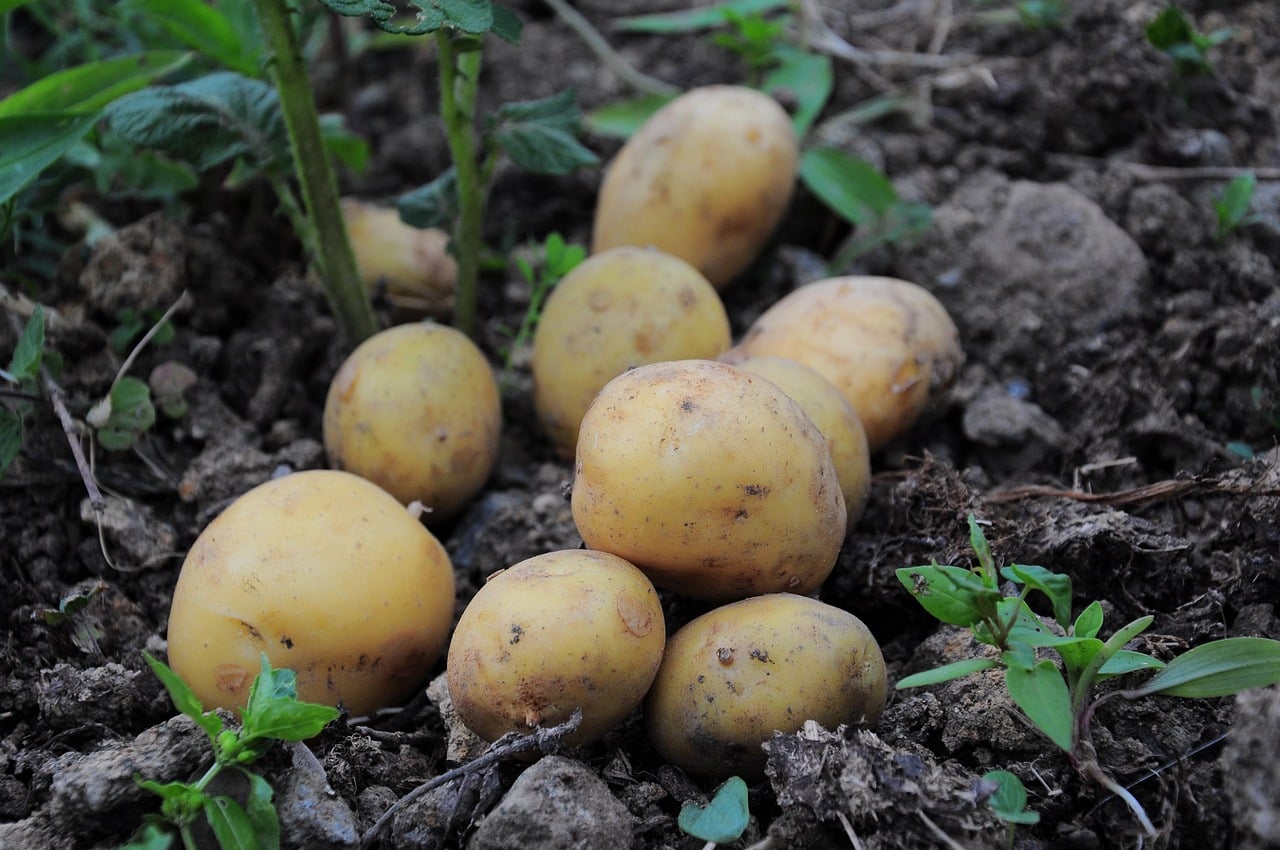
Van Dijk says the team chose potatoes as a clear, practical example of circular farming: nutrients recovered from sources such as treated household wastewater or water from food-processing plants — including potato-processing factories — are applied to fields to grow potatoes that become food, with nutrients ultimately recovered and returned to the soil again, completing the cycle.
So far, the most encouraging results in the field trials have come from human urine. The urine was collected from a housing development where toilets separate urine from solid waste. After processing, it is free of pharmaceutical residues and considered safe for agricultural use. The method uses an electric field and a membrane to separate dissolved nutrients from the water. The same housing complex also applies the treated urine in its own vegetable garden.
Van Dijk believes several other circular fertilizers could eventually reach the market, especially nitrogen-rich products recovered from sewage treatment (such as ammonium sulphate and ammonium nitrate) and the nutrient-rich sludge left after purifying wastewater from the food industry.
He says wider adoption depends on legal changes. While fertilizer granules made from incinerated sewage-sludge ash have been permitted since early 2024, many other recovered products are still excluded. One sticking point is that Dutch rules treat fertilizers derived from industrial wastewater as strictly as those from sewage sludge, even though wastewater from food processing is often much cleaner. Van Dijk argues regulations should better reflect these differences, balancing safety with sustainability.
He is continuing to gather evidence on which circular fertilizers perform best and expects to share this year’s results in early 2026. He adds that public acceptance remains a hurdle: people often find the idea of using treated human waste unpleasant, even when treated urine is odorless and safe. In his view, these alternatives will be increasingly necessary as agriculture relies less on animal manure and inorganic fertilizer.
This research is being carried out in collaboration with KWR and LeAF, with funding from TKI Agri & Food and TKI Water Technology.