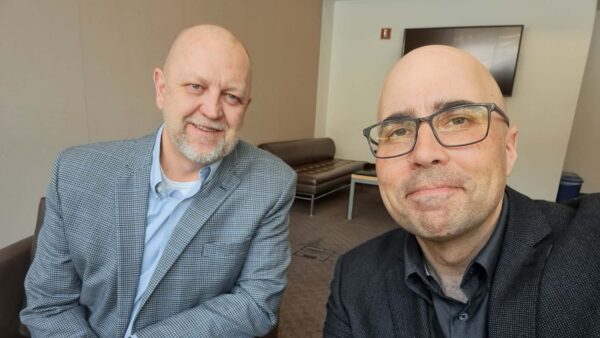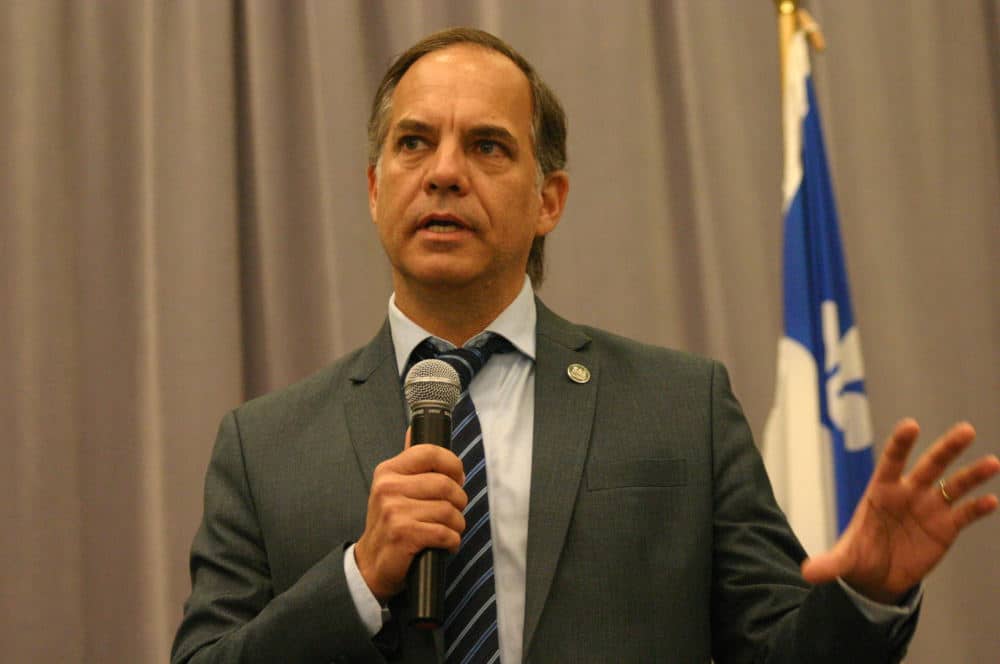
URUPOV’s Diego Risso came to Canada this week to offer an example of how seed policies can be changed to benefit everyone — farmers, breeders and government.
QUEBEC CITY — In the often-overlooked corridors of agricultural policy and plant science, Uruguay has quietly become a benchmark for how to run a functional, fair, and forward-looking seed system. At the heart of this transformation is Diego Risso, executive director of the Seed Association of the Americas (SAA) and the Uruguayan Breeders Association (URUPOV) and a longtime advocate for breeder rights and value capture mechanisms.
Risso, speaking to industry leaders at the Seeds Canada annual conference today, didn’t mince words. “If you keep doing the same things, you are going to get the same results,” he warned, pointing to Canada’s stagnant wheat sector where certified seed usage hovers near 20% — and just 8% for durum. “I came to Canada in 2010 to talk about these very issues. Fifteen years later, the landscape looks much the same.”
A System Built on Trust and Accountability
In Uruguay, Risso and members of URUPOV have helped engineer a unique, contract-based system that secures royalty payments not just from certified seed sales, but also from farm-saved seed. This system — which he describes not as royalty collection but as “technology value generation” — hinges on trust and farmer engagement. Farmers sign contracts when purchasing seed, agree to declare farm-saved use, and are subject to audits that include DNA fingerprinting of on-farm seed.
“We visit them face to face,” he said. “We talk. We listen. We build trust — and we get the data we need.”
The results are striking. In soybeans and wheat, Uruguay’s two cornerstone crops, most of the area planted is accounted for in the system — 85% for soybean and 97% for wheat. In stark contrast to countries where enforcement is spotty or nonexistent, Uruguay sees widespread compliance, not through coercion, but through what Risso calls “a balance of trust and verification.”
Regulations That Work — Because They’re Enforced
Uruguay has not yet fully ratified UPOV 91, the international standard for plant breeders’ rights. But it has effectively implemented nearly all of its provisions. “We call it UPOV 78++, even though that designation doesn’t exist,” Risso quipped. “What matters more than legal definitions is implementation and enforcement. You can have the best laws in the world, but if they aren’t enforced, they’re meaningless.”
Uruguay’s plant variety protection authority actively works with the industry, supports the development of molecular marker labs, and publishes the names of violators online. The country even offers tax incentives for the use of certified seed, providing a financial nudge for adoption.
Lessons for Larger Markets
While Uruguay’s scale is modest — just 5,000 commercial grain farmers and around 1.1 million hectares of soybean — its lessons are scalable. The system’s simplicity, its reliance on a single unified contract model, and the blend of public-private cooperation make it an attractive blueprint for other countries seeking to reform their seed sectors.
In contrast, Risso pointed out that Canada’s system remains fragmented. Royalty collection on farm-saved seed is limited to private breeders, representing a minority share of the market. Meanwhile, innovation stagnates. “Breeders won’t invest if there’s no return,” he said. “It’s simple economics.”
From Farm Boy to Policy Architect
Risso’s pragmatic approach stems from his roots. He grew up on a research farm in Uruguay, the son of a man who coordinated national breeding programs. After earning a degree in agricultural economics, Risso worked as an extension officer before becoming an architect of national seed policy.
His guiding principle is simple: value must be shared across the chain. “Breeders deserve a return, but we also have to show farmers the value they’re getting,” he said. “Innovation only continues when the whole system believes in its worth.”
A Wake-Up Call
Risso’s speech served as both inspiration and warning. Canada, he argued, is at risk of falling further behind in global breeding competitiveness if it continues to undervalue genetics and rely on outdated frameworks.
“Genetics is science. And science is progress,” he concluded. “If we want agriculture to move forward, we need to stop apologizing for innovation and start building systems that sustain it.”