Starting Aug. 1, farmers will need a prescription to use seed treated with insecticide. An agronomist warns it could cause big issues.
Jean-François Patenaude isn’t sounding alarm bells. Not exactly. But the professional agronomist and director of operations with Réseau Végétal Québec did have a message for attendees at today’s Seeds Canada annual conference in Quebec City: the rules governing crop inputs in Quebec are changing — fast — and the seed sector needs to pay attention.
Patenaude offered a candid and at times sobering overview of the province’s evolving regulatory landscape — from new pesticide rules to ongoing battles over seed treatments and agronomic advice.
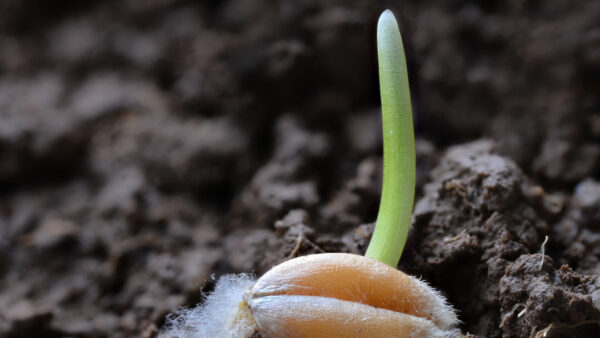
“Seed treatments in Quebec are now considered pesticides,” he explained, pointing to regulations that require growers to hold pesticide use certificates and, in the case of insecticide-treated seed, obtain a prescription from a certified agronomist. “The goal is to end the preventive treatment of seed.”
That goal, he said, is rooted in a 2020 report which came to the conclusion that only about 5% of corn and soybean fields in Quebec actually require seeds coated with insecticidal seed treatment.
The new rules take effect Aug. 1, and Patenaude expects a sharp decline in treated seed use as a result — similar to what happened with atrazine, which saw sales drop by over 90% after prescription requirements were introduced in 2018.
“Fool Around and Find Out”
“This is a fool around-and-find-out moment,” he said. “We don’t know what will happen with pest populations. We expect wireworm pressure may increase, so it’s crucial that agronomists and technicians closely monitor field conditions and collect data. We need to show what’s happening on the ground.”
To that end, his organization is working closely with research institutions like CÉROM who are tracking pest dynamics across the province. Collaboration and transparency, he stressed, will be essential.
But seed treatments aren’t the only concern. Another issue taking root, Patenaude said, is a policy shift around pedigreed seed and crop insurance eligibility — particularly in the organic sector.
Traditionally, growers in Quebec have needed to use certified seed to qualify for crop insurance through the provincial insurer, La Financière agricole du Québec (FADQ). But a 2023 pilot project made an exception for organic growers, who argued there wasn’t enough certified organic seed available.
Patenaude disputes that claim. “We did the research. There’s more than enough certified organic seed on the market to meet demand.”
He worries the exemption may set a precedent. “If that wedge opens wider, it could undermine the value chain that funds plant breeding and varietal development,” he said.

Bill 41 and the Agronomist’s Role
Another flashpoint? The future of agronomic advice. Bill 41 — a now-defunct piece of legislation that may soon return in a new form — sought to restrict agronomists tied to input sales from offering crop protection recommendations, including seed treatments.
“It’s a question of accountability,” said one attendee during a Q&A session. “I want advice from someone who understands my operation — and who I can hold accountable if that advice doesn’t work.”
Patenaude acknowledged the concern and emphasized the need for balance. “In Quebec, agronomists are already heavily regulated. We’re the only ones legally allowed to give agronomic prescriptions. There are professional codes of conduct in place. But we also understand the optics — that sales and advice shouldn’t be seen as one and the same.”
He noted that the Bureau de normalisation du Québec (BNQ) is developing a voluntary standard to better manage ethical risks in sales and consulting. “It’s a risk, but also an opportunity,” he said. “The industry has changed. Agronomists’ compensation is no longer tied to sales volume. There are good things we’re doing — and we need to tell that story.”
Navigating a Shifting Landscape
Patenaude didn’t shy away from the political context. With provincial elections on the horizon, he sees a chance to reset the conversation. “We’re planning to engage key opposition members, hire a government relations firm, and build new partnerships — including one we just secured with the Ministry of Agriculture to share synthetic fertilizer sales data.”
It’s part of a broader strategy to ensure the crop input sector — which includes seeds, fertilizers and crop protection — has a seat at the policymaking table.
“I believe in our profession,” Patenaude concluded. “And I believe we need strong, evidence-based communication if we’re going to keep doing what’s right — for farmers, for the environment, and for the future of agriculture in Quebec.”