Field trial results show 0% disease incidence, company says.
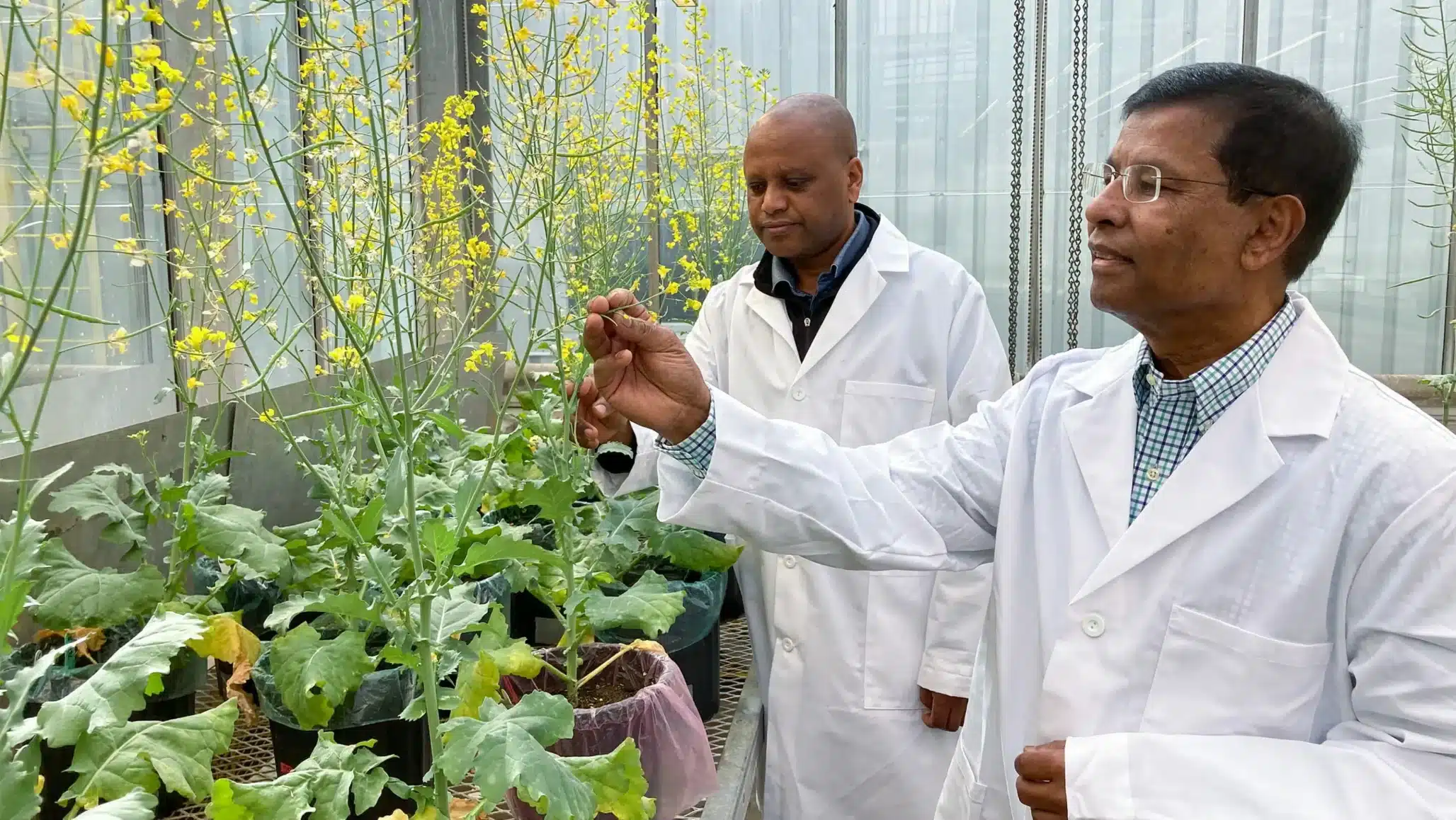
Saskatoon-based NRGene Green says it has achieved a first in the global fight against clubroot disease in canola, reporting field trial results that showed immunity-level resistance. The company says its advanced breeding lines demonstrated zero infection under high disease pressure — a performance not previously observed in commercial varieties.
Trial Results
The 2025 field trials tested NRGene’s introgressed donor lines against aggressive strains of Plasmodiophora brassicae, the pathogen that causes clubroot. According to the company, donor lines labeled A and B showed no disease incidence, while hybrid varieties developed with the resistance trait had only 0.2 per cent infection. Stabilized breeding lines maintained infection rates below one per cent across different environments.
By comparison, commercial “resistant” varieties used as checks showed infection rates between 74 and 85 per cent.
“These results represent a global breakthrough in sustainable agriculture,” said Dr. Masood Rizvi, general manager of NRGene Green. “For the first time, farmers worldwide will have access to canola varieties that combine complete disease immunity with commercial viability, ensuring food security while driving long-term agricultural sustainability.”

Industry Context
Clubroot has become one of the most serious threats to Canada’s canola industry, which is valued at $43.7 billion annually. Existing resistance sources have broken down in recent years as the pathogen evolved, leaving growers with few options beyond short crop rotations and chemical management.
NRGene’s approach relies on genomics and artificial intelligence to identify natural resistance genes, stack them through molecular breeding, and integrate the traits into commercially viable germplasm. The company emphasized that the technology is non-GMO, which it says may ease regulatory approval and adoption in multiple markets.
“This achievement demonstrates how AI-driven genomics combined with an in-depth biology understanding can solve agriculture’s most challenging problems,” said Gil Ronen, CEO of NRGene. “Our technology provides farmers and seed companies with the first truly effective solution to this global crisis while protecting both yields and the environment.”
Commercialization Plans
NRGene Green says the resistance trait is available for licensing by seed companies and can be integrated into existing hybrid breeding pipelines. The company is pursuing a royalty-based model and has begun working with industry partners to bring the material to market.
The company added that the resistance has remained stable across multiple genetic backgrounds and field environments, suggesting durability against the pathogen.