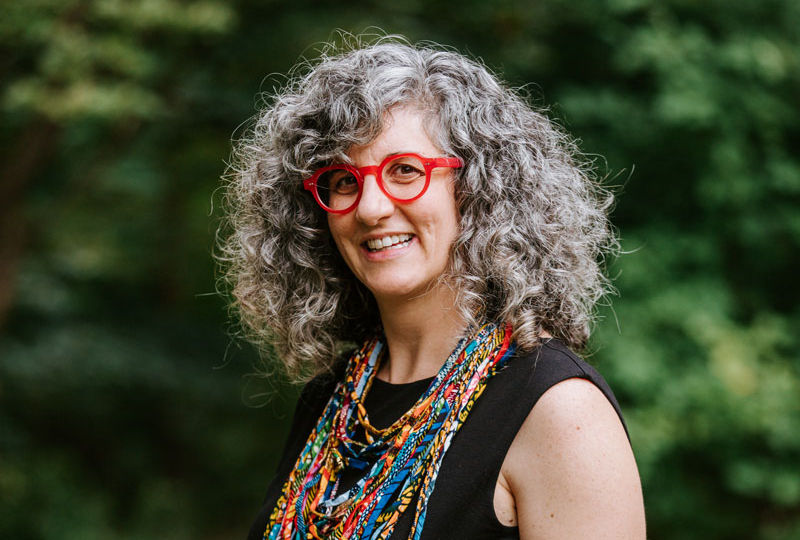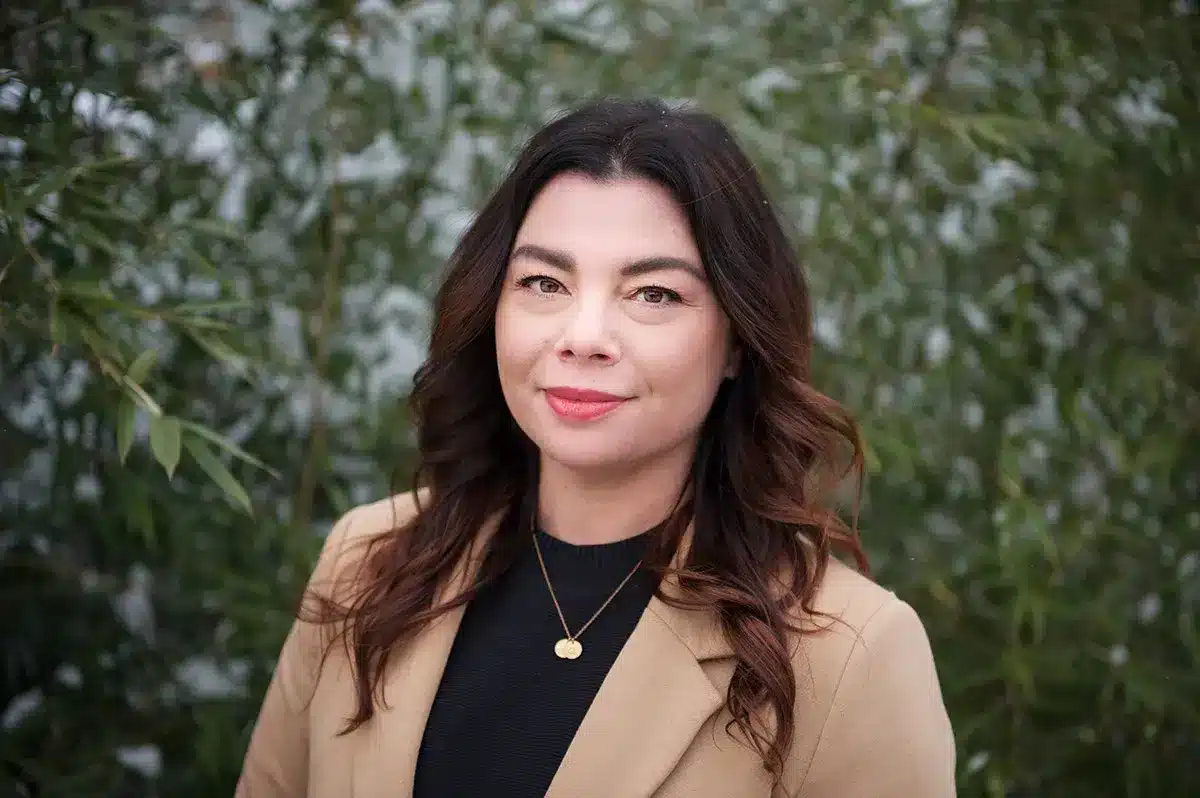
Dr. Briana Hagen’s groundbreaking work is changing how Canada talks about — and treats — mental health on the farm.
Across Canada, women in agriculture are quietly carrying an invisible weight. They run farms and manage books, raise children and care for aging parents, volunteer in their communities, and hold families together through droughts, disease, and unpredictable markets. The expectation to be endlessly resilient runs deep — but for many, the pressure to stay strong has come at a cost.
“Women are often the glue holding everything together,” says Dr. Briana Hagen, CEO and lead scientist at the Canadian Centre for Agricultural Wellbeing (CCAW). Speaking at the Influential Women in Agriculture Summit 2025, held virtually on Oct. 21, she describes a troubling reality: too many women in agriculture feel they can’t pause, even when they’re struggling. “They’ll pull me aside after a talk and say, ‘I recognize that maybe I need some support, but I don’t really know how to take a break,’” Hagen says. “They feel like they don’t have permission to stop.”
That relentless pace — combined with limited access to care and a culture that prizes endurance — has created a silent crisis. “Farmers tell us, ‘I don’t have time to be mentally unwell,’” Hagen says. “They work through exhaustion, through uncertainty, through loss, because stopping feels impossible.”
In 2016, Hagen led the first national survey of farmer mental health in Canada, and the results painted a stark picture. “Nearly three quarters of farmers were living with moderate to high chronic stress,” she says. “Almost half said they wouldn’t reach out for mental health supports because of stigma or lack of access. And maybe the most sobering was that one in four farmers had thought about taking their own life in the previous year. Women specifically were doing significantly worse than men on all those measures.”
The findings were a turning point — not just for the agriculture industry, but for Hagen herself. “This wasn’t just about data,” she says. “We sat with folks who told us, ‘I don’t know if you can use this in your research, but I’m just not okay.’ This study gave those voices credibility.”
The research, cited in Parliament and discussed across farm organizations, sparked a national conversation about stress, stigma, and the human cost of agricultural life. But for Hagen, the next step was clear. “If we wanted change, it had to be practical, relevant, and real-world,” she says.
That thinking led to the creation of In the Know, a free, four-hour mental health literacy workshop designed alongside farmers. The program, now delivered across Canada, covers stress, depression, anxiety, and substance use — all through the lens of farm life. “One of my favourite parts is seeing women walk in thinking they’re there to take this course to help others — and realizing they needed it too,” Hagen says. “That’s how change starts, with honest conversations.”
Soon, mental health professionals began reaching out to Hagen’s team, asking how they could better serve their farm clients. In response, CCAW developed the Canadian Agricultural Literacy Program (CALP) — a national training program that gives therapists, counselors, and doctors insight into the realities of farm life. “Let’s be honest,” Hagen says. “If a therapist tells a farmer to just take a week off, they’ve lost a lot. CALP helps professionals meet farmers where they are.”
For women in agriculture — who are often the ones noticing when a partner, child, or employee is struggling — that understanding can be life-changing. “When folks finally do reach out for help themselves, they deserve someone who understands their world,” Hagen says.
That philosophy also inspired the National Farmer Crisis Line, Canada’s first support line created specifically for farmers and farm families. It’s free, confidential, and available 24 hours a day, seven days a week. “When a farmer calls, they’re speaking to someone who’s been trained in the Canadian Agricultural Literacy Program,” Hagen says. “When a farmer is in crisis, they shouldn’t have to explain what a combine is or why harvest is stressful — those things should just be understood.”
For women in agriculture, that lifeline has filled a critical gap. “I’ve heard from women who said they called not just for themselves, but because they didn’t know how to help someone else,” Hagen says. “They felt like this was something tangible they could do — something that could actually help.”
The CCAW’s latest resource, the Catastrophic Events Toolkit, provides practical, easy-to-use guides for farmers and community responders navigating recovery after floods, fires, or disease outbreaks. “These toolkits give structure and permission to ask for help, to share responsibility, and to take a breath or a break without guilt,” Hagen says.
Though Hagen is now one of Canada’s most recognized advocates for mental health in agriculture, her path to this work wasn’t straightforward. She didn’t grow up on a farm and once doubted whether she belonged in the industry at all. But during her PhD at the University of Guelph, her advisor urged her to spend time listening to farmers before deciding on her research focus.
“Those conversations around barns, truck rides, and kitchen tables taught me that my expertise in mental health could fill a real gap,” she says. “The farmers were really teaching me about what that ag context meant.”
That blend of listening, evidence, and co-creation has guided her ever since. “Representation really matters — for permission to take up space,” Hagen says. “And what’s happening right now — this movement of women showing up for themselves and each other — is changing the culture of agriculture.”
Because for women in agriculture, strength has never been about silence. It’s about standing together — and finally being heard.