As science is reduced to soundbites and farming becomes politicized, the Anderson family of Manitoba shows how agriculture can rebuild trust through clarity, credibility, and leadership.
Scroll any social platform long enough and agriculture looks less like an industry and more like a debate stage. Production practices are questioned, science is flattened, and complex systems are reduced to soundbites. Artificial intelligence now multiplies both nuance and noise.
As consumer trust strategist Michele Payn notes, “Distrust is significant. People don’t like being manipulated.” When two-thirds of survey respondents say foods containing DNA should carry warning labels — which makes no sense from a scientific perspective — the gap extends far beyond food. It’s about understanding the agricultural system itself.
Yet while misinformation grows louder, a quieter story has been unfolding in Manitoba: a multigenerational family steadily demonstrating what effective, modern agricultural influence looks like.
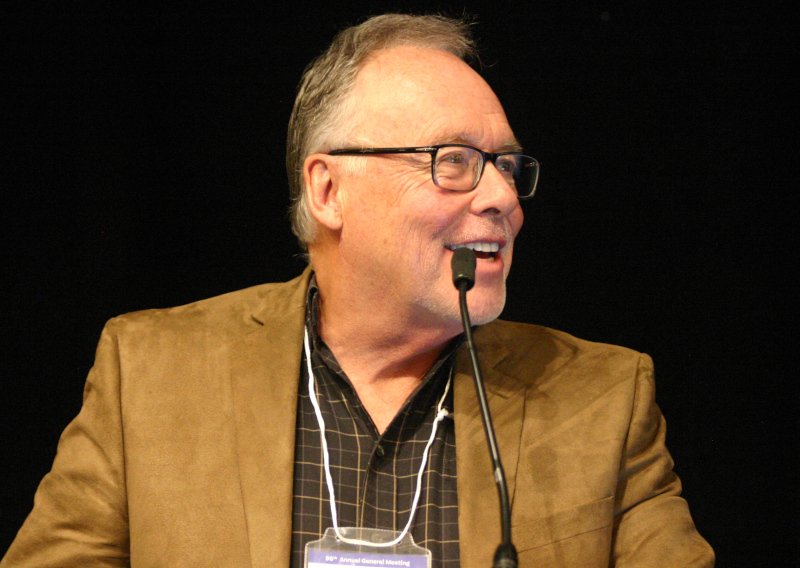
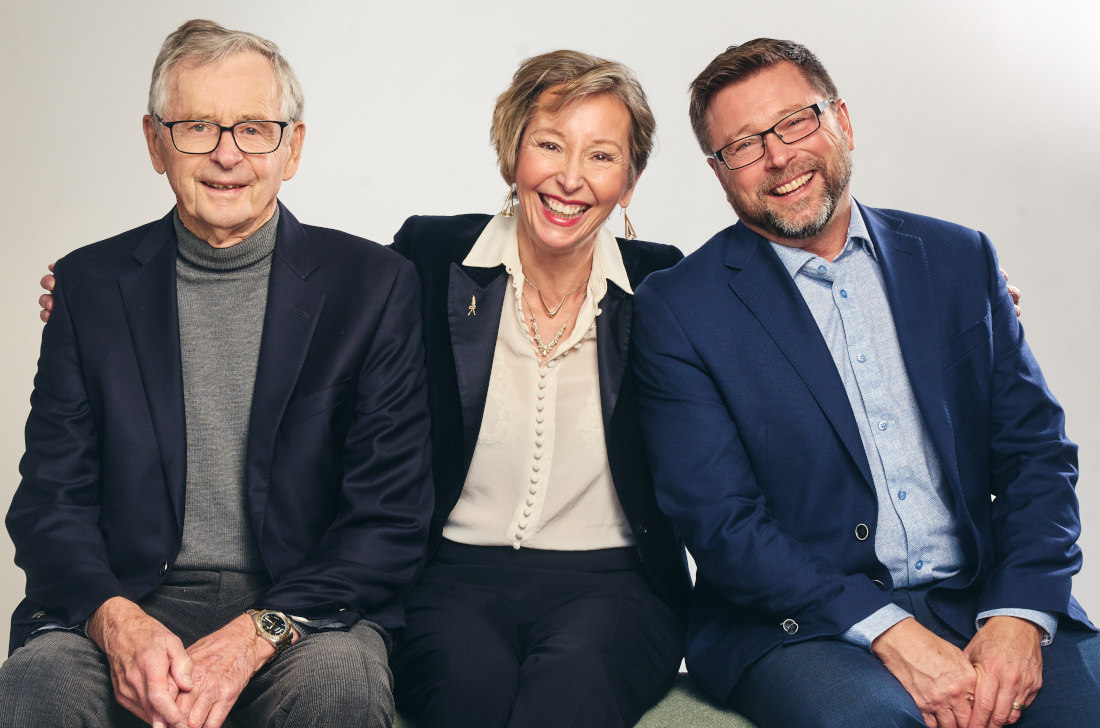
For over 70 years, the Andersons of Dugald, Man. — Bob Anderson; his son Chris (general manager of DL Seeds and Canola Council of Canada board member); and daughter Robynne (founder of Emerging Ag Inc. and a Canadian Agricultural Hall of Fame inductee) — have modeled a style of leadership rooted not in volume but in credibility, clarity, and respect for the people they serve.
Their story isn’t a profile of one operation. It is a blueprint for how agriculture can communicate — and lead — in an era defined by scepticism and speed.
The Farm-Gate Origin of Practical Influence
Before social media platforms rewarded the loudest voice, Bob Anderson was shaping western Canadian agriculture through a seed plant, a legislative seat, community boards, and his family’s kitchen table.
His father survived the Dirty Thirties through sheer ingenuity — growing rye that could withstand drought, beating rye straw to sell as horse-collar stuffing. Innovation wasn’t a business strategy; it was survival.
Bob, now in his 80s, inherited that instinct. With rigid markets, tight margins, and the Canadian Wheat Board controlling delivery, he looked for a different path.
“We always cleaned our own grain to replant,” he recalls. “We just took that a little further. Maybe a lot further.”
That decision launched him into pedigreed seed production, a world defined by precision and intense oversight.
He pursued it not because it was glamorous, but because it needed doing — a philosophy that became the Anderson family operating code.
Bob went on to serve as an MLA, help lead commodity groups like the Prairie Oat Growers Association, guide Western Grains Research Foundation strategy, and advocate for Wheat Board reform long before it was politically feasible.
Robynne summarizes his impact succinctly: “Dad was never the loudest in the room, but he knew how to influence — calmly, clearly, effectively.”
In today’s environment — where amplification often substitutes for expertise — Bob embodies something agriculture needs: earned authority.
The Communications Catalyst Behind the Family
Behind Bob stood his late wife Joan — the family’s communications anchor.
Joan, a vice-president at the Canadian Cancer Society, helped drive national tobacco-control advocacy. She worked in university public affairs and understood how scientific concepts must be translated for the public to trust them.
“She’s the reason the kids see the world the way they do,” Bob says.
Her influence forged communicators. The farm forged credibility. Combined, they shaped the Anderson approach: fact-based, outcome-focused, empathetic.
Innovation Only Matters When People Trust It
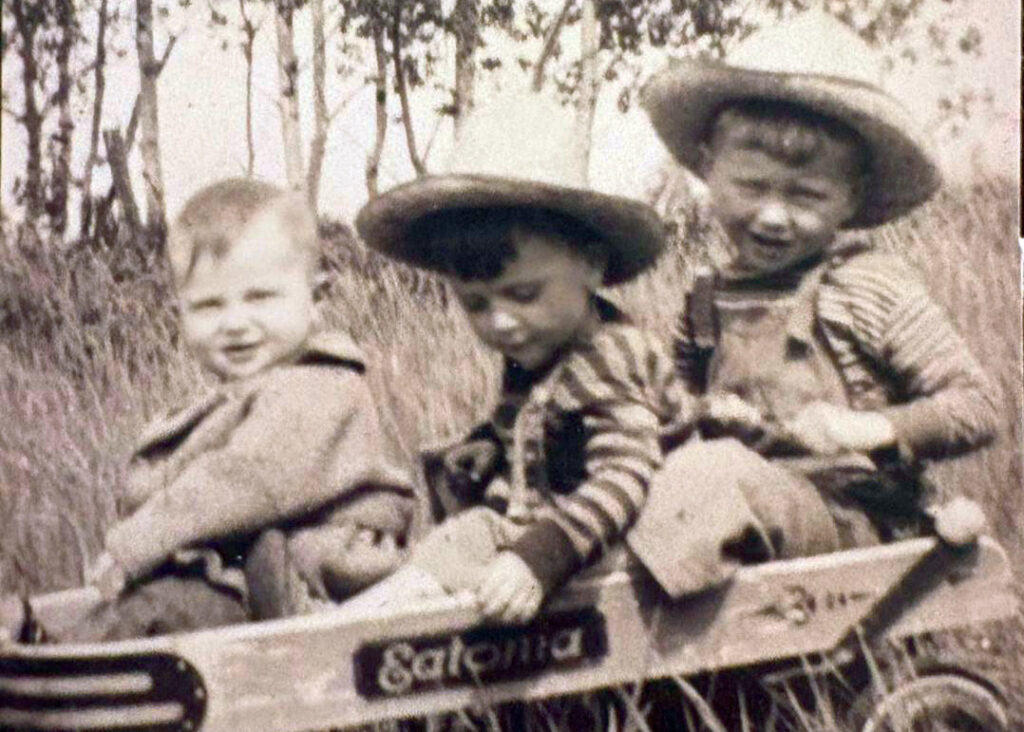
Chris Anderson now serves as general manager of DL Seeds, helping drive one of Canada’s most important innovation pipelines. His entry point was a university genetics class that “flipped a switch.”
His career spans DEKALB/Monsanto, Bayer, Protein Industries Canada, the Canola Council of Canada, and now DL Seeds, where he oversees hybrid development across the Prairies.
Seeing a hybrid he helped develop in a farmer’s field still hits him: “It’s rewarding. But building the product isn’t enough.”
Innovation relies on an ecosystem — growers, processors, retailers, grain companies, researchers. And ecosystems collapse without trust.
“It’s easy to schedule a Teams meeting,” he says. “What’s hard is creating the trust to talk honestly about risk.”
Trust has become the new currency of influence — and Chris builds it the same steady way his father did. Chris’s influence is often defined not by how much he speaks, but by when he chooses to.
As Chris Davison, president and CEO of the Canola Council of Canada, puts it, “Chris is not someone who has to talk a lot to be heard or to have an impact. His comments and interjections are thoughtful and insightful and you get the feeling that he is often drawing on past experiences and considerations when he makes them.”
In meetings, Chris Anderson frequently becomes the person who brings perspective and steadiness to the table, Davison says.
“Through his engagement, Chris often fills the role of providing that ‘sober second thought’, articulating an alternate point of view or encouraging people to think about something that has not yet been considered as part of the discussion. These are valuable and important roles to play and part of what make Chris effective in what he does.”
From Parliament Hill to UN Policy Tables — and a Global Network of Allies
Where Chris brings scientific grounding, Robynne Anderson brings political precision and global reach.
She began as a House of Commons page, then joined the deputy prime minister’s office, where an “accidental” agriculture file became her calling. She quickly discovered how little many decision-makers understood about farming — and committed her career to closing that gap.
She founded Issues Ink in her 20s — the company that would evolve into Seed World’s current brand — and later launched Emerging Ag, now one of the world’s most respected agricultural policy and advocacy consultancies.
A Longtime Collaborator’s Perspective: “She Gets it”
Few people know Robynne on the global stage as well as Lindiwe Majele Sibanda, a Zimbabwe-based scholar, negotiator, and agricultural leader who has worked with her for more than 15 years across UN platforms, climate negotiations, and continent-wide agricultural initiatives.
Sibanda describes their professional overlap as constant: “We interface at most of the major global engagements. And we compare notes about our farming dads — mine is 94 and still on his farm in Zimbabwe; hers still lives on the farm in Manitoba. Once a farmer, always a farmer. It grounds you.”
Their collaboration spans moderating global dialogues, supporting the Alliance for a Green Revolution in Africa, co-leading bids for Africa-wide events, and working shoulder-to-shoulder at the UNFCCC agriculture days and the Committee on World Food Security in Rome.
Sibanda is quick to point out that Robynne’s reputation extends far beyond Canada: “On African soil, she is known and knows everyone — their capacity, their expertise, where they are best placed to serve. In Rome, she is a brand name. On the World Food Prize platform as well. And within the global research community. Her network is exceptional.”
Why is Robynne effective?
“It’s her humility,” Sibanda says. “Her ability to embrace multicultural settings and truly understand the dynamics. She knows when to talk, when to watch, and when to lead.”
She also stresses Robynne’s leadership style inside Emerging Ag: “She attracts good talent, mentors them well, and treats them like family. When someone needs support — not technical support, but personal support — she drops everything. She cares.”
Sibanda adds that technology has amplified Robynne’s reach, not diluted her authenticity:
“Once your brand is known, people can follow your work. Robynne is very active on LinkedIn, and technology has helped her communicate, expand into new areas, and stay visible. It’s made our field more demanding, but also more connected.”
Why the Anderson Example Matters Now
As global trust strategist Payn emphasizes, the people who move public understanding today aren’t the loudest — they are the most authentic.
Sibanda agrees.
“Once you understand how complex and difficult farming is, you become a natural advocate. The real hard work is on the soil. Only the tough cookies get it — and they’re in it for the long haul.”
In a time when AI-generated narratives spread in seconds and fewer people understand what happens on a farm, agriculture needs more leaders who operate like they do: curious, credible, grounded — and genuinely invested in the people they work with.
Because, as Bob Anderson says matter-of-factly: “If something needs to be done, it has to be done by someone who cares enough to make it better.”