Researchers at the University of Saskatchewan are using advanced X-ray imaging to unlock hidden value in Canada’s most important crop, potentially transforming canola oil production, plant-based protein, and omega-7 markets.
Canada’s canola industry already delivers outsized impact, generating $43.7 billion in economic activity each year, according to the Canola Council of Canada. But researchers at the University of Saskatchewan (USask) believe the crop, first developed in the 1970s, could be worth far more if producers rethink how they process the seed itself.
Today, canola oil is the primary output. Everything else is treated as a byproduct. Now, a research team at USask is exploring a new processing technique that could unlock plant-based protein, premium animal feed, and ultra-high-value omega-7 oil, all from parts of the seed that are typically discarded.
Rethinking the Canola Seed
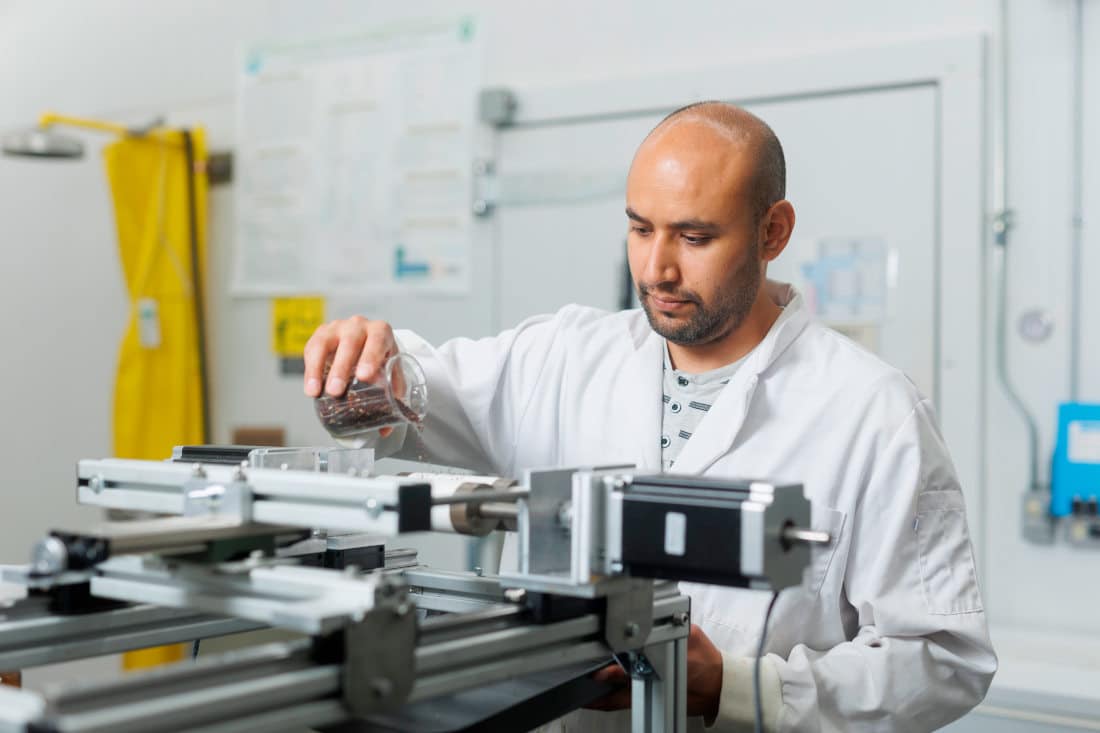
The research was led by Runrong Yin, a graduate student in USask’s College of Engineering, alongside Edgar Martinez Soberanes, who conducted the work during his PhD in engineering and now works in USask’s College of Agriculture and Bioresources.
Using the Canadian Light Source (CLS), a synchrotron facility at USask, the team analyzed a method designed to separate the canola seed’s hull from its kernel, a step that could fundamentally change how the crop is used.
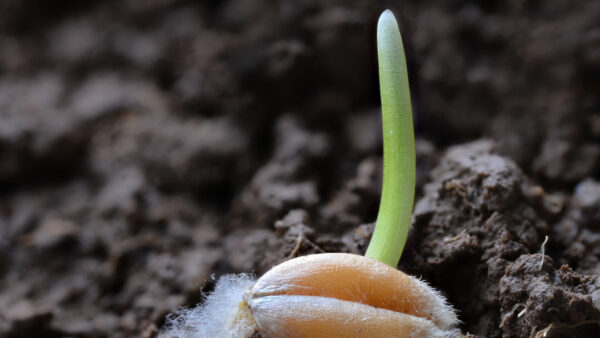
A typical canola seed consists of a tightly wrapped outer hull surrounding an inner kernel. In standard industrial processing, the entire seed is crushed. Oil is extracted, and what remains — known as canola meal, a mixture of hull and protein — is sold as low-quality cattle feed or disposed of as waste.
Separating the hull and kernel before crushing, however, opens the door to multiple higher-value products.
Canola Protein’s Untapped Potential
As much as 30 percent of the canola kernel is protein, according to Soberanes, protein that could be redirected toward human food instead of animal feed.
“My colleague has used canola meal to make high-protein crackers, but it could be used in many other foods too,” he says. “I can picture it in a variety of products on grocery store shelves.”
Canola protein could also serve as a high-quality feed for fish and poultry, markets that increasingly rely on alternative proteins as sustainability pressures grow.
The $7,000 Oil Hidden in the Hull
The real surprise lies in the hull itself. While long considered waste, it contains omega-7 oils, a rare fatty acid with applications in nutrition and cosmetics.
“About $5 could buy you a kilogram of canola oil, but for canola hull oil you’d need to pay $7,000,” says Yin.
Extracting that oil, however, is difficult. The hull clings tightly to the kernel, making clean separation a long-standing challenge for the industry.
Seeing Inside a Two-Millimeter Seed
To solve that problem, the USask team developed a process involving heating, cooling, and moisture treatment. They then used non-destructive synchrotron X-rays at the CLS to observe how the treatment altered the seed’s internal structure.
“We’re talking about a seed the size of two millimeters. That’s very small and the changes inside are even smaller. That’s why we needed to use the CLS’s intense X-rays. Otherwise, we would not be able to see the changes,” says Soberanes.
The imaging revealed a critical breakthrough: the process creates a microscopic gap between the hull and the kernel.
Once that gap exists, the hull can be broken away without damaging the kernel.
“It’s like breaking open a peanut shell. The gap inside helps to separate the nut and it protects the nut when the shell is crushed.”
Built for the Real World, Not Just the Lab
One of the most promising aspects of the method is its practicality. Soberanes notes that the process relies on equipment already common in the canola industry, making it easier to integrate into existing facilities.
Challenges remain, particularly around scaling the technique for industrial use, but the researchers believe commercialization is achievable.
“We want to be able to utilize everything from canola: the oil, kernel, and hull,” says Yin. “Being able to separate these components of the seeds makes this possible. With our process, you can easily and economically get canola oil, omega-7 oil, and canola protein products from canola seeds.”
A Bigger Future for Canada’s Signature Crop
While additional research is needed to move from pilot studies to full-scale deployment, the implications are significant, especially for Saskatchewan and Canada’s broader agri-food economy.
“We feel confident that we can provide an increase to the value that canola already has that will benefit Saskatchewan and Canada,” says Soberanes.