In a seed industry defined by rapid change and increasingly complex trade pathways, 2025 underscored one truth: seed quality depends on scientific consistency across borders.

For SGS, 2025 was about strengthening consistency — harmonizing testing across North America, accelerating diagnostics for growers, advancing international standards, and supporting a global community built on trust.
One North American Network, One Scientific Language
Seed quality testing today happens in a world where borders matter, but consistency matters more. With seed moving freely between Canada and the United States, customers no longer think in terms of separate markets — they think about production, movement, and performance across an integrated supply chain.
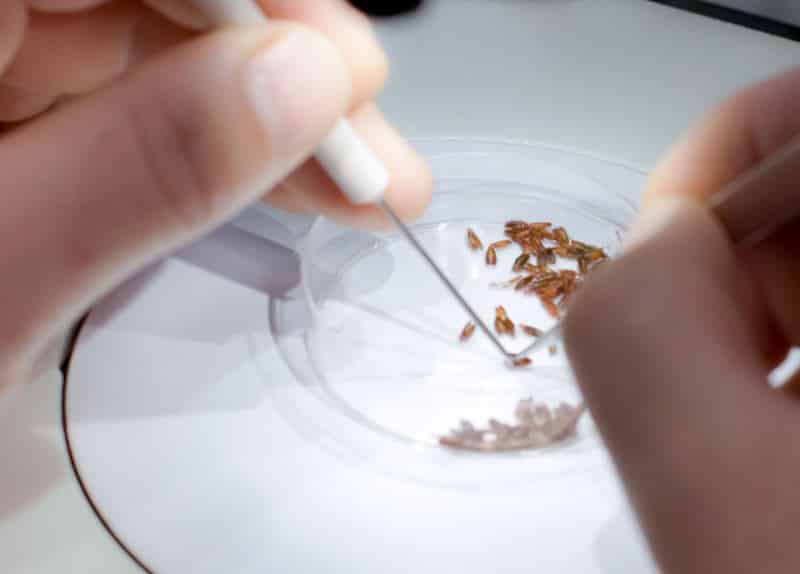
SGS’s North American laboratories function as one unified system, ensuring identical service regardless of where a sample lands. Whether tests follow CFIA rules, AOSA guidance, or ISTA standards, our analysts work from harmonized criteria validated through real-time comparison. A germination tray in Brookings, South Dakota, can be evaluated simultaneously with the same lot in Sherwood Park or Grande Prairie — thousands of kilometres apart, yet side-by-side for interpretation.
This alignment proved crucial during challenging logistics this year, when both physical seed shipments and sample transfers were affected by adverse conditions. By operating as an integrated network, we removed obstacles rather than adding to them — especially for forage, grass seed, and cover crop clients navigating peak export seasons.
A recent example illustrates the value: a customer required the exact same vigour method applied to treated seed on both sides of the border. SGS teams exchanged methodologies, ran comparison tests, evaluated seedlings collaboratively by video, and conducted a full validation study. The result was complete confidence in cross-border consistency — a reminder that even as AI tools emerge, the expertise of trained seed analysts remains irreplaceable.
Global Collaboration That Elevates Testing Standards
This year also showcased the power of SGS’s contributions to the International Seed Testing Association (ISTA). SGS is represented on nearly half of ISTA’s technical committees, enabling us to help shape global testing rules and ensure new methods arrive in all our labs simultaneously.
A highlight for SGS, member of the organizing committee, was securing the bid to host the 2026 ISTA Annual General Meeting in Calgary. It will be the country’s first ISTA meeting in 43 years. The event will spotlight Canada’s leadership in seed science and help inspire the next generation of seed analysts at a time when attracting new talent is critical for our industry. Stay tuned for registration details for the ISTA Seed Health Testing workshop, coming to SGS Sherwood Park laboratory June 15th-17th.
One of the year’s most groundbreaking global efforts came from SGS Canada’s Fusarium diagnostics team, led by Nicole Calliou. Working through ISTA, she helped build the world’s first open-access, image-based Fusarium identification database — a resource documenting every variable that affects colony appearance, from agar type to lighting to growth duration. For labs around the world, especially those in developing regions, this tool brings new clarity and consistency to one of the most challenging pathogen identifications in seed testing.
Diagnostic Innovation: Faster Answers, Stronger Decisions
2025 also marked major advances in molecular and genomic diagnostics, giving growers faster and more precise insights than ever before.
- Automation Driving Better Pathogen Testing: With the adoption of robotic DNA extraction, SGS dramatically increased throughput for clubroot and Aphanomyces testing. Samples that once required meticulous manual processing can now be handled with robotic precision — doubling capacity, reducing human error, and freeing analysts to focus on higher-value diagnostic work. These molecular tools continue to evolve: quantification of clubroot inoculum is now standard practice, and genomic methods to identify specific clubroot pathotypes are on the horizon.
- A Breakthrough in Herbicide Resistance Testing: A major milestone this year was launching rapid herbicide resistance testing for fresh plant tissue. Instead of waiting months for greenhouse growouts, farmers can now receive target-site resistance results for wild oats and kochia in one to two weeks. Offered by SGS in partnership with TurnKey Genomics, the test empowers growers to make in-season decisions — a crucial advancement as resistance challenges escalate across the Prairies.
- Confidence for Faba Bean Protein Supply Chain: As the demand for alternative proteins and sustainable livestock feed continues to rise, faba beans have an exciting future. Our role is to provide the testing services that keep this industry moving forward. Whether breeders are developing the next breakthrough variety or processors are ensuring the integrity of their protein ingredient, we deliver fast, accurate and convenient tannin testing, first of its kind by a Canadian seed laboratory.
Canadian Expertise, Global Reach
Across the SGS North American network (Sherwood Park, Grande Prairie, and Brookings), regional expertise is backed by global standards. Sherwood Park’s expanded chemistry and disease capabilities, Grande Prairie’s strength in fescue and vegetable testing, and Brookings’ deep experience in corn, soybeans, and trait confirmation all contribute to a robust system that supports seed companies from early-stage breeding to international export.
Cold stress tests, vigour evaluations, thousand kernel weight analysis, ISTA Orange International Certificates, APHIS documentation, and molecular assays all converge to help clients make informed, confident decisions. The 2025 seed crop test results highlighted the value of that insight, with extreme variability in germination and kernel weight making accredited, harmonized testing more essential than ever.