The recent reported departure of Richard Cuthbert, a senior wheat breeder at Agriculture and Agri-Food Canada’s Swift Current Research and Development Centre, has intensified calls from Canadian wheat growers for decisive, forward-looking action to secure the future of the country’s public wheat breeding system.
Cuthbert’s reported exit comes at a moment of mounting pressure on public research capacity. The federal government has directed departments, including AAFC, to implement budget reductions, compounding nearly a decade of year-over-year funding constraints on public wheat breeding programs. During that same period, growers have increasingly stepped in to fund the system through checkoffs and levy dollars, underscoring both their financial commitment and their stake in its long-term success.
In a statement released Jan. 12, Gunter Jochum, president of the Western Canadian Wheat Growers Association, says Canada must build deliberately on its breeding legacy.
“The opportunity in front of us is to turn that legacy into a launchpad for the next generation of innovation, talent, and growth. That requires foresight, continuity, and a clear commitment to building on what already works,” he said.
Canada’s public wheat breeding system has delivered elite genetics that underpin productivity, end-use quality, and the country’s reputation in global markets. Growers warn, however, that sustained funding pressure, mandated cuts, and the loss of experienced personnel heighten the importance of deliberate planning to protect institutional knowledge and long-term program value.
“Wheat breeding is a long-term endeavour measured in decades, not fiscal cycles,” Jochum added. “When experienced people move on during periods of constraint, it raises important questions about how knowledge is transferred, how continuity is maintained, and how we ensure the full value of growers’ investments is preserved.”
A System in Transition
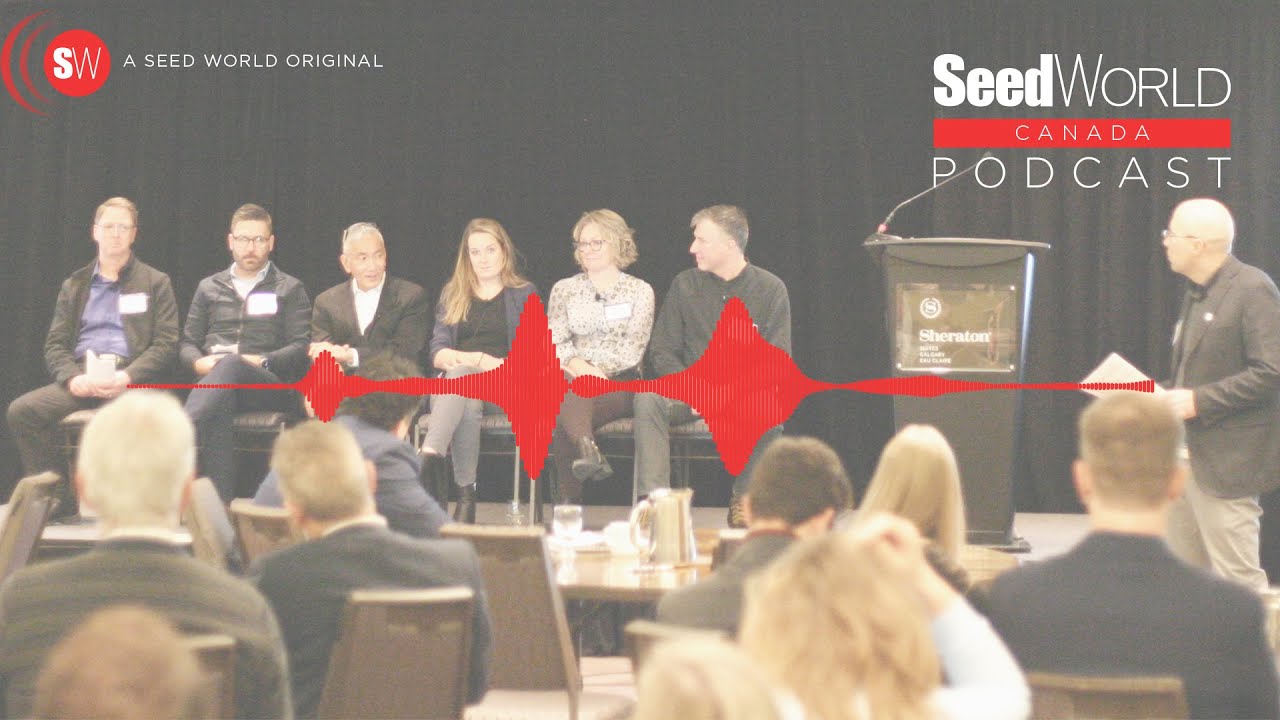
Concerns surrounding the loss of breeding capacity and continuity were echoed in broader industry discussions late in 2024, including during a panel at the Interprovincial Seed Grower Meeting in Calgary hosted by the Alberta-British Columbia Seed Growers. The panel explored how AAFC’s historical role in delivering field-ready cultivars is evolving and what that transition means for the future of plant breeding in Canada.
“We’ve been in this business for more than 100 years,” said François Eudes, AAFC’s research, development, and technology director and national science lead for breeding innovation and crop germplasm development. “But the way we conduct science has to adapt to challenges farmers face, emerging technologies, and shifts in the seed sector.”
Eudes described AAFC’s growing emphasis on upstream science — such as genomics, gene editing, and artificial intelligence — while acknowledging that this evolution signals a changing role in delivering finished varieties.
“We’re committed to plant breeding,” he said. “But we recognize we’re not the only science provider. Collaboration with other players is essential to ensure innovations reach the market efficiently.”
Holly Mayer, AAFC’s director of science partnerships, pointed to structural vulnerabilities in the current system, including reliance on short-term funding cycles.
“This reliance on a federal government program and a five-year funding cycle is far from ideal,” Mayer said, noting the decade-long timelines required to develop new varieties.
The Cost of Inaction
For Robert Graf, a retired AAFC winter wheat breeder who helped develop some of Canada’s most recognized varieties, the stakes are clear.
“Canada has been a bright spot in wheat yield increases globally,” he said, “but if we reduce our capacity for delivering field-ready cultivars and don’t have a solid plan in place to fill that void, the consequences could be dire.”
Graf, currently science advisor for SeedNet, emphasized that breeding pipelines operate far ahead of market realities. “What’s coming out in the next five years is already in the pipeline,” he said. “By the time we notice a problem, it will be too late, and clawing our way back will be a monumental task.”
Others on the panel pointed to collaboration and diversified funding models as key to maintaining resilience. Curtis Pozniak, director of the Crop Development Centre at the University of Saskatchewan, stressed the importance of stable, program-based funding.
“Plant breeding is inherently a long-term endeavour,” Pozniak said. “Program-based funding provides stability — supporting our people, infrastructure, and core breeding activities. Without it, the work simply can’t continue.”
A Call to Build, Not Dismantle
The Wheat Growers emphasize that their response to Cuthbert’s departure is not a call to abandon public science, but to strengthen and modernize it through improved governance, investment models, and partnerships that can attract talent and encourage collaboration.
“Growers are not looking to tear anything down,” Pawlik said in the statement. “We are looking to build. To take ownership of a system we already invest in, grow its value, and ensure it remains a source of pride, competitiveness, and opportunity for Canada.”
According to the Wheat Growers, Canada still has all the essential ingredients for success: world-class science, committed farmers, and a proven breeding legacy. What is needed now, they say, is leadership and a shared commitment to shaping what comes next — before further capacity and expertise are lost.