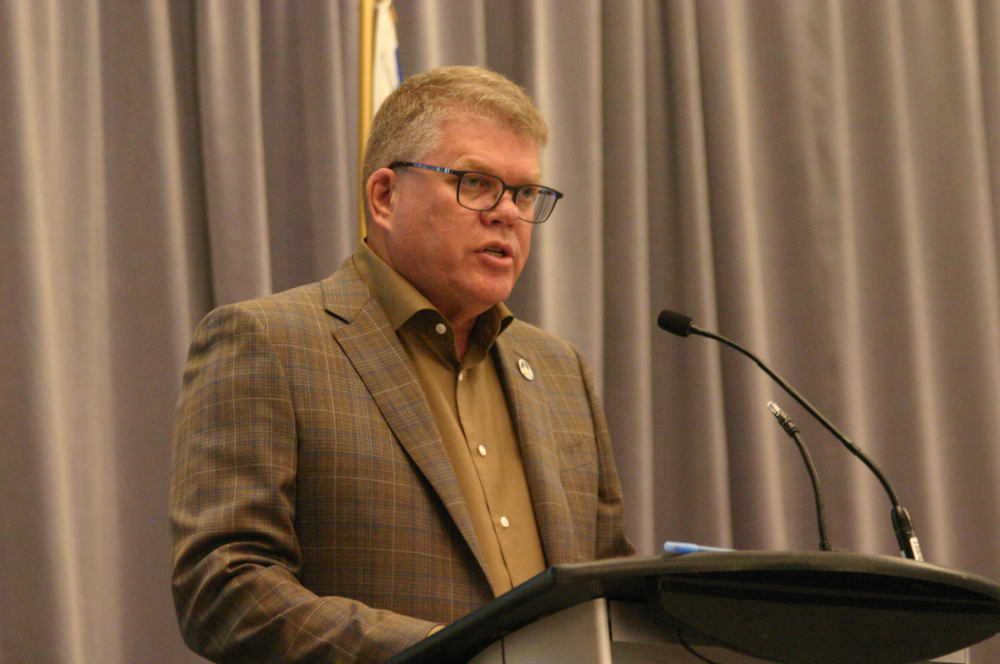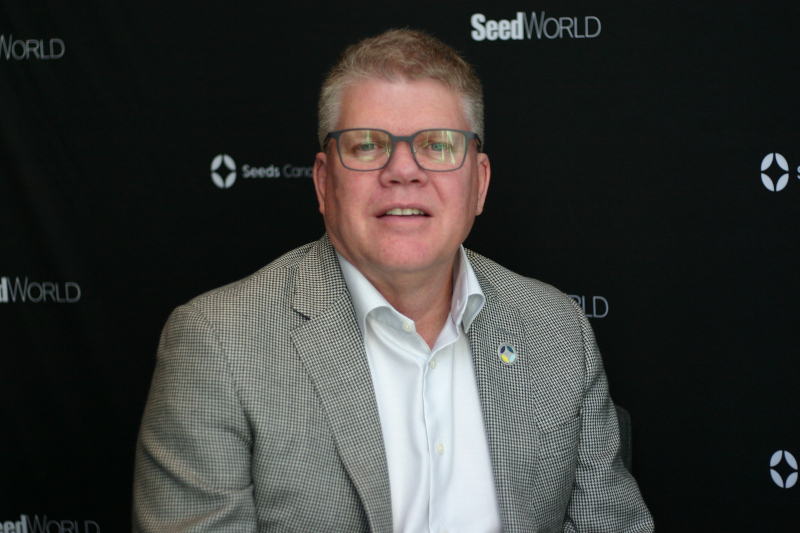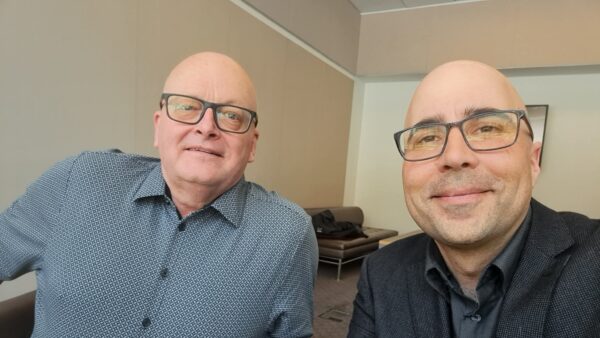
After a career spanning Syngenta, Bayer and Monsanto, Dan Wright steps into Seeds Canada’s top role with a listening-first approach and a focus on collaboration, innovation and regulatory modernization.
Dan Wright didn’t arrive at Seeds Canada by accident — or by some sudden midlife pivot away from the corporate world.
His path to becoming Seeds Canada’s new CEO has the steady logic of someone who has spent a lifetime watching how industries work when they’re at their best: not as isolated companies competing in silos, but as ecosystems held together by shared infrastructure, shared standards, and shared purpose.
Yes, it’s a different ball game. Wright spent years inside the private sector — Syngenta, Bayer, and Monsanto — where decisions are often driven by market share, investment cycles, and competitive advantage.
“Leading a national industry association requires a different lens. But it’s one I’ve been sort of looking through since I was young,” he says.
Wright’s belief in the power of associations started at home. He grew up watching his father devote years to the Ontario Retail Farm Equipment Dealers Association. He didn’t just hear about it at the dinner table; he sat in meetings as a young adult and absorbed the culture of collaboration. People working together, even when they’re competitors, “for the betterment of an industry.”
That early exposure stuck. Even before he entered the seed business, Wright worked in farm equipment. His parents owned a farm equipment dealership, and when the family made the hard decision to close it in 1990, it was painful, but formative: a firsthand lesson in how quickly market conditions can change.
And how hard those changes land on real people.
It also cemented a theme that now runs through Wright’s leadership philosophy: resilience comes from collective action. Later, he worked in a joint venture connected to the same equipment association he grew up around, engaging directly with members and learning how trust is built at the ground level.
So, when opportunities came up in the seed sector to get involved in association work — back in the days of the Canadian Seed Trade Association (CSTA) — Wright didn’t hesitate. He advocated to get engaged. He learned the landscape. He met the people. And he kept coming back to what he describes as the central appeal: “You get to work for the bigger good.”
Now, stepping into Seeds Canada after its first five years under former CEO Barry Senft, Wright sees the timing as more than a leadership transition. He sees it as a strategic moment for the Canadian seed industry.
“Seeds Canada has passed a major milestone: the association is established, functioning, and in great shape. The foundational work has been done. The question now is what comes next, and what we need to become in its second phase,” Wright says.
“I don’t have a prewritten agenda,” he adds. Instead, he’s deliberately resisting the executive impulse to “fix” things on day one. His priority is a 60-day listening tour: meeting as many people as possible, learning, and engaging without assumptions.
In his first week, he attended a board meeting, went to Manitoba Ag Days, met staff, and connected with most of the board. The schedule only intensifies from there: Ottawa, a food conference, meetings in London, Ont., the Prairie Grain Development Committee meetings, and international engagements including gatherings of the American Seed Trade Association and the International Seed Federation.
This, in Wright’s view, is the real work of association leadership: not commanding from the top but shaping direction from the membership outward.

A Natural Progression
For some in the seed sector, Wright’s selection felt less like a surprise and more like a natural progression.
Scott Horner of HyTech Production has known Wright for years, most closely during their overlap on the CSTA executive.
That period, Horner says, is where he got to know Wright best, at the time when Wright was a leader at Monsanto and bringing a corporate executive’s perspective into the association environment.
When Horner heard Wright was becoming CEO of Seeds Canada, his reaction was immediate.
“I thought it was a really good fit,” he says.
Horner points to Wright’s mix of corporate leadership experience and association fluency, something not every executive has.
“Dan’s got a great perspective on the industry, given his history and his experience. Working in senior leadership roles with seed industry companies in Canada, as well as his experience as an advocate in the industry, counts for a lot,” Horner says.
What stood out most to Horner wasn’t just Wright’s résumé. It was the way he carried himself in rooms where competing interests had to find common ground.
“I got an appreciation for the depth of knowledge, perspective, vision that he has. And certainly he’s a great communicator. I think that’s really important in that role. He’s sharp, he’s quick and he’s articulate.”
In other words: Wright doesn’t just understand the files. He understands the people.

That matters now more than ever, because Wright isn’t stepping into a stable, settled landscape. He’s stepping into a moment of change.
Leadership is changing across the sector. The Canadian Seed Growers’ Association (CSGA) also is set to welcome new leadership. And behind the scenes, there are long-running tensions that many in the seed industry know exist, even if they rarely get talked about publicly.
Horner believes Wright is particularly suited to this moment because of his ability to build relationships quickly, and keep the bigger picture from getting hijacked by personality conflicts.
That bridge-building ability is also something Michelle Wall, who worked alongside Wright at Syngenta, sees as central to why he’s the right leader for Seeds Canada’s next chapter.
“I think that Dan is the perfect person for this kind of next phase,” Wall says. “We’re through the growing pains of the first five years, and now I think Dan can lead us through into forward momentum on a lot of these projects that we have ongoing.”
Wall’s confidence is rooted in how Wright operates when the work gets messy — when multiple perspectives collide, and when an organization needs both direction and trust.
“I think one of his biggest qualities is that Dan’s a real good listener,” she adds. “When he says ‘I’m open to hearing everybody’s input and all the voices of the members,’ that is not lip service.”
In an industry where leadership can sometimes feel like a top-down exercise, Wall argues Wright does something more subtle and more powerful: he decentralizes expertise.
Despite holding senior leadership roles, she says, Wright has always been skilled at identifying the subject matter experts in the room and leaning on them.
That approach, she believes, is exactly what Seeds Canada needs right now as it moves from building the organization to finishing the big files already in motion — Seed Regulatory Modernization, the Variety Use Agreement (VUA), and the wider question of how Canada maintains seed innovation capacity in the face of shifting federal priorities.
Wall can point to a specific moment when Wright’s leadership style changed her own trajectory in the association.
She remembers her first Seeds Canada meeting sitting beside him, when a regulatory issue came up and she leaned over with a suggestion.
“And he looked at me and said, ‘Well, you’re the expert. You tell them what you think. Don’t get me to do it,’” Wall recalls.
Wright didn’t just encourage her to speak up — he pushed her into leadership.
That empowerment, she believes, is something Seeds Canada members will feel under Wright’s leadership as well.
If Senft’s leadership was about building the machine — establishing a new association, creating structure, getting the fundamentals in place — then Wright’s leadership, in Wall’s view, will be about activating it. Taking the projects that are already underway and either moving them into their next phase — or pushing them over the finish line.
As Seeds Canada began the search for a new CEO, President Brent Collins says the organization had a rare opportunity to reflect on both its progress and its future direction.
“When we started out on the recruitment for the new CEO for Seeds Canada, we kind of had a clean slate,” Collins explains. “We had just completed a strategic plan, and [Barry Senft] had done such a marvelous job rolling that out. He really took us from zero to 60 in five years.”
With that foundation firmly in place, the board was looking for someone who could build on the momentum — not simply maintain it.
“We were really looking for someone that would have a seed background, first of all, but then the ability to take that strat plan and really carry and implement some of the key pillars that we identified,” Collins says. “Dan’s myriad of attributes made him a logical candidate… and we’re just thrilled that we’ve been able to land him.”
While Wright’s industry credentials were strong, Collins said it was a more personal quality that stood out during the selection process. “I knew Dan, but the one thing that jumped out at me upon spending more time with him was his listening skills,” Collins says. “We’ve discussed in detail not running too fast at the beginning, but walking at a pace where Seeds Canada’s ears are wide open — listening to the needs of what our members are asking for and what the seed industry is looking for. That’s a skill set he’s really strong at.”
That deliberate, listening-first approach comes at a pivotal time for the organization and the broader sector. With leadership changes across industry groups and ongoing conversations around seed regulatory modernization, breeding investments and intellectual property, Collins believes the timing is right.
“You look at some key topics like Seed Regulatory Modernization that have taken so much of the airspace,” he says. “Now breeding investments and intellectual property seem to be the two key areas — and Dan brings expertise in both those areas. The timing really fits like a glove for him in terms of being able to use his knowledge base.”

No Room for Silos
For Wright, that transition comes at a moment when the Canadian seed sector is under pressure from multiple directions at once.
The impact of cuts at the Canadian Food Inspection Agency (CFIA) and Agriculture and Agri-Food Canada (AAFC) is no longer theoretical. Wright describes it as the difference between “what if” and “how do we deal with it today.”
His message is blunt: the seed system cannot function on either public or private investment alone. It needs both.
“Companies don’t invest because they like a certain country. They invest because the environment there is stable, the regulatory pathway is clear, and the innovation ecosystem has depth,” he says.
“If Canada becomes perceived as unpredictable — if either public or private programs shrink without a co-ordinated strategy to sustain or grow output — then farmers don’t just lose varieties. They lose leverage in the global market.”
And in Wright’s framing, that’s the anchor point for everything: the farmer.
He returns to the idea repeatedly: agriculture can get distracted by internal complexity, but success comes from staying focused on what farmers need at the end of the day — and building backward from that.
In other words, don’t start with institutional structures. Start with outcomes.
What varieties do farmers need? How many? What traits? What timelines? What keeps them competitive globally?
Then design the system that produces those outcomes.
Wright is optimistic that the industry can do it, but only if it moves forward collaboratively.
“There’s no room for silos,” he says.