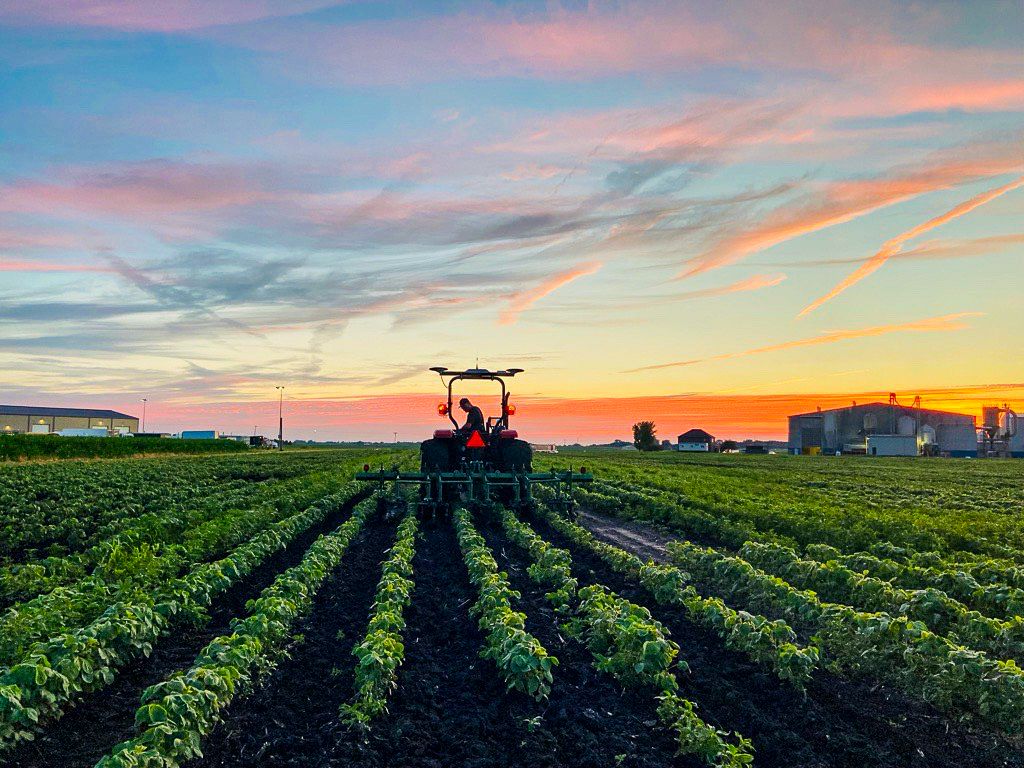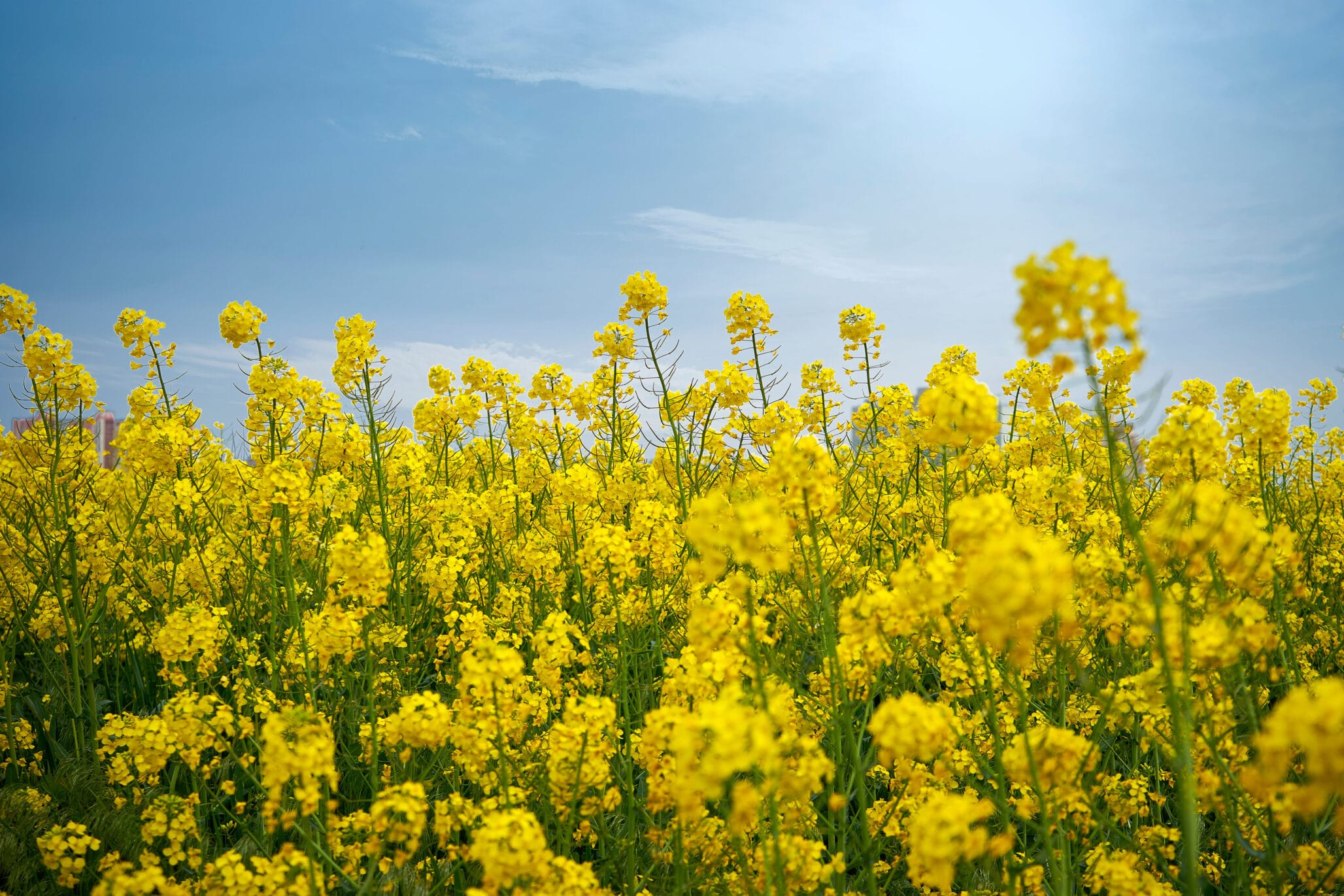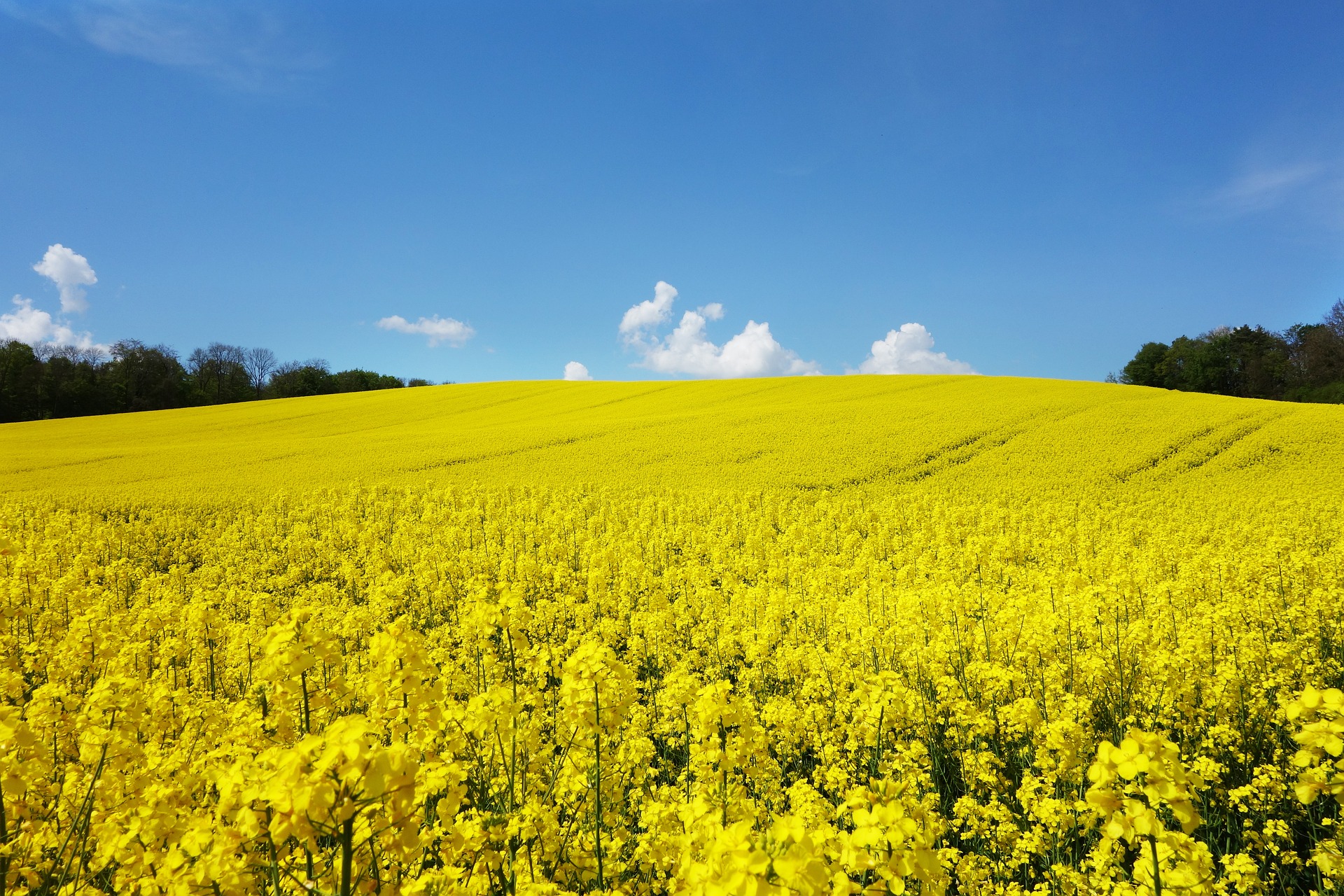
Walk through the agricultural heartlands of Canada, northern Europe or Australia in early summer and you’ll see it everywhere: fields of brilliant yellow stretching to the horizon. Rapeseed — known as canola in North America — is one of the most widely grown crops on the planet. It fuels our cooking, feeds our livestock, and powers biodiesel engines across three continents.
Yet most people have never eaten it directly, and for good reason: in its raw form, rapeseed is effectively toxic to humans.
That may be about to change. Researchers at the University of Copenhagen have made a discovery that could unlock rapeseed’s remarkable protein content and position it as one of the most important sustainable food sources of the coming decades. Here’s what they found — and why it matters.
What Is Rapeseed?
Rapeseed (Brassica napus) is an oilseed crop in the mustard family, closely related to cabbage, broccoli, and kale. It’s one of the world’s top three sources of vegetable oil, after soybean and palm, and the leading oilseed crop grown in Europe.
The plant produces small, round seeds packed with oil — typically 40–45% by weight — which are crushed and processed into the cooking oil you find in every supermarket. After the oil is extracted, the remaining meal is protein-rich and widely used as livestock feed.
What makes rapeseed remarkable from a nutritional standpoint is what’s left after the oil: seeds that are 30–40% protein by dry weight. That’s comparable to soybean, the crop that currently dominates the global plant protein market.
Rapeseed vs. Canola: What’s the Difference?
The two terms are often used interchangeably, but there’s a meaningful distinction.
“Rapeseed” refers to the broader species, including older varieties with high levels of erucic acid — a fatty acid that raised health concerns in the 1970s. “Canola” is a trademarked name (derived from “Canadian oil, low acid”) given to varieties that were specifically bred in Canada to have very low erucic acid content, making the oil safe for human consumption.
Today, virtually all commercially grown rapeseed in Europe, Canada, and Australia is of the canola-type variety. The two words mean essentially the same thing in modern agricultural practice — the differences are historical and regional more than botanical.
So Why Can’t You Eat Rapeseed?
The oil is safe. The problem is the whole seed.
Rapeseed seeds contain a group of natural compounds called glucosinolates — the same class of chemicals that give wasabi its eye-watering heat and mustard its sharp bite. In rapeseed, glucosinolates serve as a natural defence mechanism against insects and pathogens. In concentrated form, as found in raw seeds, they interfere with thyroid function and are harmful to humans in any meaningful quantity.
This is why rapeseed protein — despite being abundant, affordable, and nutritionally well-balanced — hasn’t made it onto supermarket shelves the way soy protein has. Processing can reduce glucosinolate levels, but not reliably or cheaply enough to make the whole seed viable as a direct food ingredient at scale.
The result is a paradox: one of the most protein-rich crops in the world, grown on millions of hectares across the northern hemisphere, that humans can’t eat.
The Copenhagen Breakthrough
Researchers at the University of Copenhagen’s Department of Plant and Environmental Sciences have made the most significant step yet toward solving this problem.
Publishing in Nature, the team identified the specific proteins responsible for transporting and storing glucosinolates within rapeseed seeds. Until now, scientists knew glucosinolates were present in seeds and understood their chemical structure — but didn’t know the precise cellular mechanism that puts them there and keeps them concentrated.
“Our discovery has allowed us to find a way to eliminate these bitter substances from the seeds,” said Dr. Deyang Xu, lead researcher on the study.
The team’s work was conducted using thale cress (Arabidopsis thaliana), a small flowering plant widely used in botanical research because its genetics are extremely well understood. By identifying the proteins in this model plant — which is closely related to rapeseed — they were able to map the “cell factory” responsible for glucosinolate production and storage in seeds.
The significance is that once you know which proteins are doing the job, you can target them. Switch off the transport mechanism and glucosinolates don’t accumulate in the seed — potentially leaving everything else intact, including the protein content that makes rapeseed so nutritionally valuable.
Why This Matters for Food and Agriculture
The timing of this research intersects with one of the most pressing challenges in global food systems: where will the protein come from as the world’s population grows and meat consumption needs to decline?
“The climate crisis demands that we reduce meat consumption and eat more plants, which is where rapeseed has great potential,” said Professor Barbara Ann Halkier, who leads the DynaMo Centre at the University of Copenhagen, which funded the research through a 10-year Danish National Research Foundation grant.
Rapeseed already has several advantages over other protein crops:
- It grows where soy can’t. Rapeseed thrives in temperate climates — Canada, northern Europe, the UK — where soybean cultivation isn’t viable. Sourcing protein locally rather than importing South American soy would significantly reduce food system emissions.
- The infrastructure already exists. Processing facilities, supply chains, and agricultural know-how are all in place. This isn’t a new crop that needs to be introduced — it’s a crop already being grown at massive scale.
- The protein quality is strong. Rapeseed protein has a good amino acid profile and is suitable for human nutrition, pending the glucosinolate problem being solved.
In the EU alone, rapeseed already accounts for half of all plant proteins produced domestically. The question has never been whether rapeseed could be a protein source — it’s been whether the glucosinolate barrier could be removed.
What Happens Next
The Copenhagen team’s immediate next step is to transfer their findings from thale cress to actual rapeseed plants — a more complex organism with a larger genome. This is where laboratory discoveries often face their biggest test: what works in a model plant doesn’t always translate cleanly to a commercial crop.
If the glucosinolate transport proteins in Brassica napus behave similarly to those in Arabidopsis — and the researchers have good reason to believe they will — the path forward involves either breeding programmes that select for low-glucosinolate seed expression, or precision gene editing to switch off the relevant proteins directly.
Neither is an overnight process. Regulatory approval for gene-edited crops varies significantly across markets, and conventional breeding to fix a trait this specific would take years. But the research has identified the target. That’s the critical step that was missing.
For the seed industry, the implications are significant. Companies already invested in rapeseed breeding — for oil content, disease resistance, yield — may find protein content becoming a fourth major trait in the coming decade. Varieties optimised for human consumption could command premium pricing and open entirely new markets.
The Bottom Line
Rapeseed is one of the most underutilised protein sources on earth — not because of any fundamental nutritional deficiency, but because of a single biochemical barrier that has, until now, been poorly understood at the cellular level.
The University of Copenhagen’s discovery doesn’t solve the problem overnight. But it identifies the mechanism precisely enough that solving it becomes, for the first time, a genuine engineering challenge rather than an unsolved scientific mystery.
A crop that already covers millions of hectares, grows in some of the world’s most productive agricultural regions, and contains protein levels comparable to soy may be closer to feeding people directly than it has ever been.
The research was published in Nature and conducted at the DynaMo Centre, University of Copenhagen, Department of Plant and Environmental Sciences, supported by the Danish National Research Foundation.