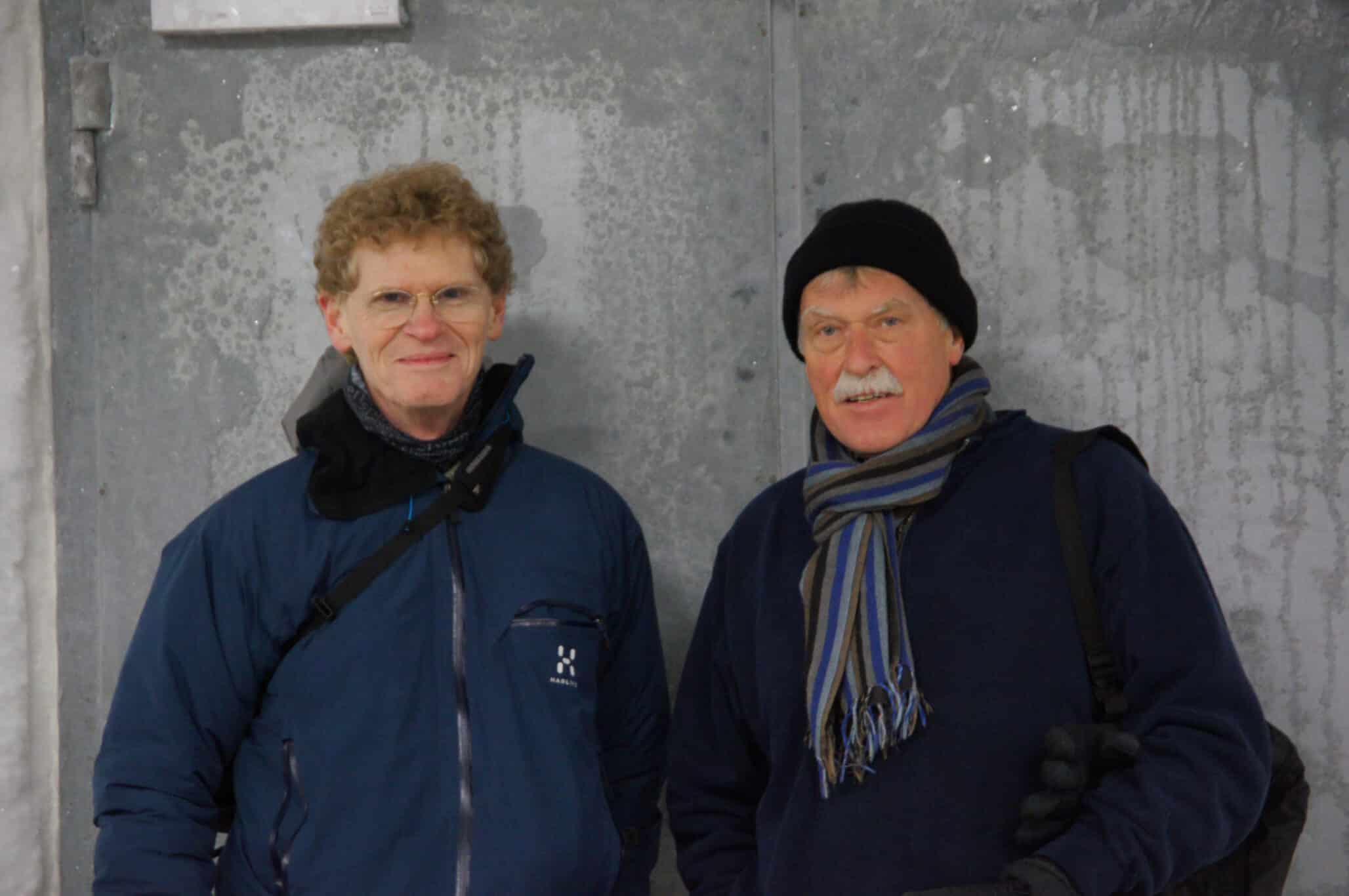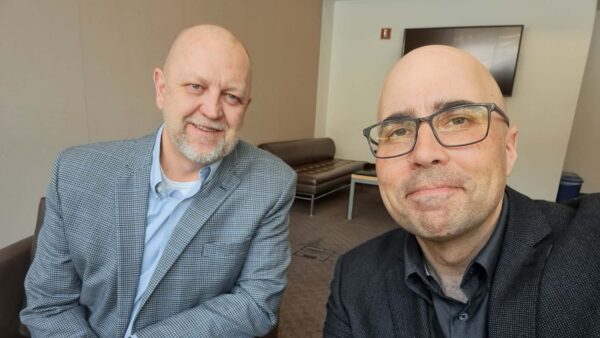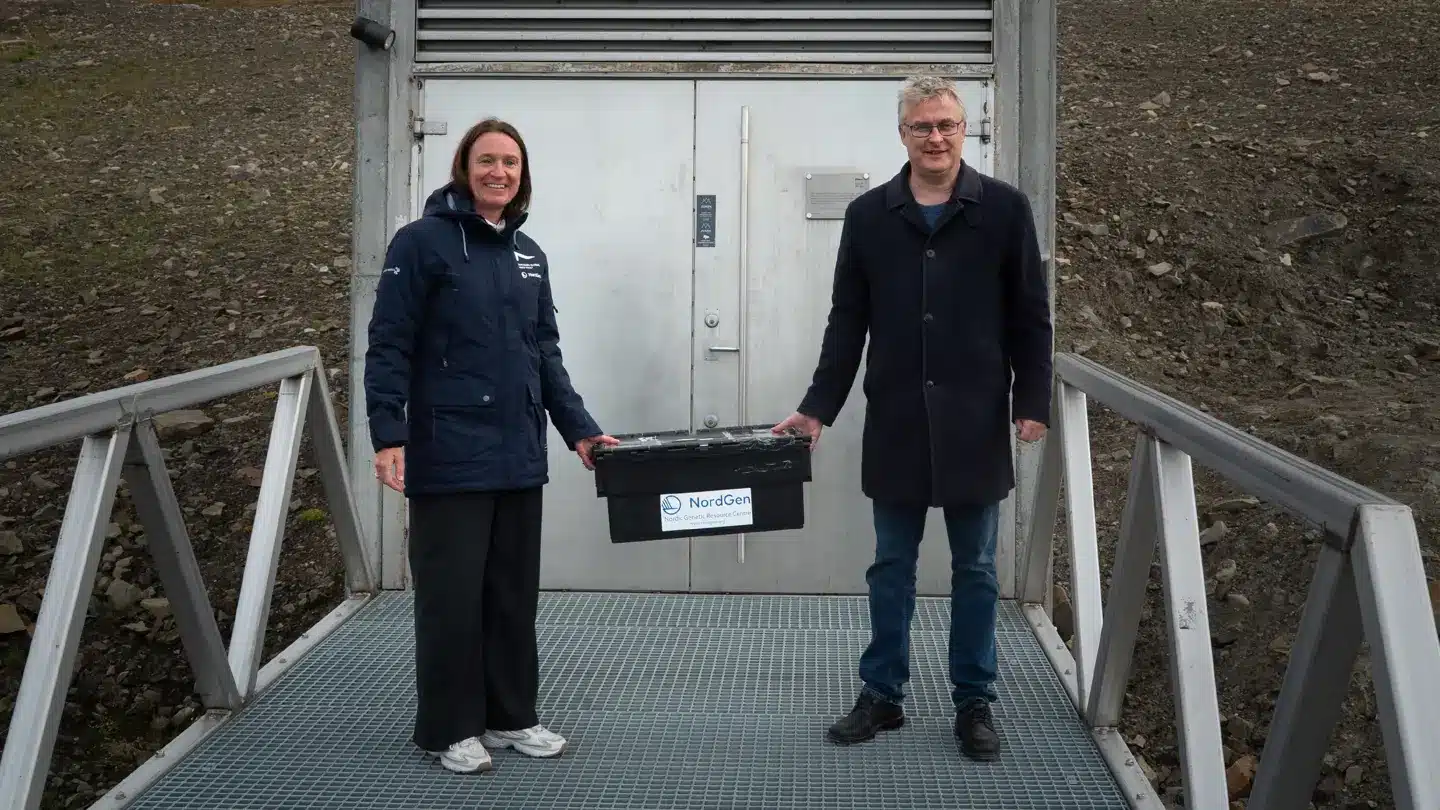
On Aug. 17–18, Danish Minister Jacob Jensen visited Svalbard with a delegation. The trip included learning about the work carried out at the Svalbard Global Seed Vault. During the visit, the minister reviewed the seed shipment prepared by NordGen for the next deposit, scheduled for October.
The shipment contains 381 seed samples from the Nordic countries’ joint collection, 19 of which are of Danish origin. These include wild carrot and lingonberry, along with cultivated varieties such as turnips, root parsley, and perennial ryegrass. In total, the Seed Vault currently holds more than 4,600 seed samples from Denmark, representing 241 different plant species.
”I greatly appreciate this collaboration. We live in turbulent times, so it is good to know that someone is safeguarding this part of our heritage. It is an honor for me to carry this box, which contains such important contents, not least for food security in the Nordic countries,” said minister Jensen.
During the visit to the Seed Vault, presentations were given by Grethe Helene Evjen, Senior Advisor at the Norwegian Ministry of Agriculture and Food, and Lene Krøl Andersen, Executive Director of NordGen. Andersen highlighted two long-term experiments in Svalbard that monitor seed viability over a 100-year period, according to a press release.
The first experiment was launched in 1986 by the Nordic Gene Bank — predecessor to NordGen’s current plant division — in the now-closed Coal Mine No. 3. It examines the longevity of 17 key Nordic agricultural crops stored in permafrost, as well as the survival of seed-borne diseases under those conditions.
A second experiment is being carried out at the Svalbard Global Seed Vault. This study focuses on 14 globally important crops supplied by six genebanks worldwide, though it does not include research on pathogens.
“All genebanks work with various forms of long-term conservation, but the knowledge about seed viability is limited. In both experiments in Svalbard, germination tests are conducted over a long and actual period of time. This is what makes the experiments unique and valuable,” says Lene Krøl Andersen.
Jensen’s trip to Svalbard also ended with a visit to Mine 3, where he was allowed to enter the steel container where the seed samples from the Nordic 100-year experiment are stored.