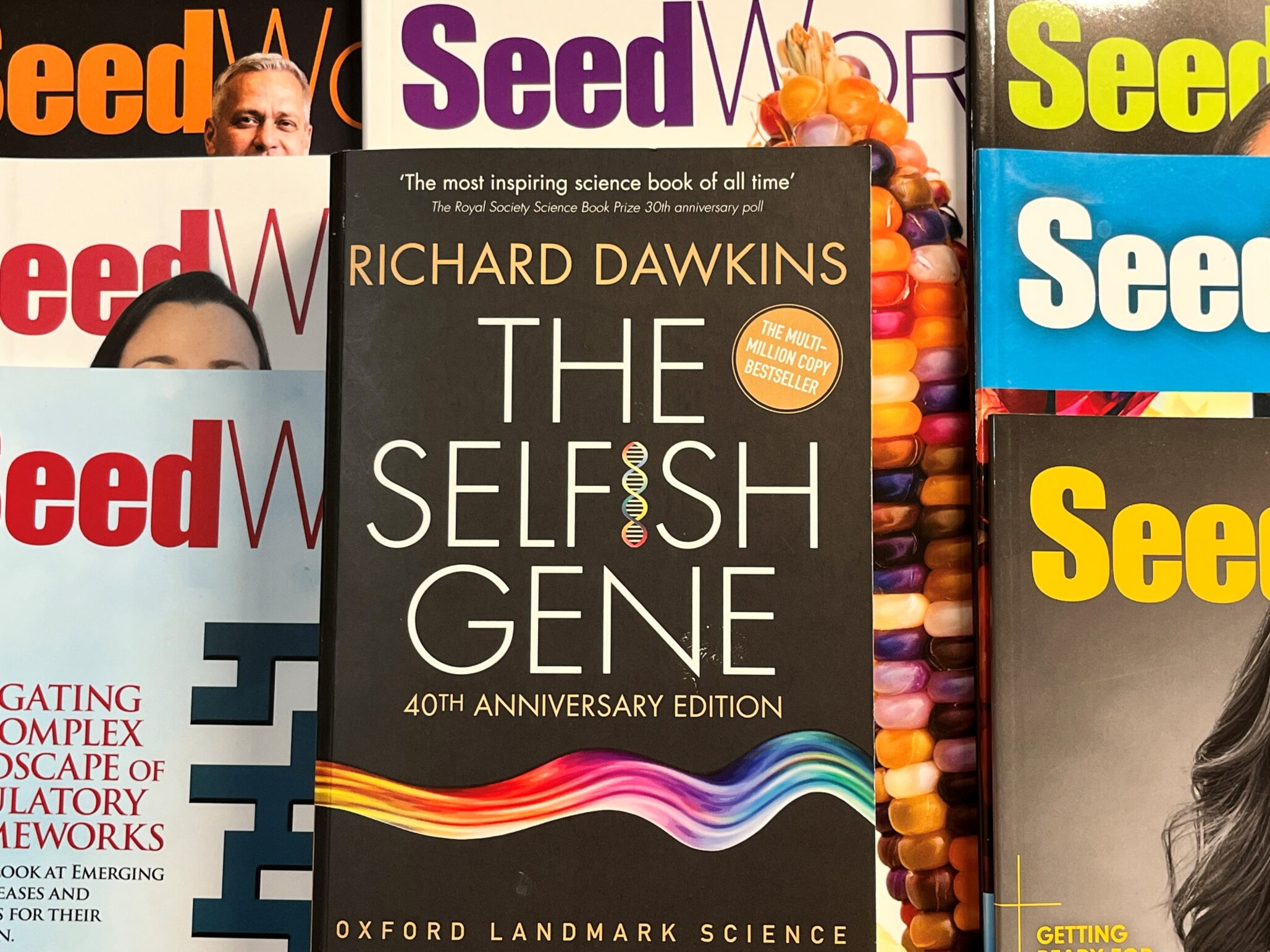
Over the holidays I finally managed to finish reading The Selfish Gene from Richard Dawkins. When he published the book in 1976, he transformed the way scientists and laypeople understood evolution. Almost 50 years on, the book remains a foundational text — not just in biology, but in how we think about behaviour, cooperation, and inheritance. Re-reading the 40th anniversary edition, I was struck by how relevant some of its insights are to today’s seed sector.
While the title may suggest a cold, deterministic view of life, the book is anything but. Dawkins isn’t saying genes are literally selfish; he’s offering a metaphor: that genes which are good at replicating tend to persist. From this perspective, the organism — including a seed, a plant, or a human — is a vehicle for genes to survive and reproduce. This lens provided me with three revelations, each with unexpected connections to agriculture, plant breeding, and even policy.
Cooperation Is an Emergent Property of Selfishness
Perhaps counterintuitively, one of the central arguments of The Selfish Gene is that cooperation can arise from selfish replication. Genes that “build” cooperative behaviour in organisms often do better in evolutionary terms — because cooperation can increase survival. Dawkins calls this the “selfish gene” view of altruism.
In the seed sector, this has parallels in the way crops interact with their environments — and each other. Consider plant root systems that share mycorrhizal networks or leguminous crops that fix nitrogen (with the help of bacteria) to benefit surrounding plants. These “cooperative” traits can be selected for in breeding programs, not because they are good in a moral sense, but because they enhance the plant’s success in ecosystems.
For seed companies and public breeders, this suggests that traits enhancing plant-plant or plant-microbe cooperation shouldn’t be overlooked. Traits like competitive suppression (plants that grow efficiently without overshadowing neighbours), or stress signalling (like allelopathic compounds) may offer pathways to more resilient, sustainable agriculture — by building “cooperation” into the genotype.
The Gene, Not the Organism, Is the Primary Unit of Selection
One of Dawkins’ boldest claims is that evolution acts on genes, not individuals or species. This idea unsettled many at the time, but it has major implications. It shifts our thinking from short-term phenotypic performance to long-term genetic persistence.
For the seed sector, especially in the context of gene banks and crop diversity, this reframing is crucial. Conservation efforts often focus on preserving “landraces” or traditional varieties. But if we take Dawkins seriously, the real conservation goal is to preserve the genes within those varieties — the alleles that may confer drought tolerance, disease resistance, or resilience to changing climates.
This view strengthens the case for investments in genotyping, pre-breeding, and data infrastructure that help us understand and tap into the full value of genetic diversity. At the same time, it highlights the importance of innovation ecosystems that include strong intellectual property frameworks. Tools like patents and plant variety protection (PVP) provide temporary exclusivity that helps de-risk investment in R&D, enabling companies and institutions to bring new, improved varieties to market.
While open access to certain genomic resources can accelerate pre-competitive research and public-good breeding, it should not undermine the incentive structures that drive innovation. In this way, IP and access policies must work in tandem — ensuring that valuable genes survive, circulate, and serve both private and public goals.
Culture—and Ideas—Behave Like Genes: The Meme Concept
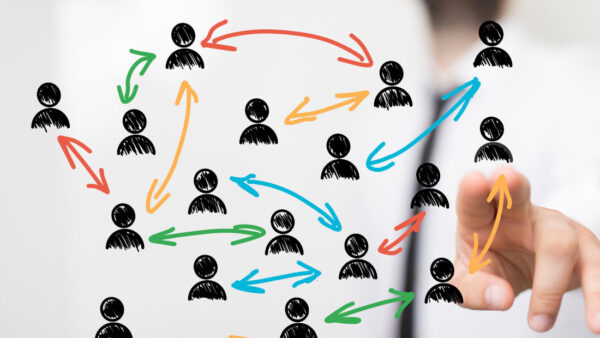
In a final, often overlooked chapter, Dawkins introduces the idea of the “meme”: a cultural gene. Memes — ideas, tunes, technologies — are subject to variation, replication, and selection, just like DNA. Some spread rapidly; others fade.
This has profound implications for agricultural knowledge and education. Take seed-saving practices, or farmer-led breeding, or traditional ecological knowledge. These are not just human activities — they are cultural replicators. Their survival depends on effective transmission, retention, and adaptation.
For institutions in the seed sector, this raises an important question: what are we doing to ensure the memes that matter — the knowledge, ethics, and practices that support seed diversity and sovereignty — are being passed on? Are we investing enough in agricultural education, in public awareness, in storytelling? Just as with genes, loss of cultural information can be irreversible.
A Gene’s Eye View on Seeds and Society
Dawkins didn’t write The Selfish Gene for plant breeders or seed companies. But the principles he laid out — genes as replicators, cooperation as strategy, culture as evolution — resonate deeply with the challenges and opportunities we face today in agriculture.
As the seed sector confronts climate change, geopolitical instability, and debates around ownership and access, perhaps it’s time to revisit evolution — not just as a biological force, but as a metaphorical one. We are all vehicles for ideas and lineages far older and more persistent than ourselves. Understanding their logic may help us make wiser, more enduring choices.