A national research project highlights the urgent need for alternatives to secure the future of Britain’s staple potato crop.
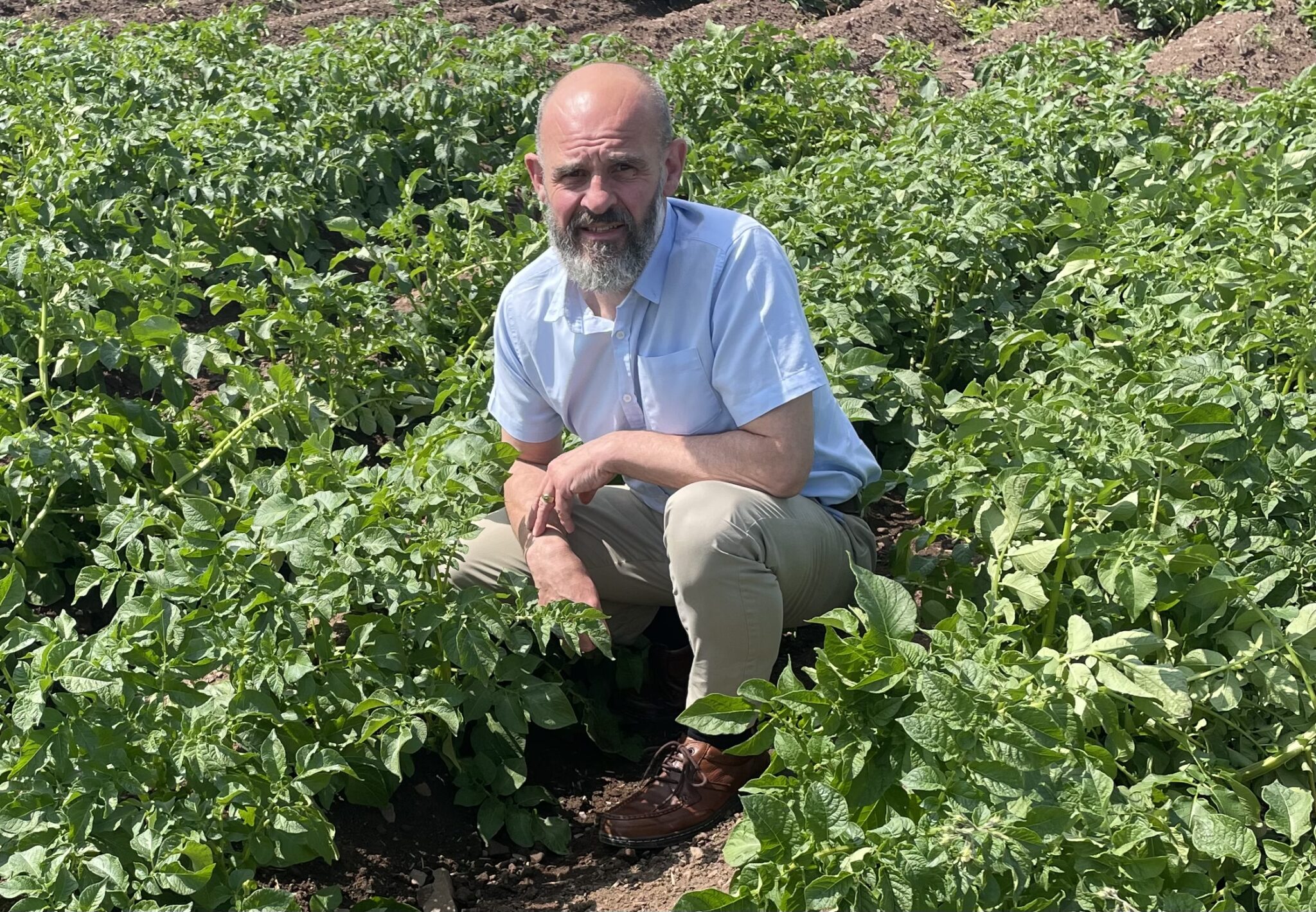
Professor Ian Toth, director of the National Potato Innovation Centre (NPIC) at The James Hutton Institute, warns that the UK is “not prepared” for the impact of climate change on its crops. His concerns come as the Met Office confirmed that 2025 marked the warmest summer on record in the UK.
While new potato varieties adapted to warmer, drier conditions are already being developed, Toth stresses that faster action is required to bring these solutions into widespread production.
“We are not prepared at all for how climate change is affecting our crops.
“It’s very difficult to produce good quality potatoes when the climate is leading to hot, dry weather. Whether it’s this year or next, we are certainly going to see the consequences on potato crops. We are going to be less reliant on what we can produce in the UK, and we are going to have to import them.”
Toth explained that as extreme weather events become more frequent, potato production is increasingly unpredictable. The Centre is actively developing varieties that can withstand heat, heavy rainfall, and emerging pests and diseases. While the Scottish Government provides support, he emphasized that this work needs to be given higher priority at the UK level, according to a press release.
“The technology is out there but we need faster action. If we don’t get a move on when we hit crunch time we are in danger of not having the alternatives.”
Head of climate attribution at the Met Office, Dr Mark McCarthy, said: “Our analysis shows that the summer of 2025 has been made much more likely because of the greenhouse gases humans have released since the industrial revolution.
“In a natural climate, we could expect to see a summer like 2025 with an approximate return period of around 340 years, while in the current climate we could expect to see these sorts of summers roughly 1 in every 5 years.”
Last year, the National Potato Innovation Centre was among several organisations hosting farmers from across the UK to discuss both immediate and long-term threats to potato production. Farmers ranked climate change among their top five challenges and agreed on the urgent need for new, more resilient varieties.
“We knew this was important but now we have information from the horse’s mouth, to say this is what people want,” Toth added.
The Institute of Grocery Distribution (IGD) warned this summer that food prices in 2025 are set to rise faster than other goods, partly due to extreme weather events. Its latest quarterly UK food inflation forecast noted: “Extreme heat and dry conditions have gripped the UK in 2025 – and the effects on food production are already evident. Core staples like wheat and potatoes are under threat.”
Potatoes are the world’s third most important food crop and the UK’s second. A 2024 NPIC report from a cross-UK farmers’ workshop highlighted the urgency of the situation: “Understanding the impacts of extreme weather and the longer-term impacts of climate change, including through the modelling of extremes, require action now to better understand and act upon them.”