Soil health is a critical factor for food security worldwide. Nearly 40% of the world’s arable land is acidic, releasing toxic aluminum ions that harm plant roots, disrupt nutrient uptake, and sharply reduce yields. While farmers often try to counteract these effects with soil amendments, such solutions are costly, temporary, and often inaccessible to smallholder farmers in developing regions.
Some plants, however, have evolved natural defenses against aluminum stress. A common strategy is the release of organic acids — such as citrate, malate, or oxalate — from their roots. These acids bind aluminum ions, neutralizing their toxicity and protecting root growth.
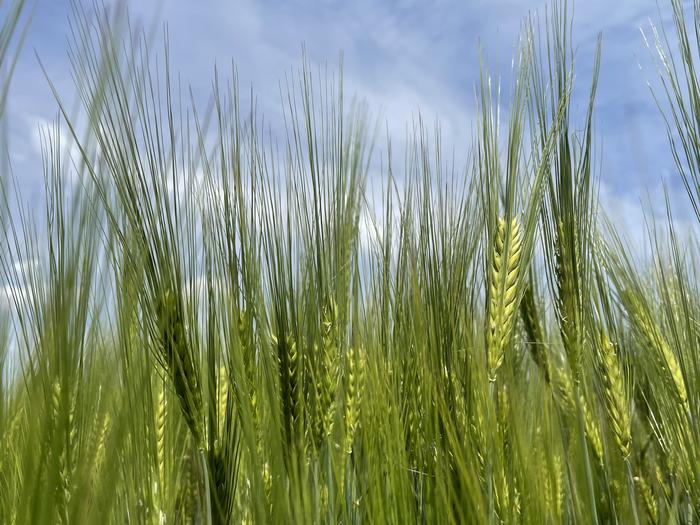
Barley, a key cereal for food, feed, and brewing, is typically sensitive to acidic soils. Yet some barley cultivars are highly resilient, thanks to a specialized root protein that actively pumps citrate into the soil, neutralizing aluminum before it can damage the plant. This adaptation allows these cultivars to thrive in environments where most barley — and many other crops — struggle. Until now, however, the detailed structure of this protective protein and its molecular mechanism remained unknown.
A new study, published on August 5, 2025, in Proceedings of the National Academy of Sciences (PNAS), led by Professor Michihiro Suga at the Research Institute for Interdisciplinary Science, Okayama University, Japan, has uncovered the first detailed structure of HvAACT1 — the barley root protein responsible for aluminum tolerance. The team, which included Tran Nguyen Thao, Dr. Namiki Mitani-Ueno, and Professor Jian Feng Ma, provides the first structural basis for citrate efflux in plants, filling a long-standing gap in our understanding of aluminum tolerance mechanisms.
HvAACT1 belongs to the multidrug and toxic compound extrusion (MATE) family of protein transporters, which are widely found across plants, animals, and microbes.
“HvAACT1 is unlike most structurally characterized MATE proteins,” explains Suga. “While many MATE transporters move positively charged molecules, this one specializes in exporting negatively charged citrate molecules. Once released, citrate binds toxic aluminum outside the root, making the soil safer for the plant.”
To capture the protein in action, the researchers employed advanced structural biology techniques. They resolved its structure using X-ray crystallography at a synchrotron facility, complemented by molecular dynamics simulations and mutational analysis, producing high-resolution images that reveal the protein’s design at near-atomic detail. These images showed that HvAACT1 has two coordinated sites—one that recognizes citrate and another that binds protons (hydrogen ions). The interplay between these sites allows the protein to efficiently pump citrate into the soil.
This breakthrough not only explains how barley tolerates aluminum stress but also uncovers a new type of transporter biology. Unlike other proteins in the same family, which typically move positively charged or aromatic molecules, HvAACT1 transports negatively charged compounds. This unusual function broadens our understanding of plant resilience and protein versatility.
This discovery builds on earlier research that first identified the barley transporter responsible for aluminum tolerance. The current study provides the long-awaited structural explanation of how the protein works, unlocking possibilities for practical applications in agriculture and beyond, according to a press release.
“As scientists, we are always inspired by how nature solves problems,” says Suga. “By revealing the structure of this protein, we now have a foundation to design or breed crops that can withstand acidic soils, ensuring stable harvests even under difficult conditions.”
Overall, the study demonstrates how uncovering plants’ hidden strategies can tackle one of agriculture’s biggest challenges. With acidic soils limiting crop production worldwide, insights from molecular biology could guide the development of resilient farming practices and innovative biotechnological solutions—offering hope for a more sustainable and secure global food supply.