During a visit to China, an INRAE delegation signed seven scientific agreements with leading Chinese institutions, reinforcing collaboration in key fields such as carbon neutrality, agroecology, biodiversity, plant genetics, nutrition, and sustainable livestock farming. These new commitments reaffirm existing partnerships, establish frameworks for future joint research, and coincide with the inauguration of a joint INRAE–CIRAD office at the French Embassy in Beijing.
A New INRAE–CIRAD Office to Boost Franco–Chinese Cooperation
Inaugurated on 8 October, the new INRAE–CIRAD office at the Embassy of France in Beijing marks an important milestone in strengthening France’s scientific presence in China. The office will facilitate closer coordination of projects on the ground, provide support to researchers based in China, and deepen collaboration with Chinese research institutions.
Continuing Long-Standing Cooperation with the Chinese Academy of Agricultural Sciences (CAAS)
Two key projects with INRAE’s long-standing partner, the Chinese Academy of Agricultural Sciences (CAAS), were renewed during the visit:
- The BIPI 2 Integrated plant biology and physiology LIA will pursue research launched in 2019 on interactions between integrated biology, plant physiology and the environment, to gain further insight into the adaptation mechanisms of plants subject to multiple pressures.
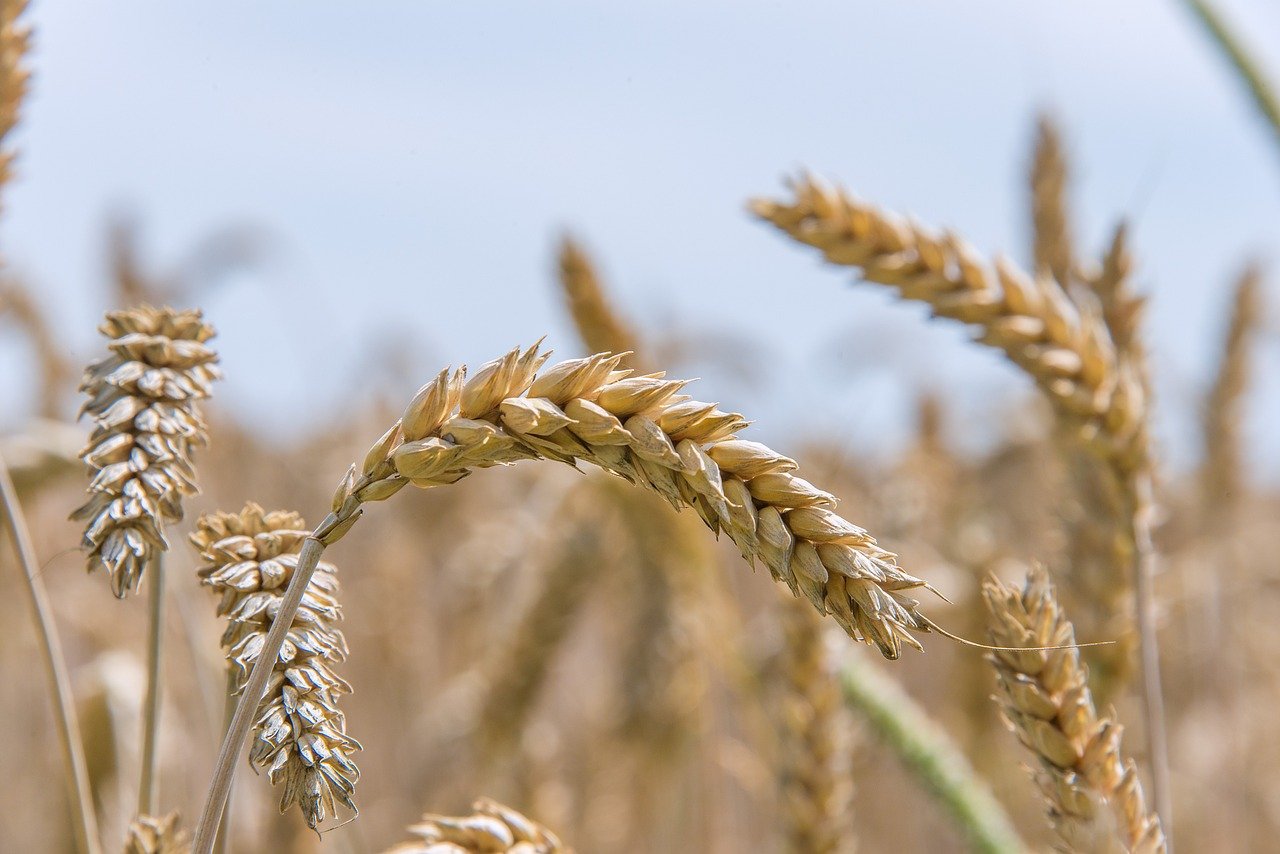
- The Wheat Genomics 2 LIA will focus on genomics, the improvement of wheat and more specifically on the selection of varieties that are most resilient to climate stress. Research will combine genetics, phenotyping and modelling as priorities for this LIA, which also launched in 2019.
These collaborations have already produced several high-impact publications, highlighting the complementarity between French and Chinese research teams, according to a press release.
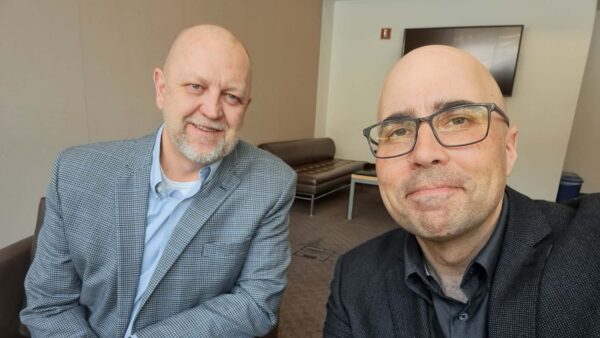
“Established alongside the representations of major French research organisations, notably CNRS, CEA and CNES, this official presence reflects INRAE’s well-established role in France’s diplomatic and scientific activities in a country that is key to the future of agricultural and environmental research,” said Philippe Mauguin, INRAE Chair & CEO
A Joint Research Programme with the Chinese Academy of Sciences (CAS)
INRAE and the Chinese Academy of Sciences (CAS), China’s foremost scientific institution, have signed a Joint Linkage Call (JLC) — a bilateral programme to promote reciprocal mobility for researchers and doctoral students starting in 2026.
The long-term initiative focuses on four priority scientific areas:
- Agroecology and climate
- Soil science
- Water management and remote sensing
- Plant genetics and nutrition
This programme builds on existing partnerships, such as the Innogrape LIA, dedicated to adapting grapevines to climate change.
“These technologies enable us to reach a new milestone. Remote sensing makes it possible to characterise large-scale water dynamics within agroecosystems, not only surface water resources but also the degree of crop water stress at the plot level, thereby contributing to optimised irrigation management,” said Jean-François Soussana, INRAE International Advisor. “This paves the way for observation-based services. The One Water Vision initiative aims to structure this approach at the international level, by linking spatial data, hydrological models, and territorial water management policies.”
Advancing Cooperation on Water Management in Agriculture
The delegation also visited the Aerospace Information Research Institute (AIRCAS), part of CAS and a key player in Earth observation, space technologies, environmental data processing, and artificial intelligence. Home to the International Research Center of Big Data for Sustainable Development Goals (SDGs), AIRCAS is a global leader in environmental data research.
These research areas align with INRAE’s One Water Vision initiative, for which the institute serves as secretariat. Identified as priorities under the Joint Linkage Call, they could soon form the basis of a new structured collaborative project.