ACLP’s arbitration applies the same clear rules and expert judgment to set fair trait royalties for small and large companies alike.
Resolving disputes through alternative mechanisms such as arbitration has a long and successful history in the industrial sector. Parties have preferred to submit disagreements to “men of art” — experts in their field — rather than to judges with limited sector-specific knowledge.
The seed industry offers a prime example. The arbitration system of the International Seed Federation (ISF), established nearly a century ago, has consistently proven its value in resolving trade disputes efficiently and fairly. The enduring spirit of the system is built on mutual respect between parties and a shared commitment to sustaining lasting business relationships.
The recently created Agricultural Crops Licensing Platform (ACLP) has also developed an arbitration system to support fair and practical access to patented traits included in commercial varieties. The ACLP system comes into play when negotiations over the royalty fee for a patented trait reach an impasse after six months of discussion.
Members of the ACLP who wish to access a patented trait can use a Standard Licensing Agreement in which all legal terms are pre-approved by members — except for the royalty fee. If the parties cannot agree on that fee within six months, either may request arbitration to determine the appropriate rate.
Like the International Licensing Platform (ILP) for vegetables, the ACLP has adopted a “baseball arbitration” model. In this format, a panel of three arbitrators must choose one of the two royalty proposals presented by the parties; they cannot propose a compromise figure. This approach encourages both sides to reach an agreement before arbitration becomes necessary, and submit realistic and well-supported royalty proposals, knowing that an unreasonable offer risks losing outright.
Ten arbitrators have been appointed by the ACLP Board. These professionals are recognized across the seed sector and bring diverse expertise — from legal and licensing to business and breeding — representing both small and large companies, as well as public and private organizations. All arbitrators are required to sign a Code of Ethics and to disclose any potential conflicts of interest before participating in a case. Parties also have the right to challenge an arbitrator on the grounds of a conflict of interest. In each arbitration, both parties appoint one arbitrator, and those two jointly select the third.
Experience shows that the model works. In the 10 years since its creation, the ILP has not seen a single arbitration case — demonstrating the strong incentive it creates for parties to settle amicably.
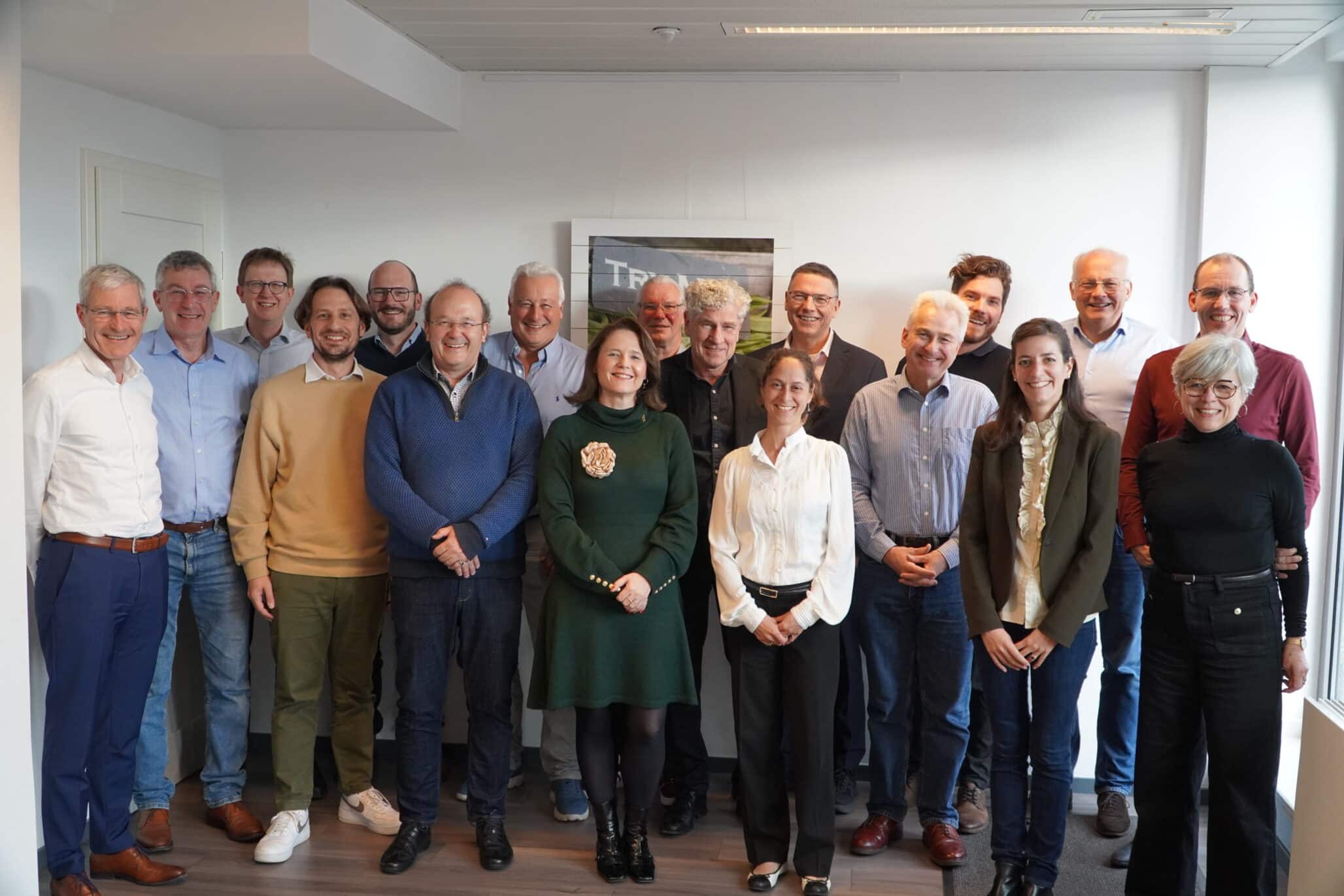
To ensure confidence in the ACLP system, trainings are provided to arbitrators. The ACLP held its first arbitrator training session in Brussels on Oct. 28, bringing together all 10 arbitrators and several ACLP members. “The training gave arbitrators a deeper understanding of their important role,” explained Claudia Hallebach, Chair of the ACLP. “It also helped members appreciate how an arbitration would proceed and what kinds of evidence companies must provide for arbitrators to assess the market value of a trait.”
Determining the market value of a patented trait can be a complex exercise. Arbitrators rely on their own expertise but also on the detailed analyses presented by both parties to justify their proposed royalty fees. The system ensures fairness among all members, regardless of company size, since each operates with deep knowledge of the markets they serve. Because the arbitration ruling is binding, members are guaranteed clarity and certainty: within a defined timeframe — six months of negotiation plus roughly two months for arbitration — any party can secure a license for a patented trait at a royalty rate aligned with market conditions.
Editors Note: Hélène Guillot is Managing Director of the ACLP