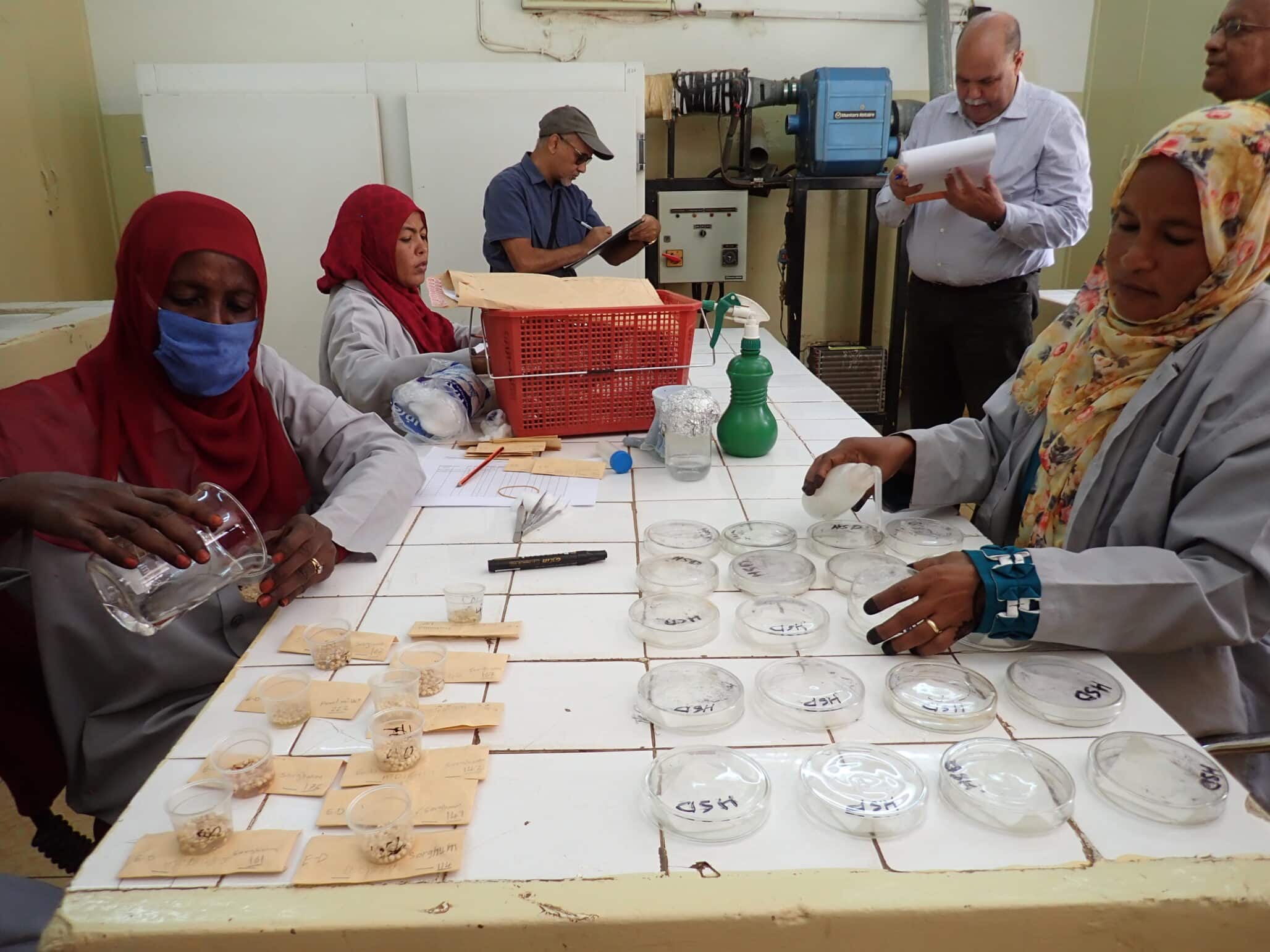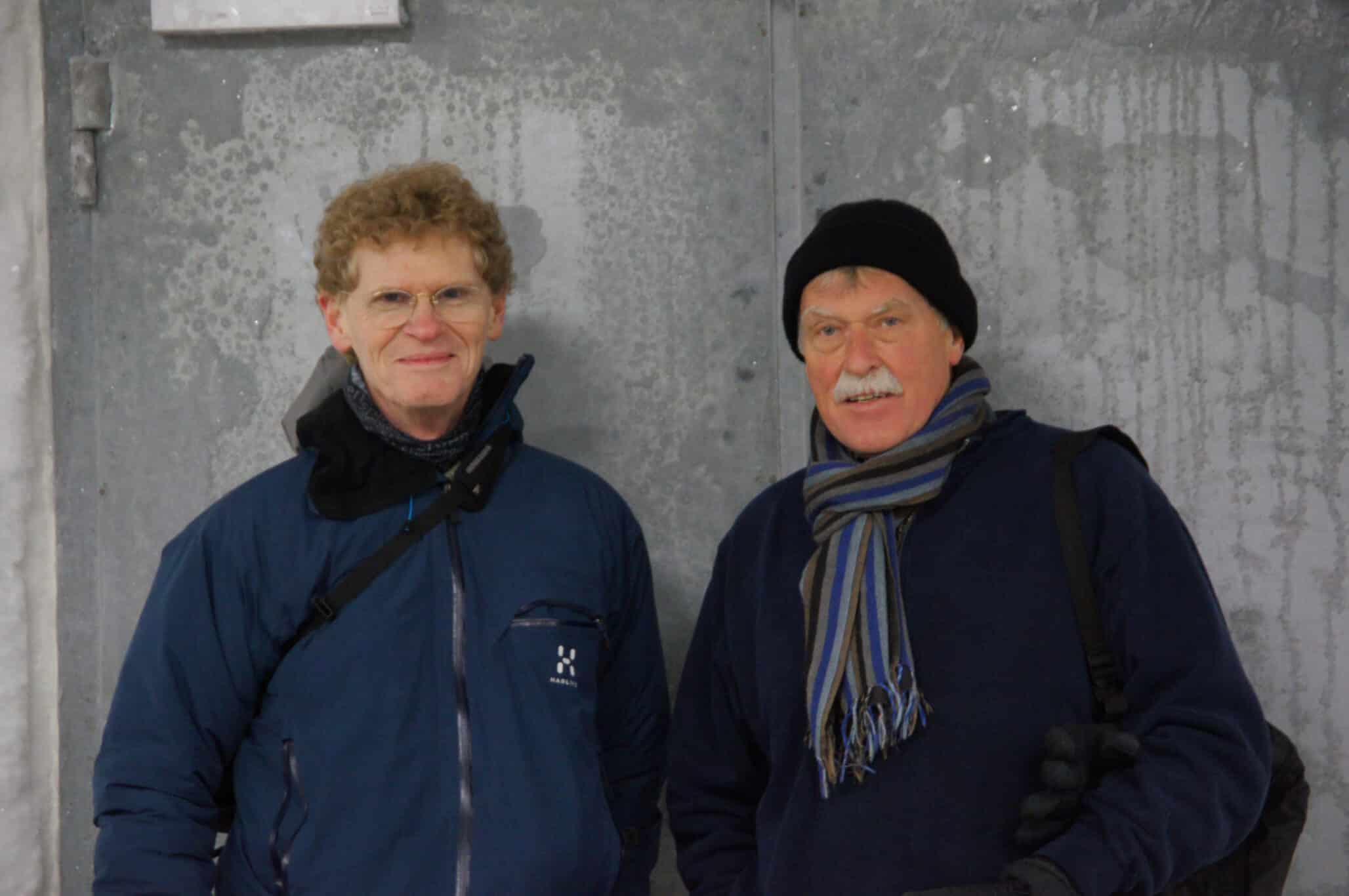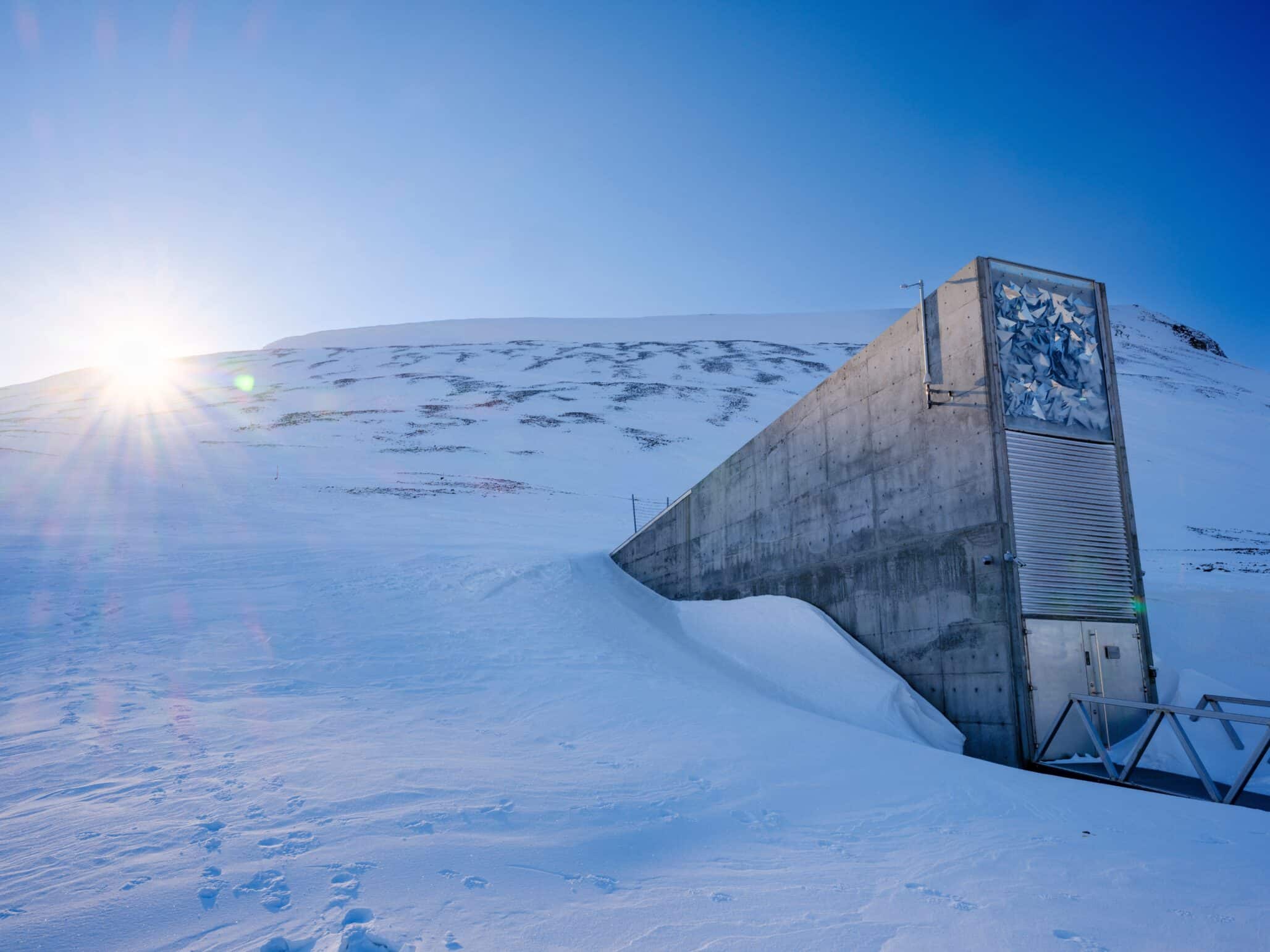
In late October, the third and final seed deposit of the year at the Svalbard Global Seed Vault was made, where more than 21,000 seed samples from 20 genebanks around the world are being secured by NordGen staff. The participating institutions represent every continent except the Arctic and Antarctica.
The 76 boxes added to the Seed Vault’s icy chambers include rice from the Philippines, Peruvian chili, traditional African vegetables, and Nordic cereals. Among the contributors, two genebanks — the Philippine Rice Research Institute (PhilRice) and Peru’s Instituto Nacional de Innovación Agraria (INIA) — made their first-ever deposits. PhilRice also sent the largest contribution in this round, with more than 4,000 unique rice varieties now safely stored in Svalbard, according to a press release.
“Safeguarding seed diversity at Svalbard provides vital protection against natural or man-made disasters, pests, diseases and accidents that could threaten our genebank in the Philippines,” said Jonathan M. Niones, Division Head and Chief Science Research Specialist at PhilRice. This marks the first time in PhilRice’s 40-year history that the genebank has secured seed duplicates outside the country.
Symbol of Shared Responsibility
The other first-time depositor, INIA, was represented on-site by Director Jorge Juan Ganoza Roncal.
“It is a great honour to take part in this deposit, because here, in this place of global cooperation, we are not only safeguarding seeds, we are safeguarding the very opportunity for life on Earth. By placing them in this vault, we are not merely protecting them from risk; we are entrusting them to the future as a symbol of shared responsibility and our determination to cooperate across borders,” said Jorge Juan Ganoza Roncal.
One of the largest shipments in this deposit came from the World Vegetable Center’s Eastern and Southern Africa division, which contributed more than 3,000 seed samples representing around 30 African countries. The collection features crops such as amaranth, jute mallow, African eggplant, and okra.
NordGen also joined the deposit, sending a box containing 381 seed samples spanning 66 plant species. While most are cereal varieties, the shipment also includes forages, herbs, and crop wild relatives — among them wild carrot collected in Denmark and prickly lettuce from Norway.
Facts – Participating Genebanks:
- Philippine Rice Research Institute – Philippines
- World Vegetable Center (Tanzania) – Headquarters in Taiwan
- Australian Pastures Genebank – Australia
- International Crops Research Institute for the Semi-Arid Tropics (ICRISAT) – India
- International Livestock Research Institute (ILRI) – Ethiopia
- Plant Breeding and Acclimatization Institute (IHAR) – Poland
- SADC Plant Genetic Resources Centre (SPGRC) – Zambia
- Station Federale de Recherches en Production Vegetale de Changins – Switzerland
- Instituto Nacional Autónomo de Investigaciones Agropecuarias (INIAP) – Ecuador
- Institut National de la Recherche Agronomique (INRA) – Morocco
- Portuguese Bank of Plant Germplasm – Portugal
- Nordic Genetic Resource Center (NordGen) – The Nordic countries
- Taiwan Agricultural Research Institute – Taiwan
- Czech Agrifood Research Center – Czech Republic
- Suceava Genebank “Mihai Cristea” – Romania
- Latvian State Forest Research Institute “Silava” – Latvia
- National Plant Genebank, Ministry of Agriculture – Croatia
- ICRISAT – Malawi division
- Uzbek Research Institute of Plant Industry – Uzbekistan
- Instituto Nacional de Innovación Agraria (INIA) – Peru
Svalbard Global Seed Vault
- Svalbard Global Seed Vault is the world’s largest backup facility for the crop diversity stored in the world’s genebanks.
- It is owned by Norway and operated by three partners; the Norwegian Ministry of Agriculture and Food, Crop Trust and NordGen.
- The Svalbard Global Seed Vault is a black-box long-term safety deposit of crop diversity open to all qualifying institutions around the world.
- Ownership of seeds remains with the depositor and only the depositor can withdraw their seeds and open the boxes.