Agricultural robots are increasingly taking on tasks such as sowing, mowing, and ploughing. But today’s reality is fragmented: each machine comes with its own app, screen, and operating language. For farmers, that often means spending valuable time navigating settings and software — time that could be better spent in the field.
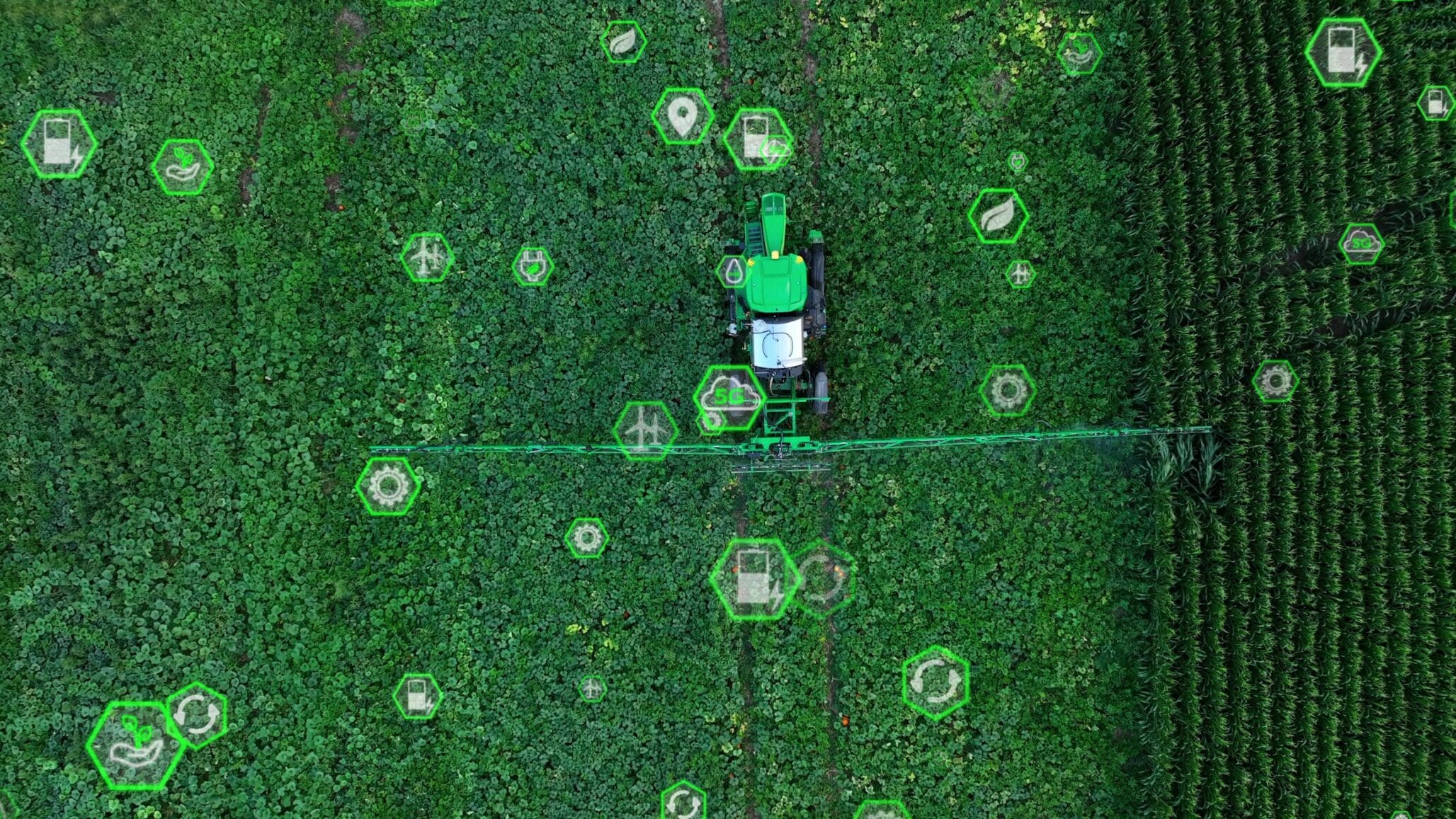
Researchers at Wageningen University & Research (WUR) are aiming to simplify that experience. They are developing a smart interface that allows farmers to communicate with their machines using everyday language — much like a conversation with ChatGPT. Instead of clicking through menus, farmers could ask questions and make decisions by talking naturally about issues like weather forecasts, harvest planning, or nitrogen regulations, according to a Wageningen University & Research press release.
To illustrate the potential, the team points to a familiar morning routine. Harmen, a farmer, wakes at 6 a.m., makes coffee, and sits down at the kitchen table. On his phone, he sees a summary of what his autonomous tractors achieved overnight: weeds removed, diseased plants detected, and the results logged with high-definition images. Looking out the window, he asks his virtual assistant when rain is expected. Together, they weigh the forecast and field conditions to decide whether irrigating today makes sense.
Later that morning, Harmen heads out to the fields in his tractor. From the cabin, he tells his virtual assistant to send the autonomous tractors to a different plot. The machines already know their assignment: apply fertilizer in a precise pattern while maintaining exactly six metres of distance from the ditch. Ahead of them, a drone lifts off to scan the area for birds’ nests, helping ensure the work can be done safely and responsibly. And if a robot malfunctions — or something unexpected happens in the field—the virtual assistant alerts Harmen right away.
Harmen’s fully connected, high-tech farm isn’t here yet. But the direction is clear. Agricultural robots are becoming more common and more capable, taking on an expanding range of tasks. Analysts expect the global market for farm robots to grow rapidly in the coming years — rising from $13.5 billion in 2023 to $40.1 billion by 2028.
“Current technology is already really smart,” says Paul van Zoggel, the precision agriculture programme manager at WUR. “Robots can do a lot: sow seed, remove weeds, mow the grass and so on. All arable sectors are relying increasingly on sophisticated robots.”
For many farmers, robots are becoming less of a nice-to-have and more of a practical necessity. Agriculture has an ageing workforce: only 10% of Dutch farmers are under 40, according to Statistics Netherlands (CBS). That share has barely shifted in recent years, while the proportion of farmers aged 67 and over has climbed to more than 20%. At the same time, it’s getting harder to find people willing to do demanding farm work in all weather conditions. “Fewer skilled workers are coming from other countries,’ says Van Zoggel. ‘That’s because of the strong economic growth in Eastern Europe and because you can earn more money in the Netherlands in jobs that are less physically demanding.”
Robots can help fill those gaps — but their benefits go further. They don’t need breaks and can often operate around the clock. They work with high precision, which can reduce the use of fertilizer and crop protection products. And because many robots are smaller and lighter than conventional farm machinery, they can also help limit soil compaction.
But as agricultural robotization accelerates, it brings new challenges too.
“The bottleneck is the problem of how to manage all the technological equipment,” says Van Zoggel. “From a technical point of view, the robots are complex and efficient, and you can achieve various environmental targets because the computer systems are designed to focus on that. But they aren’t easy for farmers to work with. The farmer basically has to have an affinity with technology and data and software.”
Some farmers do have that affinity, says Van Zoggel. “I know one who has a kind of ground control room, like an air traffic control centre. In America, a lot of farmers have been using automated tractors for a while. I’ve heard they look for youngsters who play the video game Farming Simulator because those gamers are better able to operate the machines.”
Van Zoggel envisions a near future where any farmer can easily manage their robots — and even talk with them in their own everyday language. The goal is a single, integrated interface that brings together all the digital tools used on a farm: one platform where systems can communicate with each other and with the farmer.
In simple terms, it’s the farm equivalent of Iron Man’s J.A.R.V.I.S. In the films, Iron Man speaks naturally to the assistant in his helmet, and J.A.R.V.I.S. handles the complex controls in the background — while providing constant updates, alerts, and warnings.
“Some farmers do have a digital assistant, but it’s still not easy to discuss things with it. We eventually want to get to a situation where a farmer can instruct their virtual assistant to spread fertilizer, and the assistant can say in response, ‘Are you sure? Because it’s about to rain.’ The system will be able to help the farmer come up with the right solutions because it knows the local conditions and the applicable regulations.”
Human-robot Interaction
Ard Nieuwenhuizen is one of the WUR researchers helping to develop the integrated interface. After spending years in the private sector working on autonomous farm vehicles, he joined Wageningen in 2018 as part of the Vision & Robotics programme.
He has seen firsthand how much time and effort farmers currently have to invest in managing their machines.
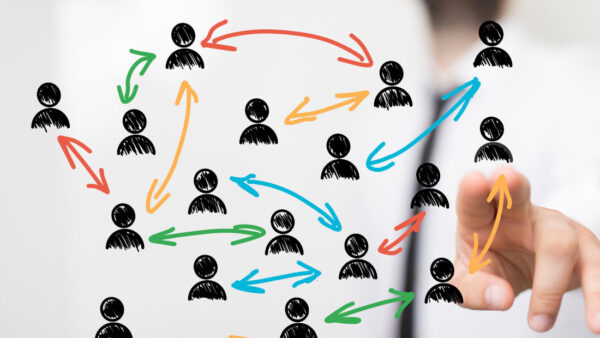
“Farmers often have to go to their computer and log into a web application. Each robot is a different brand and uses a different application. And those robots have difficulty communicating with one another when they are in the same field.
“There is a real need for better interaction between the farmer and the various systems,” he continues. “Farmers should be able to talk to their robots in the same way they normally talk to their workers.” This might have sounded like science fiction 30 years ago, but today, in 2025, millions of consumers ask Alexa and Google Assistant to turn the lights on or order some washing powder. The options are increasing thanks to the rise of ChatGPT and similar large language models (LLMs).
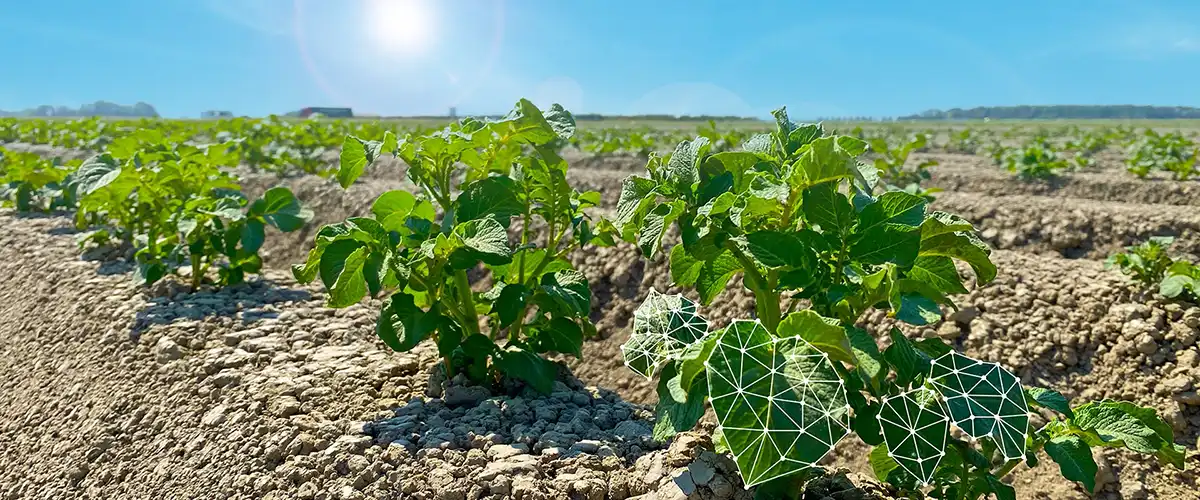
These LLMs will be used more and more in farming too. Nieuwenhuizen cites the example of the chatbot Botato. “It has absorbed vast amounts of information about the cultivation of potatoes. Now, farmers can ask the chatbot all kinds of questions, for example: ‘Can you predict my potato harvest? What about if I harvest one week later?’”
Feeding AI Models
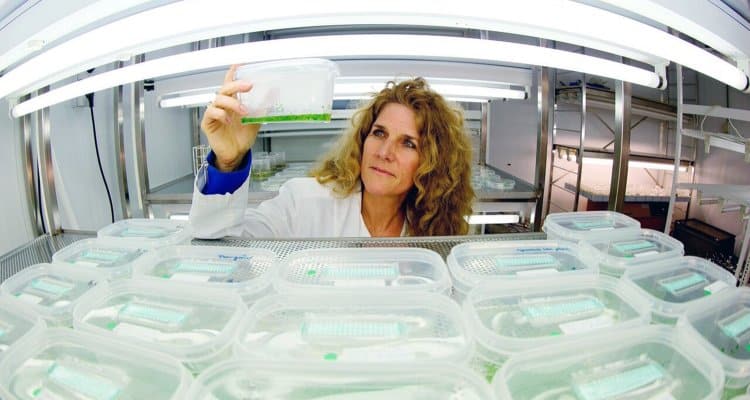
To build Botato, developers at WUR first had to train the app on crop growth models that estimate potato yields. But creating a fully integrated interface will require far more: Wageningen researchers will need to gather many terabytes of high-quality data for the AI to learn from. Without that foundation, warns Paul van Zoggel, the system risks “hallucinating” instead of providing reliable guidance.
“Then the model will make up answers. We need to make sure the model bases its answers on scientific knowledge.”
There is plenty of such scientific knowledge available in Wageningen. Van Zoggel explains, “We’d like to feed the AI models with all the knowledge we have in-house on the agronomy, economics, ecology and social science aspects of agriculture. That knowledge is currently quite fragmented, so we need to bring it all together.”
As Van Zoggel brings together Wageningen’s agricultural knowledge, Nieuwenhuizen is concentrating on the technology that will make an integrated interface possible. In his view, robots will need to become smarter and far better at capturing and sharing data. A weeding robot, for instance, would require multiple cameras to document what it encounters and what it does: one at the front to record crops and weeds before treatment, and another at the rear to verify the weeds were removed without harming the plants.
Nieuwenhuizen also argues that farms will need to adapt their cultivation methods to fit these new machines. He points to apple orchards as an early example. Growers are already adjusting tree forms so robots can move through rows more easily, spot the fruit, and pick it efficiently. Training trees into bush or espalier shapes isn’t new, he notes — but increasingly, robotization is becoming a key reason those design choices are being made.
A lot of work is needed before farmers will be able to discuss the weather, potato harvests and nitrogen emissions with their robots. Nieuwenhuizen expects that kind of communication to be possible within five years. “Language models like ChatGPT are developing incredibly rapidly and chatbots are constantly improving in quality. If farmers can chat with these systems in the future and get decent answers, that would be a major advance for agriculture.”