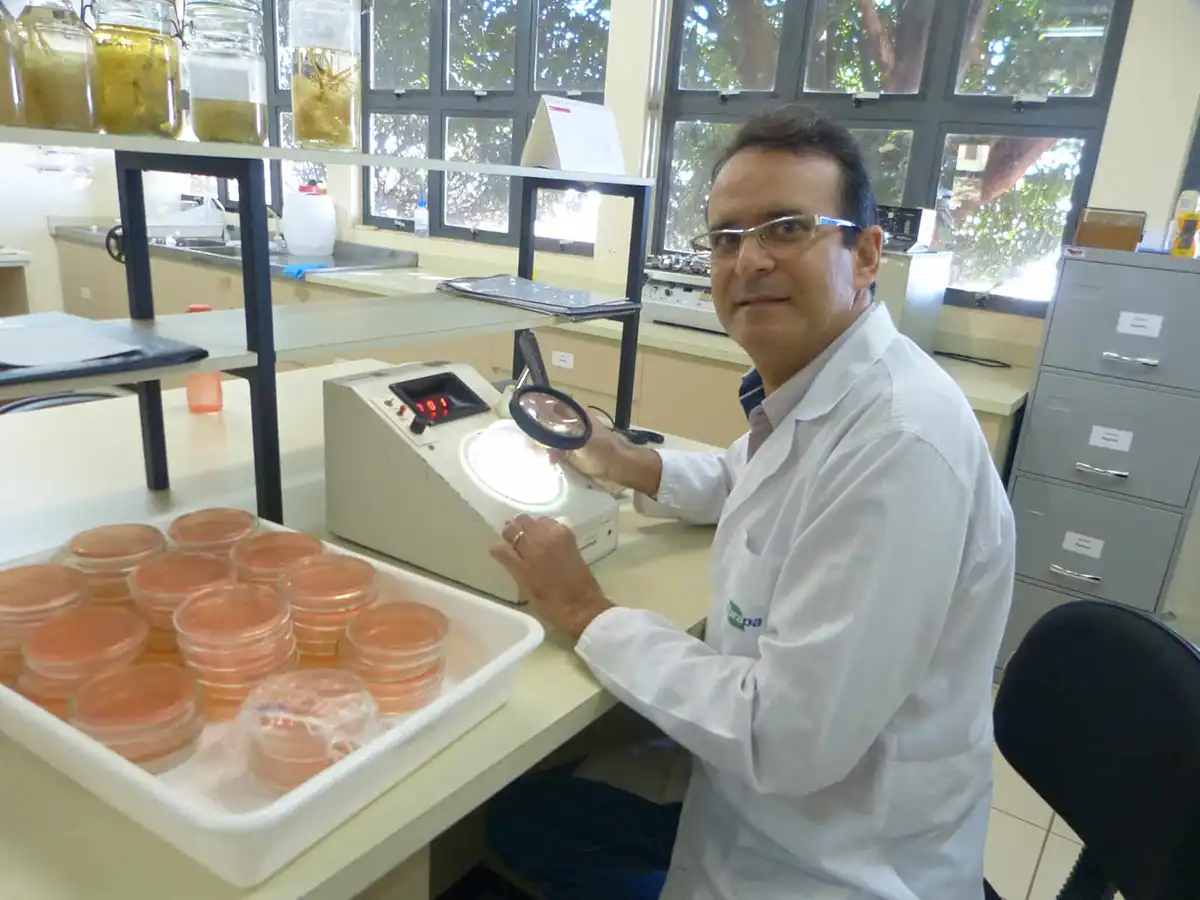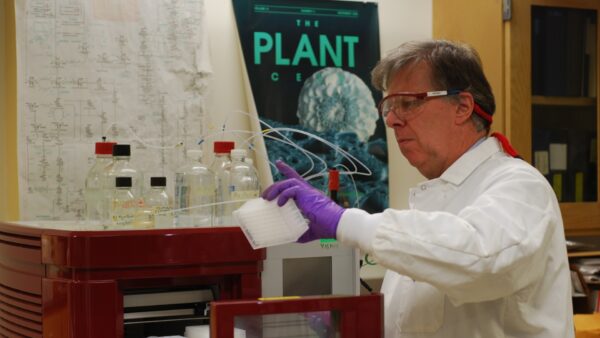
Researchers from Embrapa, in partnership with the University of Brasília (UnB) and Uruguay’s National Institute of Agricultural Research (INIA), have mapped the tomato genome and identified the gene responsible for giving the plant’s leaves an upright shape. This trait plays a key role in pest control, enhances tolerance to heat, and increases productivity per cultivated area.
The discovery also advances research in genetic breeding, enabling faster development of new cultivars through molecular markers and the biotechnological manipulation of traits linked to tomato plant architecture.
This breakthrough was made possible when researchers identified a natural mutation in Embrapa’s tomato germplasm collection, where certain plants displayed an upright leaf structure, according to a press release.
“From the field observation, in which we saw the manifestation of this characteristic, we made crosses with plants of normal foliage. In our genetic mapping work, we observed that every time a plant had an erect size, there was a specific DNA molecular marker that allowed us to land in the genome and find the exact location of the gene that controls this phenotype on chromosome number 10 of the tomato,” explains researcher Maria Esther Fonseca, from the Genomic Analysis area of Embrapa Hortaliças (DF).
Gene Editing Confirms Erect Leaf Trait in Tomatoes
After pinpointing the candidate gene, the team led by Francisco Aragão of Embrapa Genetic Resources and Biotechnology (DF) used the CRISPR-Cas9 gene-editing tool to validate its role. By selectively editing the gene in plants with normal foliage, the researchers were able to induce the upright leaf phenotype, confirming the gene’s function.
“In the specific case of this research, the greatest merit is in the discovery and validation of the gene itself. Our team went through all the stages of this discovery, from the observation of the characteristic in the plants in the field, through the genomic location and ending with the proof of concept of the edition, which unequivocally demonstrated the function of the gene,” contextualizes researcher Leonardo Boiteux, from the Plant Genetic Improvement area of Embrapa Hortaliças.
Applications Beyond Tomatoes
The identification of the gene responsible for upright leaf structure has potential uses far beyond tomatoes. According to Boiteux, phylogenetic studies — which examine the evolutionary relationships among species — revealed that similar genes are also present in crops such as corn, peach, and various other herbaceous and tree species.
“Our hypothesis is that similar genes can be found in other species, but now, knowing the exact gene, we can edit and generate an upright plant of the tomato and possibly other plant species,” he signals.
By confirming the function of the gene, the researchers established a solid genetic basis for the development of tomato cultivars more adapted to intensive cultivation systems. “The study points out that the strategy can be extended to other vegetables, cereals and fruits, contributing to face the global challenges of food security, agricultural efficiency and sustainability,” adds Aragão, stressing that the potential of integrating modern genomic tools with traditional genetic improvement accelerates the improvement of agricultural crops.
Less Sun Exposure, Lower Water Loss
Plant architecture plays a key role in crop management and productivity. Developing a phenotype with upright leaves offers clear advantages, including improved light distribution and greater thermal comfort for plants. Because upright leaves reduce direct sun exposure, they help minimize heat stress and water loss.
“In conventional tomato plants, with leaves in the horizontal position, in the hottest hours of the day, under the sun from 11am to 3pm, a more intense oxidative stress occurs. When the leaves are erect, the plant undergoes less evapotranspiration, which ends up generating a type of thermal protection,” emphasizes Inia researcher Matias González-Arcos.
Higher Plant Density, Greater Yield
One of the most significant advantages of erect-leaf tomato plants is the potential for higher planting density. By fitting more plants per hectare, growers can optimize land use and boost overall production. For processing tomatoes in particular, planting density can be increased even further without causing excessive competition for light.
Improved Disease and Pest Control
The vertical orientation of the leaves also makes it easier to manage diseases and pests. Conditions such as powdery mildew and infestations of whiteflies — which typically settle on the underside (abaxial surface) of leaves — are easier to target. Because spray droplets often struggle to reach beneath horizontally positioned leaves, the upright structure improves the effectiveness of both chemical and biological control measures.
“A promising fact was the reduction in the preference for whiteflies, an important crop pest. Edited plants received up to 2.5 times fewer insects, possibly due to the greater exposure of the lower surfaces of the leaves – a preferred place for laying eggs – to environmental conditions and natural enemies, disfavoring colonization,” highlights UnB student Pedro Brício Brito Fernandes who defended his dissertation on this topic.