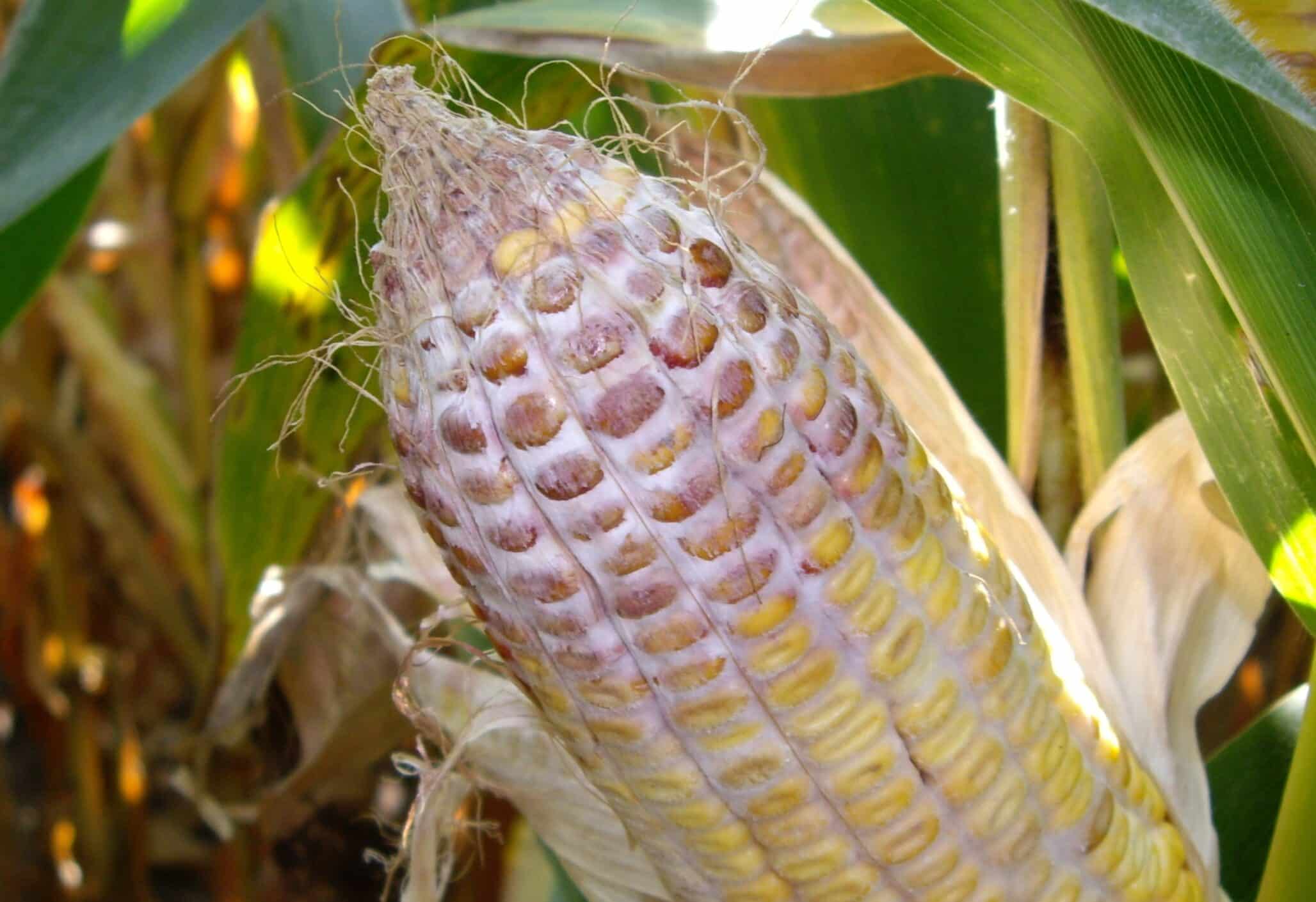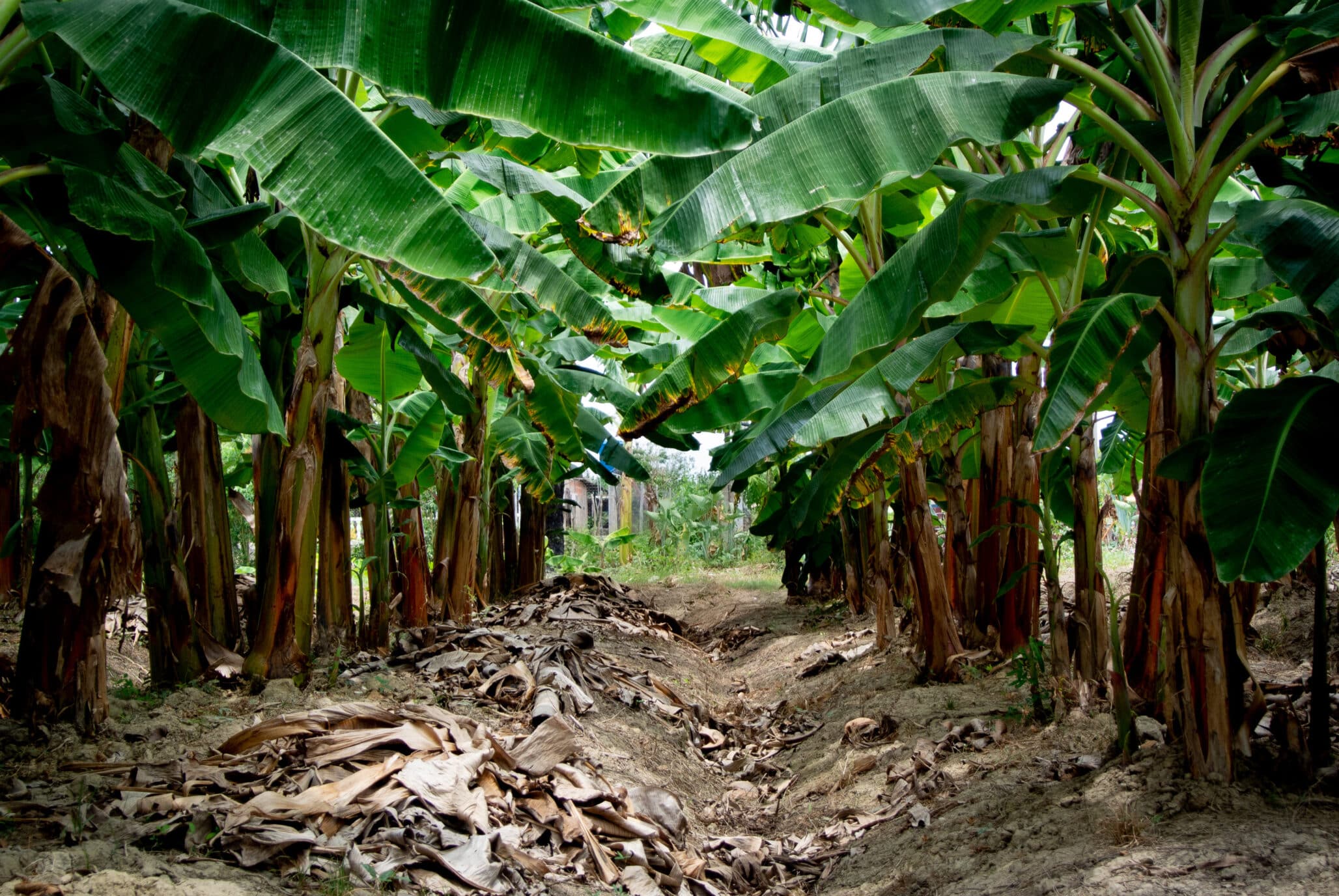
Ecuadorian scientists are pioneering a biotechnological strategy to combat banana wilt by genetically editing the fungus that causes the disease. Global banana production—vital for food security and a major source of income in tropical regions—continues to face a serious and persistent threat: Fusarium wilt.
This destructive disease is caused by the fungus Fusarium oxysporum f. sp. cubense (Foc), which infects banana roots, disrupts the transport of water and nutrients, and ultimately kills the plant.
For decades, Fusarium wilt has challenged agricultural systems worldwide. Its economic impact is especially severe in Ecuador, the world’s leading banana exporter, where the crop supports thousands of jobs and plays a crucial role in international trade.
The threat has intensified with the emergence of Tropical Race 4 (Foc TR4), a highly aggressive strain that has spread across continents and can survive in the soil for decades. Its persistence makes eradication nearly impossible using conventional tools such as fungicides, crop rotation, or strict quarantine protocols.
The limitations of traditional disease-control methods have intensified the search for innovative, science-driven solutions, according to a press release.
CRISPR-Cas9: A Precision Tool to Disarm the Pathogen
In response, a team of Ecuadorian researchers has developed an in vitro gene-editing approach based on CRISPR-Cas9 to weaken the fungus responsible for the disease. This advanced technology allows for precise cuts in the fungal genome, disabling genes essential for infection and reducing the pathogen’s ability to harm banana plants.
The study, published in Frontiers in Plant Science, focused on the SIX9 gene, part of the Secreted in Xylem (SIX) gene family. These genes are activated by the fungus during plant colonization and play a central role in its virulence. By disabling SIX9, the researchers diminished the pathogen’s ability to infect, effectively reducing its aggressiveness at the molecular level.
This strategy marks a significant departure from conventional phytosanitary approaches. Rather than intervening in the plant or relying on costly measures such as field eradication, editing the pathogen itself opens the possibility of producing attenuated fungal strains. These weakened variants could serve as experimental models or potentially act as biological competitors capable of suppressing more harmful strains in the field. The method is also rapid, reproducible, and scalable—features that support broader adoption by other research institutions.
Beyond its technical achievements, the work positions Ecuador as a regional leader in agricultural biotechnology. Safeguarding banana production not only protects a major economic sector but also provides an innovative framework applicable to other tropical regions affected by Fusarium wilt or similarly damaging fungal diseases.
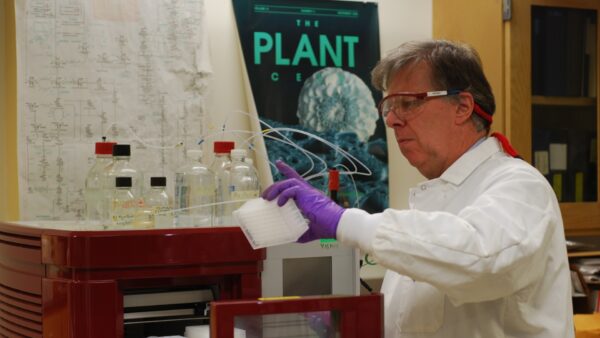
Aseptic transfer of E. coli colonies from agar plates into liquid medium for recombinant protein production. Credit: Liliana Villao CIBE/ESPOL
The study — Optimization of a CRISPR-Cas9 in vitro protocol for targeting the SIX9 gene of Fusarium oxysporum f.sp. cubense race 1 associated with banana Fusarium wilt — illustrates how locally driven research can produce solutions with global impact, aligning sustainability, food security, and resilience to emerging agricultural threats.
In an era defined by climate change, expanding agricultural trade, and rising food demand, genetic editing is emerging as a strategic tool for addressing the complex challenges of tropical agriculture. Research such as this demonstrates how biotechnology can turn urgent problems into opportunities to build more sustainable and competitive farming systems for the future.