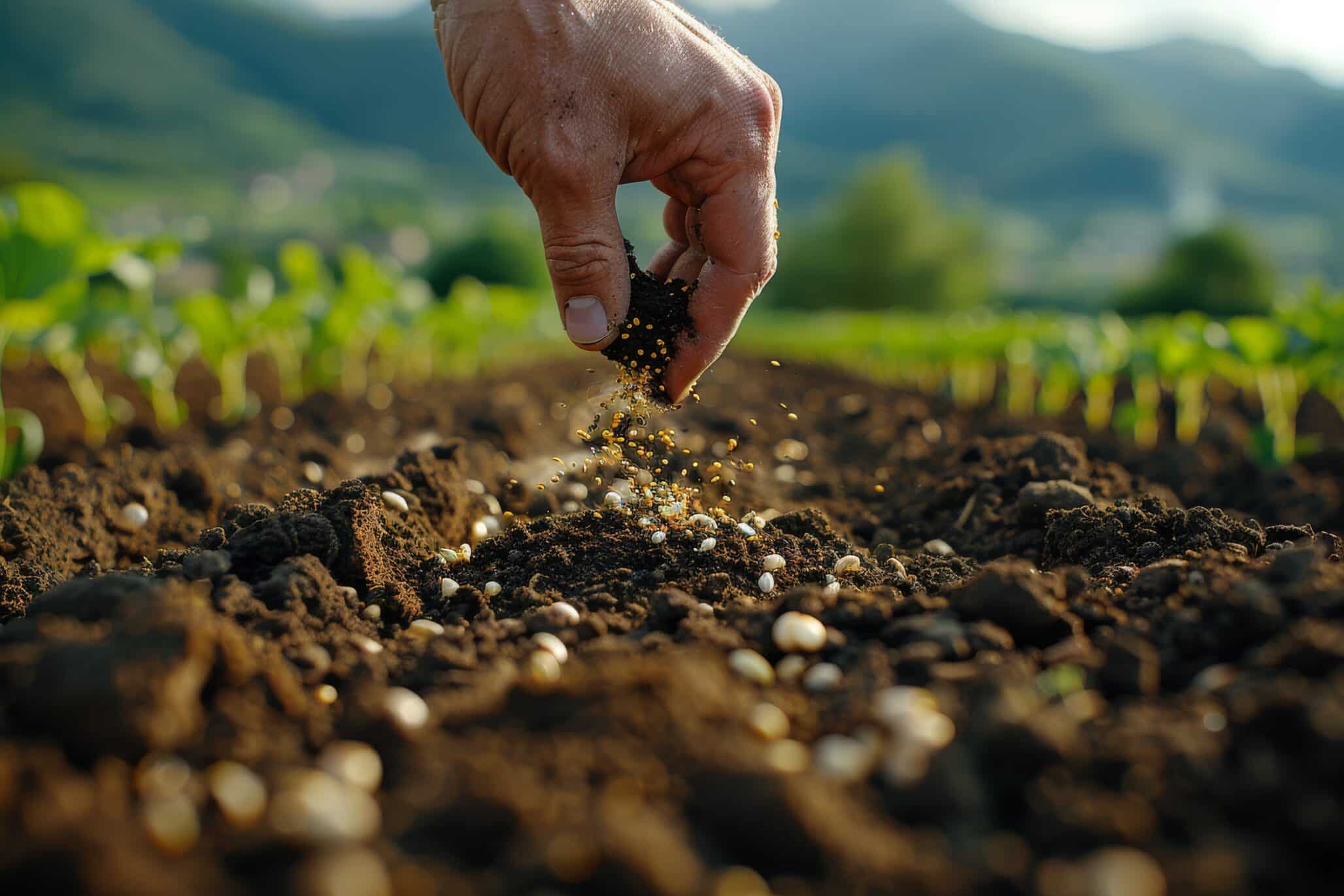
Spring! Finally! If you grew up — like I did — on a Midwest family farm, the change from winter to spring carries extra importance. Sure, people in every environment welcome spring’s warmth but, for us who live and breathe farm life, we feel the coming of spring deep in our soul: the smell of fresh soil, the sounds of the world awakening, and the incredible anticipation of the growing season to come. Show me a farmer and I’ll show you someone in touch with the land in every season, passionate about its productivity, and committed to its future.
That same spirit of deep care and commitment to the soil, water and air is what drives Bayer’s mission in sustainable agriculture. Inspired by the dedication of generations of growers, Bayer has pledged to reduce the environmental impact of its crop protection tools by 30% by 2030 compared to a 2014-2018 baseline. This promise isn’t just a lofty target on a corporate report—it’s a promise that touches the core of what Bayer believes in: protecting our environment while still empowering growers to achieve incredible yields.
We’ve already made big strides. Even though our crop protection products are used on more than 10% of all protected acres, they account for less than 2% of the total environmental impact in our sector. Still, we know we need to push further. That’s why we’re investing significant research and development into advanced precision application technologies, seed applied treatments, enhanced crop genetics, and innovative biologicals and chemistries.
Real change demands honest, transparent measurement. That’s why we at Bayer are excited about our new Crop Protection Environmental Impact Reduction (CP EIR) system—a state-of-the-art, science-based tool that precisely tracks the impact of our products. By harnessing advanced models like PestLCI 2.0 and USEtox®—developed by experts at the Technical University of Denmark and endorsed by the UNEP/SETAC Life Cycle Initiative—Bayer can accurately gauge how its actions affect the environment across various regions and crops. These models provide us with an in-depth look at how our products perform across different regions and crops, ensuring that every step we take is backed by robust, reliable data, and setting a new standard for transparency in agriculture. Here’s what we aspire to in terms of measurements:
- Independent Assessments: The Technical University of Denmark will independently evaluate our environmental impact.
- Expert Reviews: An external panel of experts will continuously review our results to ensure that our progress is genuine.
- Open Verification: we invite third parties to verify our work using our publicly available models.
- Audited Reporting: our sustainability journey is documented in the publicly released Bayer Sustainability Report, with all data audited for complete transparency.
With every measurable, meaningful step towards improved sustainability, we’re honoring our promise to our planet, to our farmers, and to the generations that will follow.