
“You’re adding weight to the bag and charging me more for it!”
That’s exactly what an alfalfa or clover grower would have said twenty years ago if you said a coating around their seed would transform their operation.
But then something shifted.
Growers discovered the agronomic benefits of coated seeds firsthand. The micro-environment around the seed can include fungicide, inoculant, insecticides and micronutrients. Mortality rates dropped. Stands improved. The market responded, and today the proprietary alfalfa industry is roughly 85% coated. Why? The ROI was undeniable.
Internal and third-party data evaluating coated seed has shown up to double the rate of uncoated seed just three weeks after planting, 85% compared to 40%. And coated seed maintained a nearly two to one advantage through the fall. Growers stopped thinking in terms of pure live seed per acre, and started thinking in terms of plants per bag. That shift in mindset changed everything.
So here’s the question worth asking: What crops are sitting right now where alfalfa was twenty years ago?
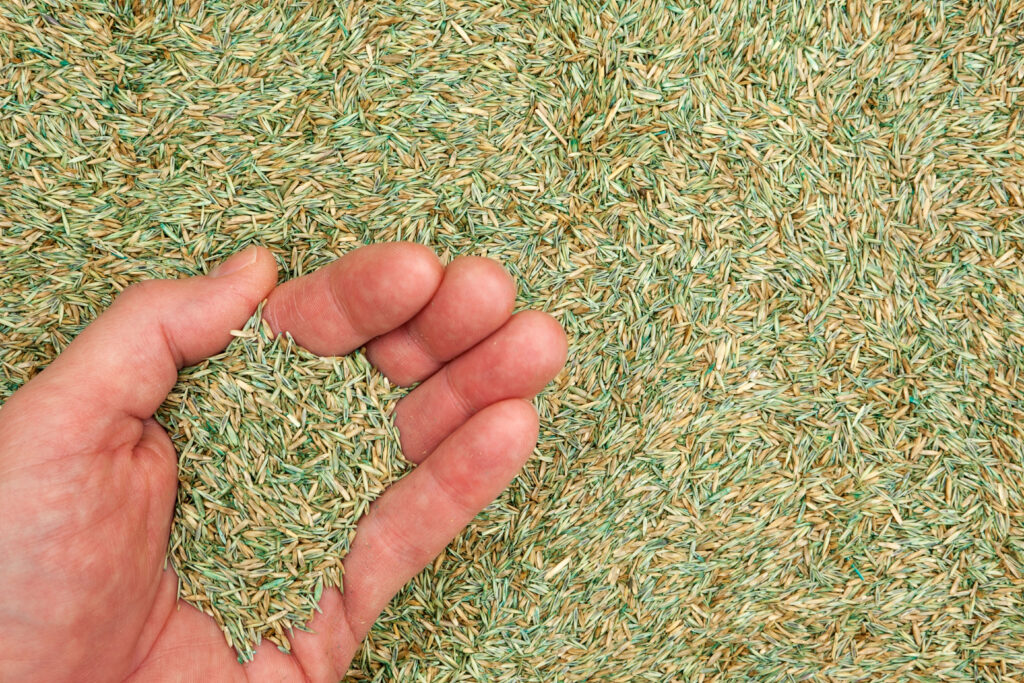
That question drives a lot of what we do, and one segment that keeps coming up is turf grass. Right now, much of the turf industry looks at coated seed primarily as an inventory management tool. Coat the seed, extend your supply by a third, solve a short-term problem. That thinking isn’t wrong, but it stops short of the bigger opportunity.
The agronomic case for coated turf seed is building. Third-party studies show that homeowners using coated grass seed see increased germination and better establishment, especially when moisture is a limiting factor. That data isn’t as deep as what exists for alfalfa, but it’s pointing in the right direction. The alfalfa industry once stood at this same crossroads, weighing skepticism against early results. We know how that story ended.
Technology has also improved vastly. Modern coatings now include polymers that improve flowability and reduce dust off, resulting in easier planting and safer handling. Coating is no longer just about what surrounds the seed. It’s about delivering a better experience from the bag to the field.
The transition from skepticism to standard practice doesn’t happen overnight, but for the segments of the seed industry still on the fence, the alfalfa story offers a clear blueprint. Who’s going to be next?