Precise measurement of ATIs opens door to more tolerable varieties and food products.
A new international study led by Katharina Scherf at the Leibniz Institute for Food Systems Biology has, for the first time, precisely measured the levels of amylase/trypsin-inhibitors (ATIs) in barley — proteins known to trigger immune responses in sensitive individuals. The research, detailed in a recent news release, offers a foundation for breeding barley varieties with lower ATI content, improving tolerability for people with food sensitivities.
“Until now, we knew very little about the occurrence of ATIs in barley. Our method now provides reliable data on the barley-specific ATI composition for the first time,” Scherf, who leads the Food Biopolymer Chemistry research group at the Technical University of Munich, said in the release.
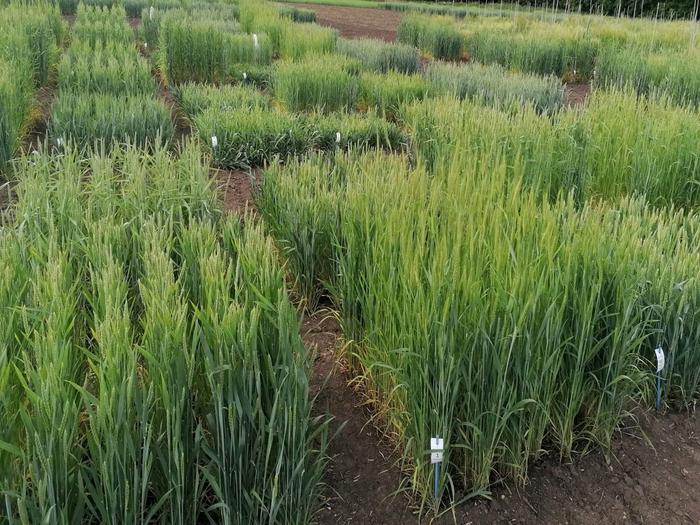
Using a newly developed targeted LC-MS/MS method combined with stable isotope dilution analysis, Scherf’s team examined 181 barley accessions from around the world. These included 113 two-row and 68 six-row types, offering broad genetic diversity for the study.
Measuring What Matters
The researchers quantified ten distinct ATI types across the samples. Total ATI levels ranged from 1.1 to 5.2 milligrams per gram of flour, which accounted for 0.7 to 3.6 percent of total protein content. Interestingly, ATI levels did not differ significantly between two-row and six-row barley.
“Now that we have a better understanding of the ATI composition in barley, we can specifically identify accessions with particularly low ATI content,” said Sarah Joestl, first author of the study and PhD student in Scherf’s lab. “This is an important first step toward breeding more tolerable barley accessions.”
Joestl identified three promising low-ATI six-row landraces from Eritrea, Greece and Ethiopia as potential breeding candidates.
Implications for Food Intolerances
ATIs are among the potential triggers of non-celiac wheat sensitivity, a condition marked by symptoms such as gastrointestinal distress, headaches, or “brain fog.” They are often considered alongside gluten and FODMAPs when assessing food intolerances.
“Although it is still difficult to diagnose non-celiac wheat sensitivity, many sufferers report relief from symptoms when following a gluten-free or low-gluten diet,” says Sabrina Geisslitz, co-author of the study and member of the same research group.
Barley Beyond Beer
Barley ranks among the top global cereals, with a 2023–24 harvest of around 142 million tons. While most barley in Europe ends up in beer or livestock feed, its use is expanding into human foods like cereals, breads, and plant-based meat.
As Scherf’s team continues their research, they aim to analyze processed barley foods for ATI content. This next phase could lead to more digestible options for consumers sensitive to barley-based ingredients.
The full study, titled “Quantitation of amylase/trypsin inhibitors in barley using targeted LC-MS/MS,” appears in Food Research International.