María Gabriela Guevara, researcher at CONICET and director of the Plant Biochemistry Group at the Institute of Biological Research (IIB, CONICET-UNMDP), is a key figure in BrewSelBar — an international, multidisciplinary project focused on developing a biological seed biostimulant enriched with selenium and derived from beer bagasse (BSG), one of the brewing industry’s largest by-products.
The project aims not only to enhance barley’s tolerance to stress, but also to support the production of functional beers with added health benefits.
Originating from Guevara’s laboratory, BrewSelBar was selected for funding by the European Union’s Horizon 2024 programme: Marie Skłodowska-Curie Research and Innovation Staff Exchange. Over the next five years, the team will explore how the nutritional content of BSG can be used to create biostimulants that help crops withstand climate stressors.
“The project aims to add value to by-products of the beer industry, which is prominent in the region. We want to generate a biostimulant for seeds that increases the tolerance of barley plants to stress from drought and high temperatures,” says Guevara.
BrewSelBar brings together academic institutions and companies from Argentina and Europe — including the National University of Mar del Plata, Antares Brewery, the Autonomous University of Barcelona (Spain), the Technical University of Denmark, the Technical University of Berlin (Germany), Semillas Battle S.A. (Spain), and Redinn S.R.L. (Italy). The project emphasizes interdisciplinary collaboration, aiming to generate high-quality research while equipping researchers with new skills and career development opportunities, according to a press release.
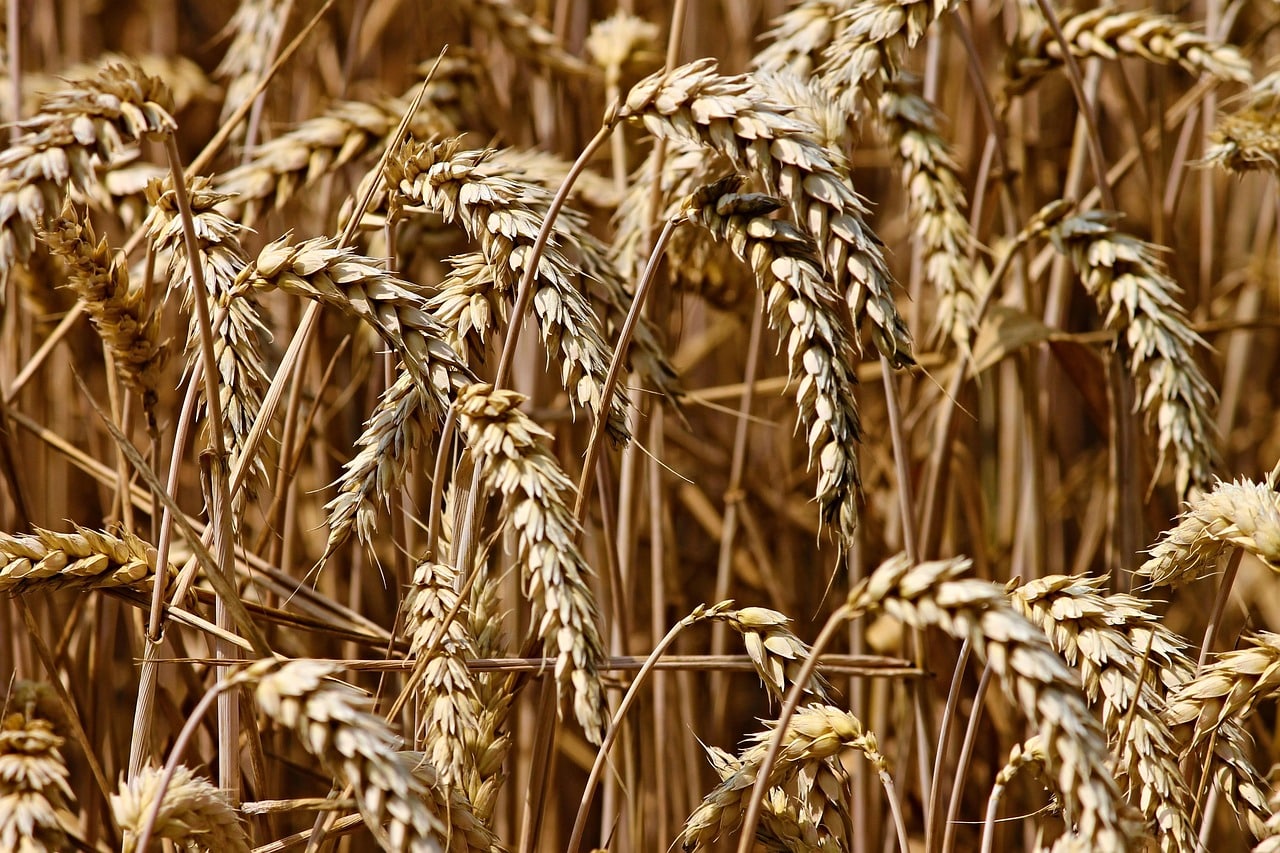
At its core, the initiative also seeks to cut industrial waste and advance sustainable agriculture by repurposing barley bagasse, a major brewing by-product. Rich in fiber, bagasse is already used as animal feed, a substrate for bioethanol, and even as flour for baked goods. BrewSelBar explores new ways to unlock its value for crop resilience and biostimulant development.
“This would be another way to take advantage of and value it, since the problem with these biological by-products is that, when they are disposed in landfills, they increase greenhouse gas emissions. That’s why this type of by-products is being tried to find new uses,” says the scientist.
Applying the biostimulant to seeds will make it possible to obtain selenium-biofortified barley grains, which can then be used to produce functional beers — initially alcohol-free — designed to deliver the health benefits of this essential micronutrient. According to the researchers, selenium plays a vital role in supporting the immune system, and evidence shows that deficiencies of this nutrient are common in humans.
“Worldwide, one in seven people has a diet with a selenium deficiency. Argentina is no exception and when we eat plants from soils with a low concentration of selenium or meat from animals that feed on those plants, we are not incorporating enough selenium into our diets.”
Cooperative Networks Between Science and Industry
Guevara’s team has been studying the application of selenium in vegetables and other foods for over a decade and, in the past five years, has expanded its research to focus on biostimulant development. According to the researcher, projects with significant productive potential require foundational research to understand the essential scientific aspects before practical implementation can succeed.
“When one is developing basic science, sometimes it is difficult to see the potential use in the short term, but there are many examples in science where something that was not thought for a certain use ended up being applied to the development of a lot of products that are currently consumed. With this project we will know well in which organic compounds of the beer we drink that micronutrient that makes it functional is present and that is pure basic science,” says Guevara.
In this way, in the laboratories of CONICET and the National University of Mar del Plata, the research team will carry out the tests and the planting of barley at scale, along with the application and obtaining of the biostimulant. “The project will have a scale at the laboratory level and a scale at the production level in a pilot plant. Initially we will carry out the development of the extraction and obtaining techniques of this biostimulant. Therefore, what we are going to do is try the formula we already have and try to obtain new formulations with different extraction methods,” describes the researcher.
Next, the researchers will treat the barley plants to incorporate selenium. In European laboratories, they will use a particle accelerator to precisely measure selenium concentrations in the grains. Once the optimal formulation is established, the process will be scaled up for field cultivation.
In the project’s final year, all the accumulated knowledge will be applied to determine the most suitable beer variety for the selenium-enriched barley, with production ultimately launching at the Antares brewery.