Researchers from Argentina’s Instituto Nacional de Tecnología Agropecuaria (INTA) and Consejo Nacional de Investigaciones Científicas y Técnicas (Conicet), in collaboration with the University of Trento in Italy, have developed SunPheno — the first open-access AI tool that uses cell phone images to automatically identify sunflower growth stages. Designed to support crop breeding and field management, the platform focuses on key developmental phases like leaf senescence, a trait closely linked to grain filling and yield potential.
“Senescence is a complex process, regulated by internal and external factors, which implies a fall in photosynthesis. If we manage to correctly synchronize this process with the phenological stages, we can maximize the performance,” explained Melanie Corzo, doctoral fellow of Iabimo, INTA-Conicet Double Dependency Executive Unit.
The team compiled a database of 25,000 field images captured with cell phones. These photos, taken from two inbred lines developed through INTA’s breeding program, were manually labeled to train a machine learning model that can now automatically differentiate between vegetative and reproductive stages, according to a press release.
“This system allows to eliminate subjectivity in the evaluation of sunflower phenology, something fundamental for both research and production,” explained Corzo, who anticipated that the next step will be to scale the model to work with images taken by drones and satellites.
According to Paula Fernández, researcher and coordinator of the sunflower genomics and ecophysiology research line at IABIMO, the INTA-Conicet joint unit, SunPheno also offers valuable insight into when senescence begins in different genotypes. This information could help refine genetic selection strategies to develop hybrids that use resources more efficiently.
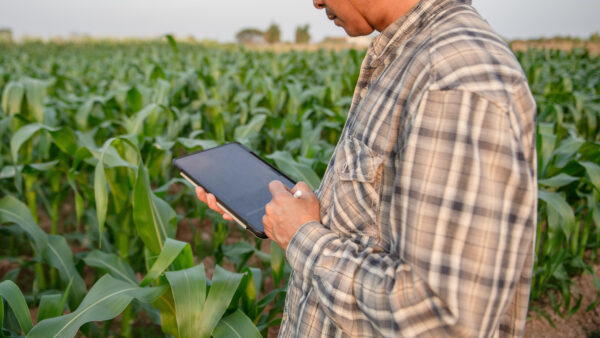
“To do this, photos are taken with cell phones in the first instance and then evaluate in field conditions in which phenological state these sunflower genotypes are,” he said.
“The cell became a massive phenotyping tool: we generate more than 5,000 images per campaign and the model allows us to classify them automatically,” Fernández said and added that the development “is of great relevance because it is the first platform of the sunflower cultivation which allows to identify the stages of the crops, which are key to identifying the components that determine their yield.”