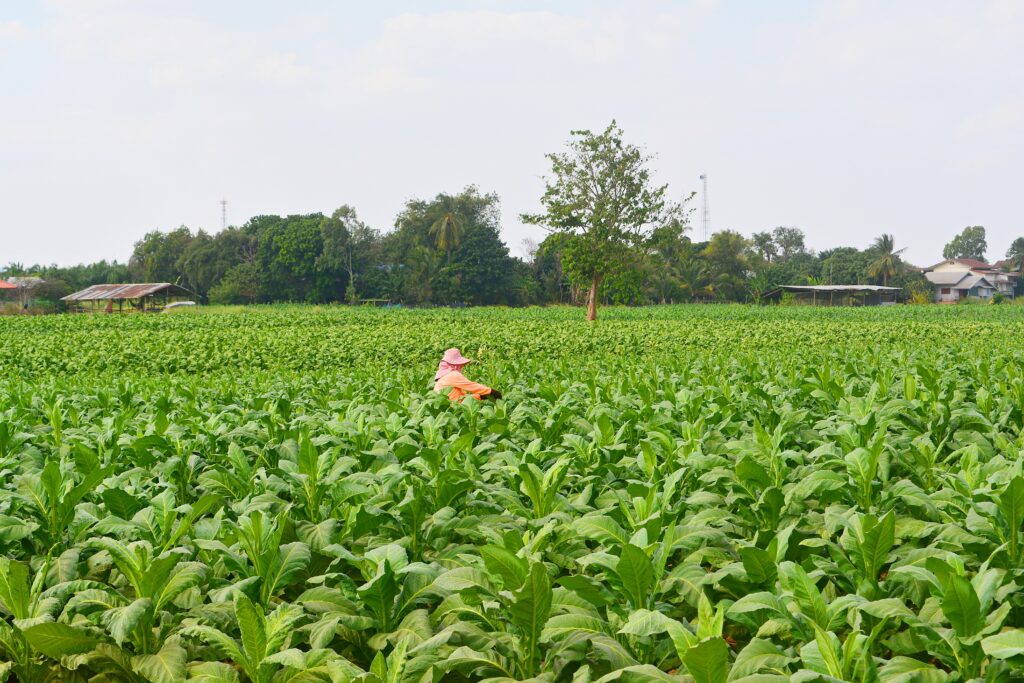

For many decades, Fidel Castro was famous for smoking Cuban cigars. Then, in 1985, he abruptly quit. That was a huge deal in a country famous for its tobacco. The industry was already on the brink of collapse due to a blue mold outbreak that killed 95 per cent of Cuba’s tobacco crop in the 1979–80 season in a well-known catastrophe.
When the decision was made to stop planting tobacco, it was the only crop many farmers had grown for generations and their soil was contaminated with nicotine, making it difficult for them to just switch to food crops. Also, culturally, they were used to specializing in tobacco crops. Things went from bad to worse during the period of austerity that followed the collapse of the Soviet Union in 1991.
We needed to rebuild our economy and one of the things we could export was tobacco, so we started to build new tobacco genetics. Eventually one of my colleagues, a great breeder named Eumelio Espino, created a variety called Havana 2000 that was resistant to blue mold, yielded well and tasted good. We patented it in Cuba and soon farmers were planting it across the island. Then we discovered that a different tobacco variety with the same name had been registered in Nicaragua. We never knew if our seed had been stolen, but it was clear that the supposed parent plants in the patent weren’t the same type of tobacco as the Nicaragua variety. Unfortunately, that type of thing is more common than you think.
I have met with breeders in Europe who work on tropicals like pitaya, papaya, etc. We did a lot of breeding for these crops in Cuba in the early 2000s but ended up not producing them. Unfortunately, a variety that doesn’t grow well in Europe can still contain a patentable trait that will make a lot of money for whoever registers it, which means LATAM breeders can invest heavily in developing traits only to miss out when a specific gene is patented.
Sadly, patenting a new plant species isn’t like patenting an instrument or equipment for which the laws are well written. These days, multiple organizations are trying to agree on a universal framework for patenting seeds that reduces exploitation. It’s complicated and political, but there are some bright spots. To patent a hybrid in Europe, for example, you must produce the parents and provide proof that their genetic profiles match your hybrid. You must also verify where the parents originated, with the goal of making it difficult for the Havana 2000 situation to happen again.