Oct 10 Update: the original version of this story stated that seed certification inspections were on hold during the federal government shutdown. The USDA has clarified that seed certification inspections are conducted by state Seed Certifying Agencies, which are not federal entities and continue operating as usual. While the Federal Seed Act sets the minimum standards those agencies must follow, their inspection schedules are managed and funded at the state level.
In addition, USDA’s OECD Seed Schemes program, which coordinates international seed certification standards, remains operational because it is funded by assessment fees paid by seed companies rather than congressional appropriations. The status of other USDA regulatory approvals depends on the specific program’s funding source — activities supported by appropriated funds are paused, while those financed through fees or industry funding continue.
Welcome to October. The U.S. government is closed. At midnight, Congress missed its deadline, and we’ve entered the first federal shutdown since the 2018–2019 lapse that dragged on for 35 days. (Transcript below)
For agriculture — and the seed industry — the timing couldn’t be worse. Nearly half of USDA’s workforce, about 42,000 employees, are now furloughed. While essential services like meat and poultry inspections and border protections will continue, the work that underpins seed innovation, farm financing and conservation has hit pause.
Here’s what that means:
- Farm Service Agency offices can’t issue new loans or process Conservation Reserve Program contracts.
- Seed certification inspections and regulatory approvals are on hold.
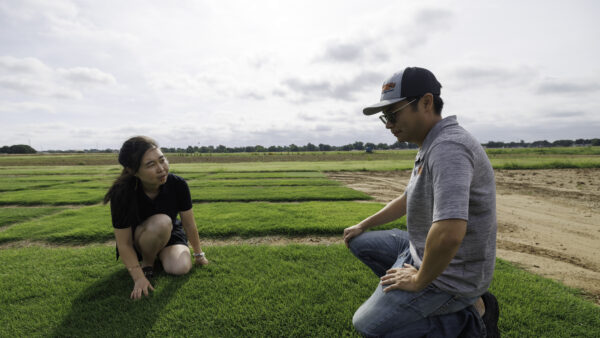
- Federal research trials are frozen mid-season, threatening to erase months of work.
- And key USDA data — like crop progress reports, export sales, and supply-demand estimates — will go dark, leaving markets and producers with fewer signals to guide decisions.
For seed companies, that translates to delayed product launches and regulatory uncertainty. For farmers, it could mean stalled paperwork at the very moment planting and harvest decisions are being made.
This shutdown also collides with another high-stakes deadline: the expiration of farm bill authorities. While many farm bill programs are mandatory and continue automatically, others — including conservation initiatives and certain seed-related programs — require both authorization and annual appropriations. Without congressional action, USDA’s ability to administer some of those programs lapsed at midnight as well.
That makes farm bill negotiations even more complex. The shutdown slows legislative drafting, agency analyses, and staff-level talks that are essential to moving the farm bill forward. It also raises the political stakes: some lawmakers may push to attach farm bill provisions to a short-term funding bill, while others dig in for policy fights over climate, conservation or nutrition. Every day the government stays closed, the path to a new farm bill gets murkier.
How bad this becomes depends on how long it lasts. If funding is restored in just a few days, most of the disruption will be manageable. But if the shutdown stretches into weeks, backlogs will grow, trials could be lost, conservation sign-ups will miss deadlines, and markets will suffer from missing data. If it extends beyond a month, the damage could become structural — programs will need piecemeal fixes, and seed companies and farmers may face lasting setbacks.
This comes on top of USDA’s own reorganization this summer, when more than 15,000 employees accepted buyouts or were reassigned. Adding furloughs on top of those departures means the return to “normal” may take even longer once funding is restored.
So what will it take to reopen? Congress must pass new appropriations bills or at least a continuing resolution. Until then, only essential services remain in place, and the agricultural clock keeps ticking.
Seeds don’t wait for politics, as I told you last week before the shutdown. Breeding cycles, planting windows and pest pressures don’t pause because Washington can’t agree. The longer the shutdown lasts, the higher the stakes for every farmer, every researcher and every seed company.
I’d love to hear your thoughts. How will a short or prolonged shutdown affect your business, your research, your employees? Email me at anielson@seedworldgroup.com or hit the reply button on your favorite social media platform to continue the conversation! Happy Fall Y’all!