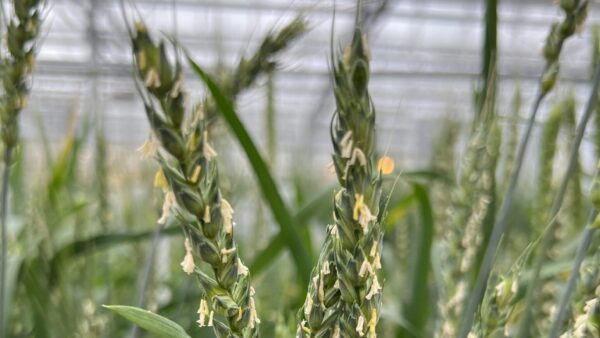
Researchers have identified a plant signaling gene as a potential target for breeding cereal crops with steeper, narrower root systems, although the trait was linked to yield penalties in barley. Richard Dixon, a Ph.D. candidate at the University of Queensland, said collaborative work with scientists at the Australian National University showed that the gene, CEPR1, has a conserved role across several major grain crops.
The findings were published in the Journal of Experimental Botany.
“Our goal is to use biotechnology to create a ‘steep, deep and cheap’ plant with a root system that can access water and nutrients in challenging conditions, without significant yield trade-offs,” Dixon said.
“For millennia, plant breeders have been purely focusing on above-ground traits because, until recently, everything underground has been challenging to view.”
Dixon said breeding has focused so heavily on above-ground traits that a great deal of useful genetic variation may have been lost in the process, according to a press release.
He noted that earlier research in Arabidopsis — widely used as a model plant in genetics — showed CEPR1 influences both root system architecture and above-ground traits such as seed production. In the latest study, researchers introduced barley, rice and maize versions of CEPR1 into Arabidopsis to see whether the gene behaved in a similar way across crops.
The work supports the idea that root system architecture could be tailored to different growing conditions and production systems to improve how crops capture water and nutrients. That, in turn, could help reduce fertilizer use and runoff while improving crop performance under drought or limited water conditions.
“Our findings are exciting because they suggest the CEPR1 genetic pathway is a promising target for optimizing the root systems of these crops.”
Dixon said that while the initial work with the gene was promising, there are limitations that will have to be addressed through further research.
“In barley, knocking out CEPR1 resulted in yield penalties and steeper, narrower root systems, just like the Arabidopsis mutants. We’ve also been growing and harvesting the gene-edited plants in the field to validate the findings in the glasshouse and are in the process of analyzing the data. We would like to fine-tune the pathway rather than switching off the gene to create root systems that can reach deeper water or nutrients without affecting grain production.”
Dixon said the research is now moving beyond identifying CEPR1 as a root architecture target and into testing how it can be used in practice. The team is exploring whether combining CEPR1 with another gene target could help produce deeper root systems, and is using advanced root-scanning facilities in Germany through UQ’s International Research Training Group to study plant performance under drought and nutrient stress.
He said the results so far are promising because they open up practical ways to address crop production challenges. The work was carried out as part of an ARC Linkage project in collaboration with InterGrain.